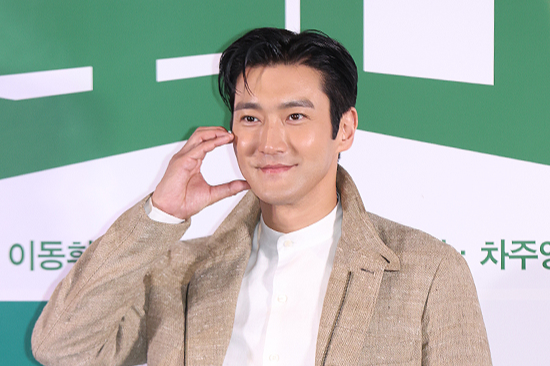
Historian Shim Yong-hwan has pushed back against attempts to define Super Junior member Choi Si-won in political terms.
On Tuesday, Shim wrote on his Instagram that Choi, currently in Mongolia filming a drama series, had taken time out of his schedule to visit the Yi Tae-jun Memorial Hall in Ulaanbaatar and sent him photographs of the visit.
The photos showed Choi touring the memorial hall dedicated to independence activist Yi Tae-jun in the Mongolian capital, along with an entry Choi left in the guestbook: "I will remember his deep love for his homeland and his noble commitment to humanity."
"I know very well how Si-won tends to get categorized," Shim wrote. "In my view, he is a genuinely rare entertainer who loves history with his whole heart."
He added that while he and Choi naturally have some differences of opinion when they discuss specifics, and that Choi's inclinations may make some people uncomfortable, he questioned how many Korean entertainers would voluntarily carve time out of a busy schedule to visit the Yi Tae-jun Memorial Hall on their own.
Shim argued that the so-called conservative-versus-progressive conflict over history has grown intense, but is ultimately petty. "Front lines only appear here and there when certain forces want to commemorate someone or drive someone out," he wrote.
He closed by saying he would continue to have more conversations with Choi, adding, "History is not politics, and it must open a broader horizon than politics."
Yi Tae-jun (1883–1921) was a Korean independence activist from Haman in South Gyeongsang Province who trained as a physician in the second graduating class of Severance Hospital's medical school. At the urging of Ahn Chang-ho, he joined the New People's Association's youth student society, and later made his way through China to Mongolia, where he practiced medicine.
According to Shim, Yi made a major contribution to eradicating venereal disease that had long afflicted the Mongolian population, earning him a position as personal physician to Bogd Khan, the Mongolian monarch. During the March First Independence Movement, he provided funds that helped Kim Kyu-sik attend the Paris Peace Conference, and he also joined Kim Won-bong's Uiyeoldan resistance organization. Yi was killed by White Army forces during the Russian Civil War. The government posthumously awarded him a presidential commendation in 1980.
dbsdn1110@heraldcorp.com