Former Jung-gu tops Incheon in cultural event participation at 69.1%, but its local culture index has fallen; former Dong-gu lags in cultural access and planning capacity — researchers call for a shift to people- and content-centered policy
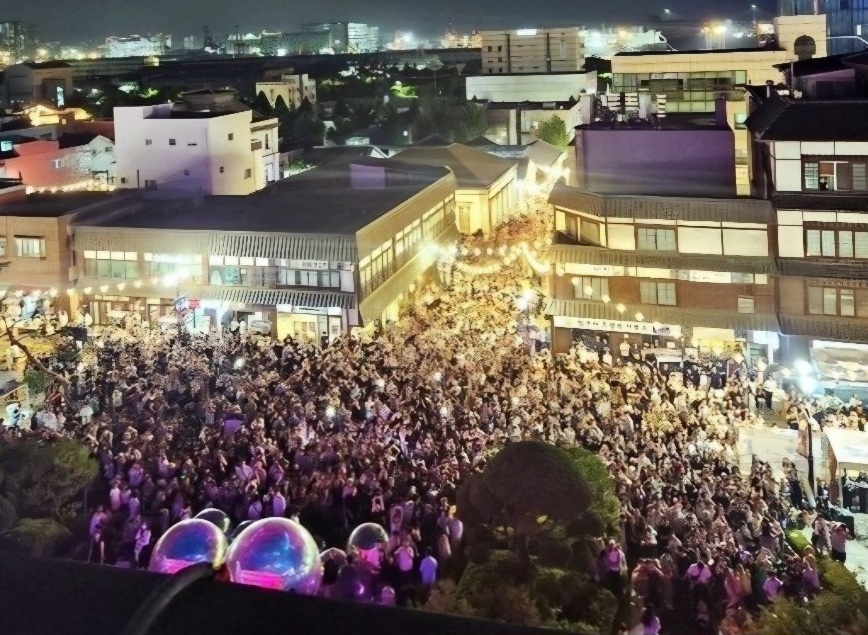
Reviving the cultural vitality of Incheon's old downtown will require moving beyond facility expansion and one-off events toward a sustainable cultural ecosystem built around trained cultural planners, quality content and local networks, researchers said Wednesday.
The Incheon Research Institute released a planning study titled "Strategies for Building a Sustainable Cultural Ecosystem in the Old Downtown," conducted by Senior Research Fellow Choi Young-hwa of the urban and social research division. The institute said the launch of the new Jemulpo-gu district presents an opportunity to connect the historical and cultural assets of the former Jung-gu and Dong-gu and to establish a new policy framework that addresses the cultural gap between the two areas.
According to the research, the former Jung-gu recorded a cultural event participation rate of 69.1 percent, the highest among Incheon's 10 districts and counties. Its local culture index, however, fell from 0.506 — placing it among the top tier nationwide — in 2017 to -0.104 in 2023.
The study found that cultural policy efforts and activity outcomes have failed to translate into an accumulation of local cultural resources or sustained cultural engagement among residents.
The former Dong-gu has seen its local culture index remain in the -0.2 range for an extended period, with indicators of cultural access also showing weakness.
The absence of a district-level cultural foundation also drew attention as a problem: without one, there is a lack of intermediary organizations capable of connecting cultural facilities and resources and developing programs.
Researchers said the core challenge of cultural policy in the old downtown is not simply a shortage of facilities or content, but an absence of the people needed to operate and connect them and of a sustained support structure.
They recommended nurturing creative artists and cultural planners while strengthening collaboration among residents, cultural organizations and local institutions, with the goal of creating a virtuous cycle linking creation, planning and cultural enjoyment.
Researchers particularly warned that if the transfer of Dong-gu's existing cultural projects and related personnel is delayed during the formation of Jemulpo-gu, the cultural gap between the two areas could widen. They urged authorities to quickly draw up an implementation plan that ensures project continuity and connects the distinct cultural identities of both areas.
The research team set out a vision of "an old downtown connected by people and culture — a place worth staying" and proposed three core goals of connection, self-sufficiency and cultural enjoyment, backed by three strategic directions and nine action tasks.
"The launch of Jemulpo-gu is an important turning point for connecting the long-severed historical and cultural identities of Jung-gu and Dong-gu and building a self-sustaining cultural ecosystem," Choi said. "Only by moving away from a supply model centered on spaces and facilities — and instead investing in people and strengthening intermediary functions — can Jemulpo-gu become an old downtown where people want to stay, drawn by its culture."
gilbert@heraldcorp.com