Candidate nominations failed under previous governments
Parties divided over scope of investigations
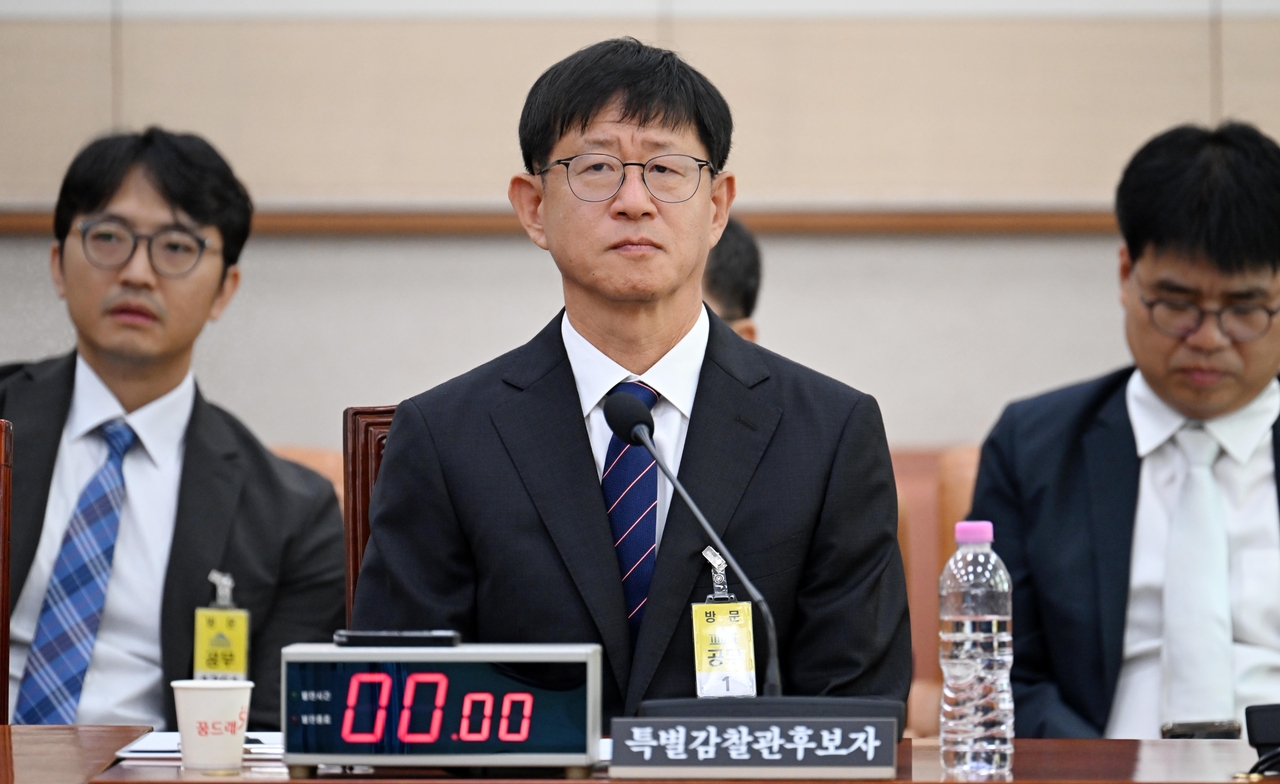
The ruling and opposition parties have agreed to complete the appointment process for a Special Inspector, a post that has sat vacant for a decade. They reached a consensus to adopt the confirmation hearing report for candidate Choi Gil-su with both "qualified" and "unqualified" opinions noted side by side, raising prospects that the long-standing vacancy will finally be filled. The two sides remain at odds, however, over the scope of investigations into associates of the current president and former aides of past presidents, leaving open the possibility of continued friction even after an appointment is made.
According to the National Assembly's Legislation and Judiciary Committee on Wednesday, the ruling and opposition parties agreed Tuesday to adopt Choi's confirmation hearing report with both qualified and unqualified opinions recorded. The agreement came roughly a month after his confirmation hearing on Sept. 18.
The Special Inspector is an independent oversight body established to prevent abuse-of-power corruption involving the president's relatives and close associates. Its mandate covers the president's spouse, relatives within the fourth degree of kinship, and civil servants at the senior secretary level or above in the Presidential Secretariat. The office was first established in March 2015 under the Park Geun-hye administration but has remained vacant since September 2016.
The first Special Inspector, Lee Seok-su, was appointed on the recommendation of the then-ruling Saenuri Party. He resigned in September 2016 while investigating corruption allegations against former Cheong Wa Dae senior civil affairs secretary Woo Byung-woo, and no successor was ever named.
The Special Inspector serves a three-year term. Under the appointment procedure, the National Assembly recommends three candidates, the president designates one, and the nominee then undergoes a National Assembly confirmation hearing before being formally appointed. In practice, however, successive administrations saw the process collapse as the ruling and opposition parties clashed over candidate nominations.
During the Moon Jae-in administration, the then-ruling party held that establishing the Corruption Investigation Office for High-ranking Officials should take priority. The People Power Party countered that the two bodies serve distinct purposes — the office investigates senior officials broadly, while the Special Inspector focuses specifically on those around the president.
The divide persisted through the Yoon Suk Yeol administration as well. The People Power Party insisted that nominating a Special Inspector candidate and nominating board members for the North Korean Human Rights Foundation should proceed together, but the Democratic Party of Korea opposed linking the two issues.
President Lee Jae Myung directed officials after taking office to move forward with appointing a Special Inspector — first in July last year and again in April this year, when he formally asked the National Assembly to begin the appointment process.
The People Power Party nominated attorney Kang Ji-sik in April, and the Democratic Party nominated Choi in July. The People Power Party said the Democratic Party had put forward its candidate to divert public attention ahead of a push to ram through amendments to the Code of Criminal Procedure. The Democratic Party said the nomination came after careful deliberation.
A slate of three candidates — including attorney Choi Yong-hun, recommended by the Korean Bar Association — passed a full plenary vote in August. President Lee then designated Choi Gil-su from among them as the Special Inspector candidate.
Disagreements between the two parties over the scope of the Special Inspector's investigative mandate remain unresolved, however.
At the Sept. 18 confirmation hearing, the Democratic Party said that if Choi is appointed, he should also investigate allegations of illegal lobbying and personnel interference that occurred during the Yoon administration.
Democratic Party lawmaker Park Ji-won said the law already allows for investigations into misconduct by senior secretaries who served under former presidents. "The insurrection special prosecutor is investigating and holding many hearings, but whatever gaps remain should be covered by the Special Inspector," he said.
The People Power Party, by contrast, raised the need to investigate Kim Hyun-ji, the first deputy chief of staff at Cheong Wa Dae, and President Lee's son. People Power Party lawmaker Ju Jin-woo asked whether Kim would become a subject of investigation if specific allegations of personnel interference emerged, and said the circumstances behind the growth of President Lee's son Dong-ho's assets should also be examined.
Under the current Special Inspector Act, the designated subjects of investigation are the sitting president's spouse, relatives within the fourth degree of kinship, and civil servants at the senior secretary level or above in the Presidential Secretariat. Whether the law permits investigations into alleged misconduct by associates of former President Yoon Suk Yeol, or into Kim — who does not hold a senior secretary-level position — is expected to be a source of continued dispute.
The two parties also traded barbs over who bears responsibility for the more than one-month delay in adopting the confirmation hearing report.
Kim Eui-kyum, the Democratic Party lawmaker who leads his party's side on the Legislation and Judiciary Committee, said Tuesday that he had proposed reviewing the adoption of the hearing report on the day of the confirmation hearing itself, but that the opposition had indicated it would not agree to adoption. "At the full committee meeting on Sept. 21 as well, there were remarks to the effect that they would not cooperate," he said.
People Power Party lawmaker Park Hyung-su, who leads his party's side on the committee, rebuffed that account. He said he had clearly conveyed to Kim on Sept. 21 that "if the unqualified opinion is noted alongside the qualified one, People Power Party members would not object to the report being adopted even in their absence."
mp1256@heraldcorp.com