Trump calls for border closures over France unrest
Republican rally screens footage of French violence
AP: no evidence linking riots to immigrants
Experts say strategy more likely to energize base than win new voters
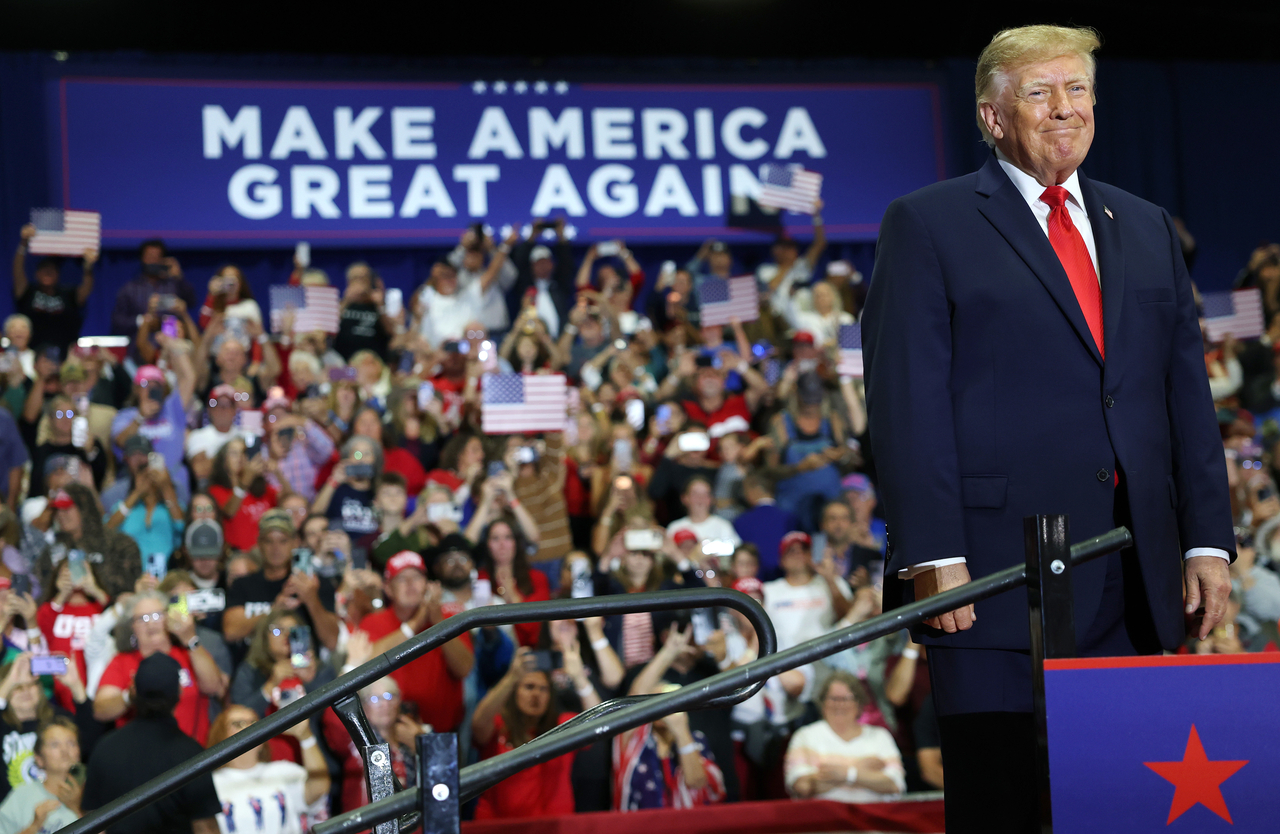
Donald Trump is intensifying his immigration offensive ahead of November's midterm elections, linking large-scale riots in France to Muslim immigration and holding up the unrest as a preview of what America could look like under Democratic rule. French authorities, however, have not connected the riots to any specific immigrant group, and a claim Trump made about churches being set on fire has not been borne out by the facts.
According to the Associated Press and Agence France-Presse on Tuesday (local time), Trump and senior Republican figures have framed recent violent protests in France and Italy as the product of failed immigration policy, using the unrest to press the case for tougher border controls.
At a campaign rally Monday in Kansas — reliably Republican territory — Trump told supporters that anyone wanting to know what was at stake in the election need only look at what was happening in France. The message was clear: a Democratic victory in the midterms could bring similar chaos to the United States.
"A once-great country is being conquered, pillaged and burned by immigrants, jihadists and communists who hate Christianity and Western civilization itself," Trump said of France. "We will not let this happen in America."
Before Trump took the stage, footage of the French violence was played on large screens at the rally venue.
Trump had also taken to social media Sunday, writing that "France is burning" and that "immigrants from a totally different world, with hate in their hearts, have torn apart a once-great country." He urged French President Emmanuel Macron to "close the borders and take back control before it is too late."
Leaving the White House for the Kansas rally, Trump warned that "Europe will be finished" unless it closes its borders and deports "criminals like these protesters." He added: "Look at the chaos and hatred in France and Italy. This is not an education problem. People who hate these countries are coming into these countries."
Republican figures echoed the message. Sen. Roger Marshall of Kansas told the rally that "radical Islam is the greatest threat to American democracy and freedom today," saying the situation in France showed in real time "what happens when moderates capitulate to radical Islam."
The AP, however, said there was no verified evidence to support the claim that immigrants were responsible for the riots.
French police and authorities have not linked the unrest to any particular immigrant community. Unlike the United States, France does not collect arrest statistics by race or ethnicity, and the identities of those charged are not made public — making it difficult to determine the precise makeup of those involved.
Trump's claims about religious sites being set ablaze also diverged from confirmed facts.
"When you see the burning church steeples in France, remember that is what the radical Democrats want to do to America," he said.
According to the AP, however, no religiously motivated attacks on houses of worship have been confirmed during the riots. France's Jewish community protection service said a Paris synagogue sustained damage, but attributed it to an apparent attempted burglary. There was also no evidence that shops were targeted because of the religion of their owners.
A video that spread widely on social media purporting to show a burning church steeple was in fact footage of a 19th-century city hall fire in Limoges, in central France. The burning clock tower of the municipal building resembled a church steeple, allowing it to be misrepresented as an attack on a religious site.
Claims that far-left groups were behind the riots also reflected only part of the picture. French authorities confirmed that radical far-left activists took part in some of the violence, but analysts said there was insufficient basis to conclude they orchestrated the nationwide looting and vandalism.
Sébastien Roché, a professor at Sciences Po Grenoble who has studied policing for more than 20 years, said far-left radicals were "too small in number to explain violence of this scale." He described the looting of shops as "completely unlike how these groups operate," and said opportunistic crime accounted for a significant share of the disorder.
The protests began last month when high school students in working-class neighborhoods north of Paris demonstrated against a shortage of teachers and deteriorating school facilities. Anger over rising living costs and declining public services then broadened the movement into a nationwide wave of unrest. On Saturday, some demonstrators clashed with police and looted shops; French authorities said at least 3,000 businesses across major cities were damaged.
AFP said Trump was exploiting the French riots politically at a moment when polling pointed to an unfavorable environment for Republicans heading into the midterms — reviving the anti-immigration message that had proved effective in the 2024 presidential election.
How much the strategy will actually shift the electoral landscape remains uncertain. Recent major polls show American voters rank the economy as a more pressing concern than immigration or racial issues.
JC Lintzenich, a senior fellow at the German Marshall Fund, noted that campaign advertising in South Carolina was focused on health care and domestic issues, saying international affairs were "just a blinking dot on the radar." He added that Ukraine, Iran and other national security matters carried more weight with voters than instability in France.
Justin Weiss, a professor of foreign policy at Johns Hopkins University, said the Republican strategy of connecting the French riots to questions of American national identity would have limited success in winning over new voters. However, he said it "could get the base to the polls," suggesting the approach may be more effective at driving turnout among existing Republican supporters than at broadening the party's appeal.
sjy@heraldcorp.com