Behind every public figure's appearance lies a personal approach to health and beauty. This series examines the diets, exercise routines, procedures, and beauty and fashion choices of notable figures as practical lifestyle information.
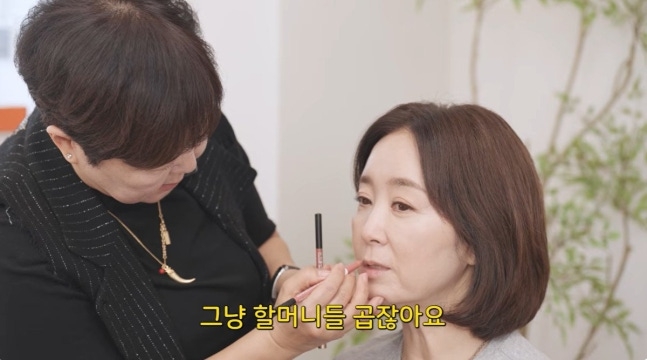
Actor Yoon Yu-seon, 57, says she undergoes laser and radiofrequency treatments to manage skin aging but keeps the intervals between sessions as long as possible. Depending on the type and intensity of a procedure, the timing and duration of results can vary significantly, making proper spacing an important part of any skin care plan.
Yoon appeared Saturday on the YouTube channel of makeup artist Lee Kyung-min, "Hello, Everyone's Unni Kyungmin," where she shared her approach to skin care.
"I do get laser and radiofrequency treatments," she said, "but I don't overdo it, and I keep the intervals between sessions as long as I can."
Laser and radiofrequency procedures are among the most widely used dermatological treatments for addressing signs of skin aging such as wrinkles, loss of elasticity and pigmentation. The two work through different mechanisms and target different concerns, and the recommended frequency and spacing of sessions varies depending on a patient's skin condition.
Lasers target pigmentation and texture; radiofrequency focuses on elasticity
Skin aging progresses as collagen and elastin in the skin diminish with age, compounded by cumulative exposure to ultraviolet rays and lifestyle factors.
Collagen is the protein that provides structural support to the skin, while elastin allows the skin to stretch and return to its original shape. As the quantity and function of both proteins decline, the skin loses elasticity and becomes more prone to wrinkles.
Laser treatments work by delivering light energy at specific wavelengths to the skin, where it acts on pigment, blood vessels or skin tissue.
Lasers designed for pigmentation issues such as melasma and dark spots deliver energy to melanin to reduce discoloration. Some lasers create microscopic damage to the skin's surface to stimulate the formation of new tissue.
Fractional lasers, used to improve skin texture and fine lines, create tiny treatment zones across the skin. The collagen remodeling that occurs during the subsequent healing process can improve both the surface and underlying condition of the skin.
Radiofrequency treatments use electrical energy to generate heat within the skin's tissue.
That heat, delivered to the dermis and subcutaneous fat layer, triggers changes in collagen fibers and stimulates the production of new collagen.
The procedure is primarily used to address sagging, fine lines and loss of facial contour. The depth and range of energy delivery varies depending on the type of radiofrequency device used.
According to the American Academy of Dermatology, noninvasive radiofrequency treatments promote collagen production by delivering heat to the tissue beneath the skin. Patients may notice some immediate tightening after a session, with further improvement appearing gradually as new collagen forms.
Improvements in skin elasticity generally emerge over several months. Radiofrequency treatments in particular may show their most noticeable effects over a period of about six months.
The appropriate treatment approach depends on the nature of the skin aging involved. Pigmentation concerns may be best addressed with a laser suited to that purpose, while loss of elasticity may call for radiofrequency or ultrasound-based procedures.
Why spacing matters when results take months to appear
Both laser and radiofrequency treatments require time for the skin to recover and rebuild collagen.
Radiofrequency in particular uses thermal energy to induce changes deep within the skin. Beyond the immediate post-treatment response, collagen continues to remodel over weeks to months, producing gradual improvements in elasticity.
The American Academy of Dermatology notes that the effects of noninvasive radiofrequency skin-tightening procedures can take about six months to fully emerge, and that results may last for years depending on how well the skin is maintained.
A 2020 expert consensus statement on fourth-generation monopolar radiofrequency treatment, published in the Journal of Drugs in Dermatology, recommended an interval of approximately 12 months between repeat sessions to sustain results.
The statement also noted that some patients may benefit from an additional session after six months, while others may extend the interval to as long as two years.
Those recommendations apply to a specific category of radiofrequency device. Some devices are designed for multiple sessions at shorter intervals, so treatment plans ultimately depend on the type of equipment, its output level and the area being treated.
Recommended intervals also differ among laser types.
Nonablative lasers, which minimize surface damage, are typically administered in a series of sessions at regular intervals. Ablative lasers, which remove part of the skin's surface, require a longer recovery period and more careful post-treatment care.
After either type of procedure, redness and swelling are common. Depending on the depth and intensity of the energy delivered, temporary pain, pigmentation changes or burns may also occur.
A systematic review of radiofrequency skin-rejuvenation treatments published in 2025, which analyzed 15 studies, found that erythema and edema were the most frequently reported side effects. Most resolved within a relatively short period.
That is why it is important to assess the skin's condition thoroughly after a procedure and to determine the timing of any follow-up treatment based on how well it has recovered.
Patients with sensitive skin or a tendency toward pigmentation changes should be particularly careful about adjusting the energy intensity and spacing of their sessions.
A comprehensive evaluation — taking into account the type and timing of previous procedures, skin thickness and elasticity, and treatment goals — can help reduce unnecessary repeat sessions and support a more effective long-term care plan.
Sun protection and moisturizing are essential to slowing skin aging
Maintaining results from laser and radiofrequency treatments also depends on consistent daily skin care.
Skin aging can be divided into intrinsic aging, which occurs naturally over time, and extrinsic aging, which is accelerated by factors such as ultraviolet exposure, smoking and environmental conditions.
Intrinsic aging is driven by genetic factors and biological changes. As people age, the skin becomes thinner and drier, and the function of collagen and elastic fibers declines.
Among the factors that contribute most to extrinsic aging, ultraviolet radiation plays a particularly significant role.
UV rays increase the activity of enzymes that break down collagen in the skin and trigger pigmentation. Prolonged exposure can lead to wrinkles, loss of elasticity and changes in skin tone.
The American Academy of Dermatology recommends daily use of sunscreen to reduce premature skin aging.
A broad-spectrum sunscreen that blocks both UVA and UVB rays is recommended, with a sun protection factor of at least 30.
During outdoor activities, sunscreen should be reapplied roughly every two hours, and again after heavy sweating or swimming.
Moisturizing also helps slow the visible effects of skin aging.
As the skin's ability to retain moisture decreases with age, dryness worsens and fine lines can become more pronounced.
Moisturizers reduce water loss from the skin's surface and maintain hydration in the stratum corneum. Products containing ceramides, glycerin and hyaluronic acid are commonly used for this purpose.
Skin care habits that cause irritation are also worth examining. Scrubbing the skin vigorously when cleansing or using exfoliating products too frequently can damage the skin barrier.
A weakened skin barrier can lead to dryness, stinging and redness, and increases the skin's sensitivity to external irritants.
Retinol and retinoid products used for anti-aging should also be applied with attention to the skin's condition, adjusting the amount and frequency accordingly. Retinoids, derivatives of vitamin A, support skin cell turnover and collagen production and are used to address fine lines and uneven texture.
When starting retinoids, it is generally recommended to begin with a low concentration and infrequent application, then gradually increase as the skin adjusts.
Adequate sleep, regular exercise and a balanced diet also affect skin health. Smoking in particular accelerates premature skin aging, and quitting is strongly advised.
When managing skin aging, choosing procedures suited to one's current skin condition and allowing sufficient recovery time are key. Consistently maintaining basic habits such as sun protection and moisturizing can support long-term skin health.
rainbow@heraldcorp.com