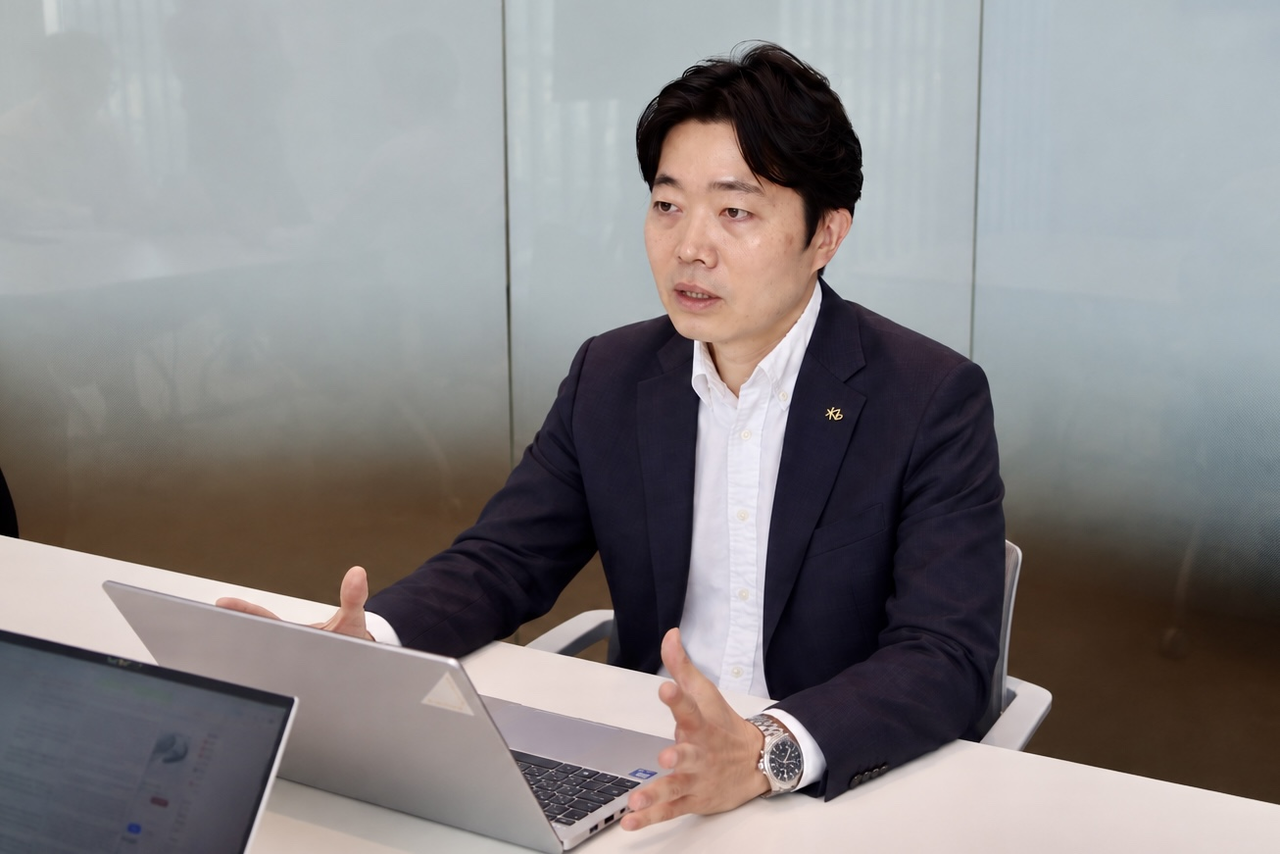
"If you map the current situation onto past semiconductor cycles, we are about 70 percent of the way up the hill. But this time is different. The capital expenditure cycle could run for two to three years, which means the upside potential for materials, parts and equipment companies is 1.5 to two times higher than in previous cycles."
Kwak Chan, head of active ETF management at KB Asset Management, made that assessment Tuesday in an interview, sizing up the growth prospects for South Korea's semiconductor materials, parts and equipment sector. Unlike past semiconductor booms driven by consumer devices, he said, demand is now expanding structurally around the AI industry — and earnings growth among materials, parts and equipment companies will be sustained over the long term.
Kwak has built roughly 17 years of experience in the semiconductor industry and leads the management of the RISE Semiconductor Materials Parts Equipment Active ETF that KB Asset Management launched Tuesday. He said the product was developed on the conviction that materials, parts and equipment companies retain strong growth potential even as share price volatility across the broader semiconductor sector has increased.
The biggest reason he views this semiconductor boom differently from past cycles is a structural shift in demand. Where PCs and smartphones once drove memory chip demand, server demand centered on AI data centers is now surging.
"In 2018, mobile and PC applications accounted for about 60 percent of memory demand, but today servers account for 70 percent," Kwak said. "In the past, when memory supply increased, demand was quickly satisfied and oversupply followed. Now, many companies still cannot meet their demand, so even as supply expands there is ample capacity to absorb it."
He also expects chipmakers' capital expenditure to continue for an extended period. While the up-and-down cycles of past memory markets typically lasted about 18 months to two years, he said this time a "multi-year supercycle" of large-scale capital investment running two to three years could emerge.
"Samsung Electronics and SK hynix are carrying out large-scale capital investment in Pyeongtaek, Yongin and other locations, and there is a possibility that investment sites will expand further," he said. "In the past, a short burst of capital expenditure led to oversupply, but this time both the scale and duration of investment are significantly larger, which will widen the earnings growth of materials, parts and equipment companies."
He said this shift could also change the valuation benchmarks applied to materials, parts and equipment companies. In past cycles, a price-to-earnings ratio of 25 to 30 times for semiconductor equipment makers was seen as a sign of overvaluation, but with earnings growth now more durable, multiples above 30 times are justifiable, he said.
"In this cycle, we can apply higher valuation standards to materials, parts and equipment companies — not just for their earnings, but for their multiples as well," Kwak said.
He added that the most promising subsectors within materials, parts and equipment will shift over time. Early in a capital expenditure expansion, equipment makers see order books fill first, but as utilization rates at new factories rise, earnings at materials and components companies begin to improve in earnest.
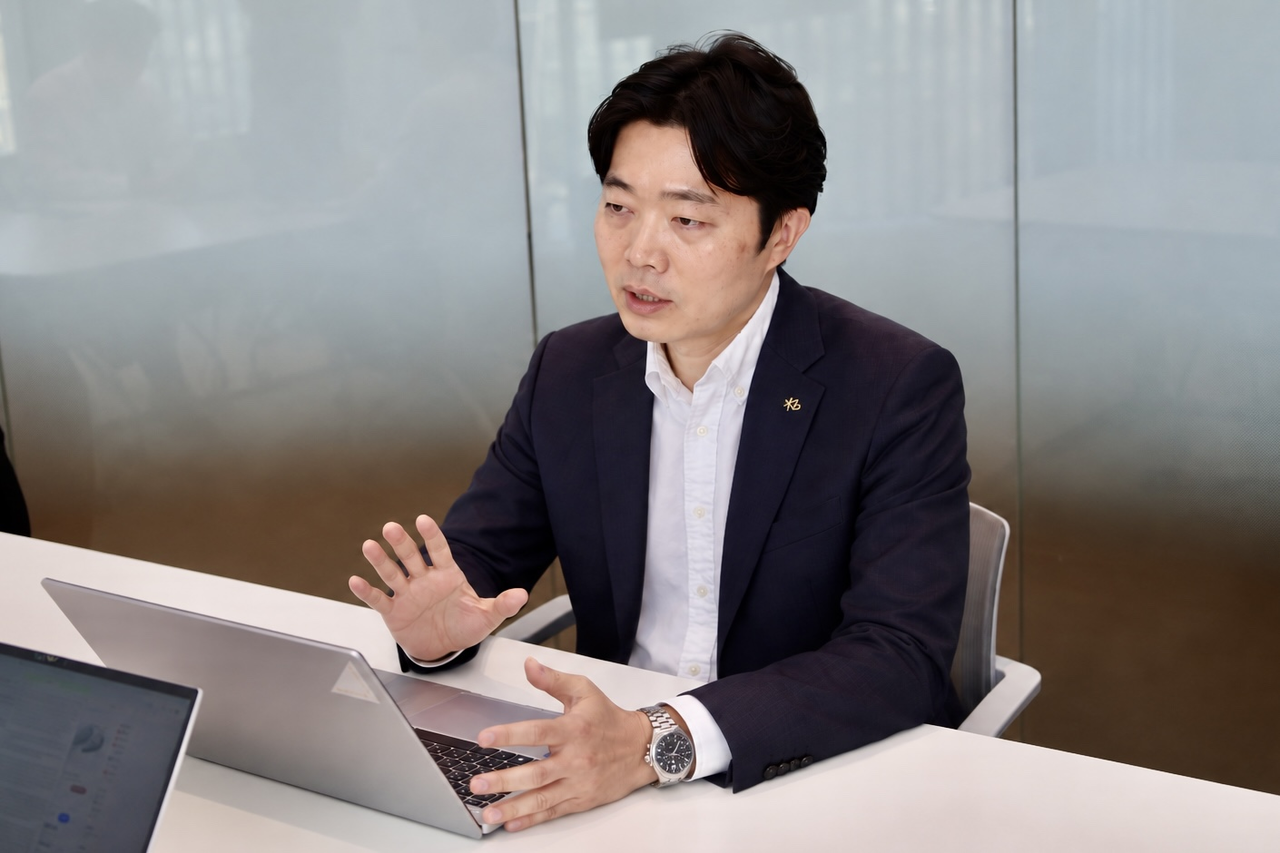
"Early in a capital expenditure expansion, the priority should be equipment stocks, and then as factory utilization rates rise, the strategy of increasing exposure to materials and components becomes effective," Kwak said. "Right now we are overweight equipment relative to materials and components, but we plan to gradually shift the investment center of gravity toward materials and components between the fourth quarter of this year and the first quarter of next year."
He also cited the rapid rotation of market leaders within the semiconductor industry as a reason for launching an active ETF. Unlike passive ETFs, which are built around specific sectors or stocks, an active ETF can flexibly adjust its holdings and weightings to match market conditions, he said.
In the first half of this year, for example, front-end equipment stocks were revalued while large memory companies' share prices were strong, and afterward back-end equipment and outsourced semiconductor assembly and test companies showed relatively stronger price momentum.
"Many existing semiconductor ETFs are concentrated in specific areas such as front-end or back-end processes," he said. "As a semiconductor cycle progresses, the timing of share price gains differs by subsector. The distinguishing feature of this product is that it is designed to follow those shifts flexibly within a single fund."
KB Asset Management's RISE Semiconductor Materials Parts Equipment Active ETF selects core holdings from domestically listed semiconductor materials, parts and equipment companies. Key investment targets include Samsung Electro-Mechanics, GigaVis, Simtech, TES and PSK Holdings. The fund adjusts the weighting of each holding by analyzing order backlogs, customers' capital expenditure plans and factory utilization rates.
Technological competitiveness is the most important criterion in stock selection. Customer relationships and order visibility are also key factors, as is whether a company has secured overseas customers. Because the supply chain for domestic semiconductor materials, parts and equipment — once centered on Korean chipmakers — is expanding into global markets, companies with a more diversified customer base are seen as having stronger growth potential.
Kwak also said materials, parts and equipment companies could rebound more sharply in the near term than large-cap semiconductor stocks such as Samsung Electronics and SK hynix, whose share prices have fallen sharply recently. Despite improving earnings, the large memory companies face headwinds from doubts about the sustainability of AI investment and uncertainty surrounding shareholder return policies, he said.
"I have no doubt about the long-term growth of Samsung Electronics and SK hynix, but the reason their share prices are not rebounding is not a lack of earnings," Kwak said. "It may take time for uncertainty around shareholder return policies to be resolved by year-end, so in the short term there is a possibility that stronger upward momentum will concentrate in materials, parts and equipment companies."
He recommended that investors adopt a diversified strategy holding both large-cap semiconductor stocks and materials, parts and equipment companies. He cautioned, however, that while active management can reduce order-book and financial risks at individual companies, it cannot shield investors from a broad downturn across the entire semiconductor industry.
"Many investors already have heavy exposure to large memory companies such as Samsung Electronics and SK hynix," Kwak said. "It is worth considering a core-satellite strategy — holding large memory stocks as the core asset while adding a materials, parts and equipment ETF as a satellite position."

th5@heraldcorp.com