Device tracks sleep without wearables, logging snoring, movement and room conditions
Family members receive alerts for prolonged stillness or sudden temperature spikes
Up to 10 people can connect via a shared code; domestic launch set for this year
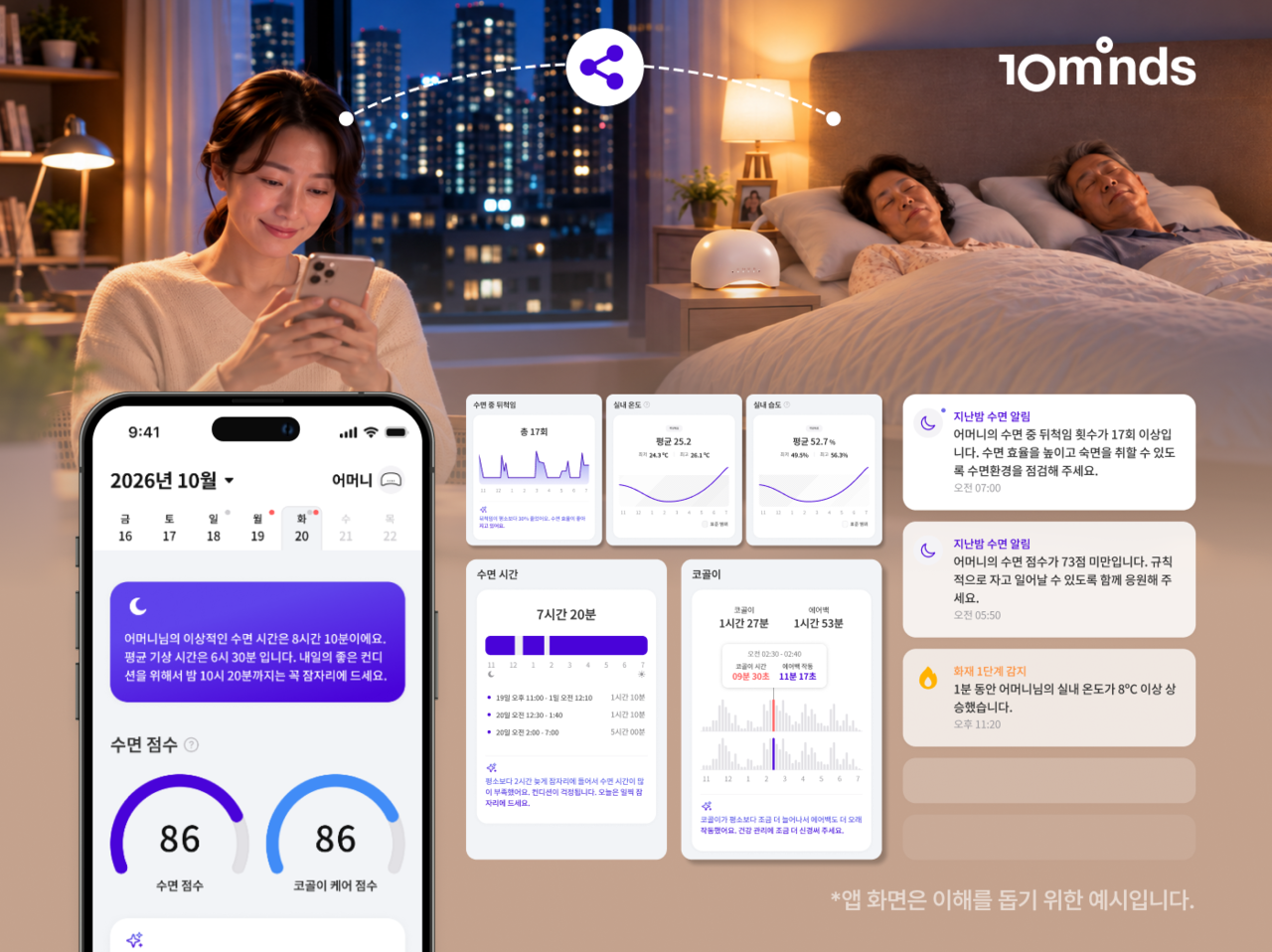
Healthcare device company Tenmainds is set to launch a next-generation sleep management solution that records a user's overnight sleep patterns and bedroom environment without requiring any wearable sensors, then shares the data with family members.
Tenmainds announced Tuesday that its upcoming AI Sleepbot, scheduled for domestic release later this year, will include a new family sleep-monitoring feature.
The AI Sleepbot uses a contactless system that activates when the user rests their head on the pillow and stops recording when they get up — no wearable device or daily power cycling required.
A proprietary sensing technology called AI Air detects pressure changes to determine whether someone is in bed, how much they are moving and where their head is positioned. A separate sound-analysis AI identifies snoring.
Once the user wakes up and the sleep session ends, a push notification goes to connected family members. Through the app, they can view total sleep duration, a sleep score, the number of times the user moved, snoring records and hour-by-hour temperature and humidity readings from the bedroom.
Up to 10 family members can connect to a single user's account via a shared code, and any connection can be removed at any time through an approval process.
The device also strengthens real-time anomaly alerts. If no sleep activity is recorded during the user's usual hours, if no movement is detected for two, four or six consecutive hours during sleep, or if the bedroom temperature rises by 8 degrees Celsius or more within a single minute, the app immediately notifies connected family members — allowing them to spot and respond to warning signs without having to monitor the app constantly.
"Sleep patterns and environmental changes are important clues to everyday health, but it is not easy for family members living apart to check on them consistently," said Jang Seung-woong, chief executive of Tenmainds. "We will build a sleep management service that allows families to care attentively for one another's daily lives and health across physical distances."
The upgrade extends sleep technology beyond simple measurement into the practical realm of remote, non-contact senior care — including the prevention of solitary deaths among elderly parents living alone and the detection of emergencies — in step with South Korea's entry into a super-aged society.
silverpaper@heraldcorp.com