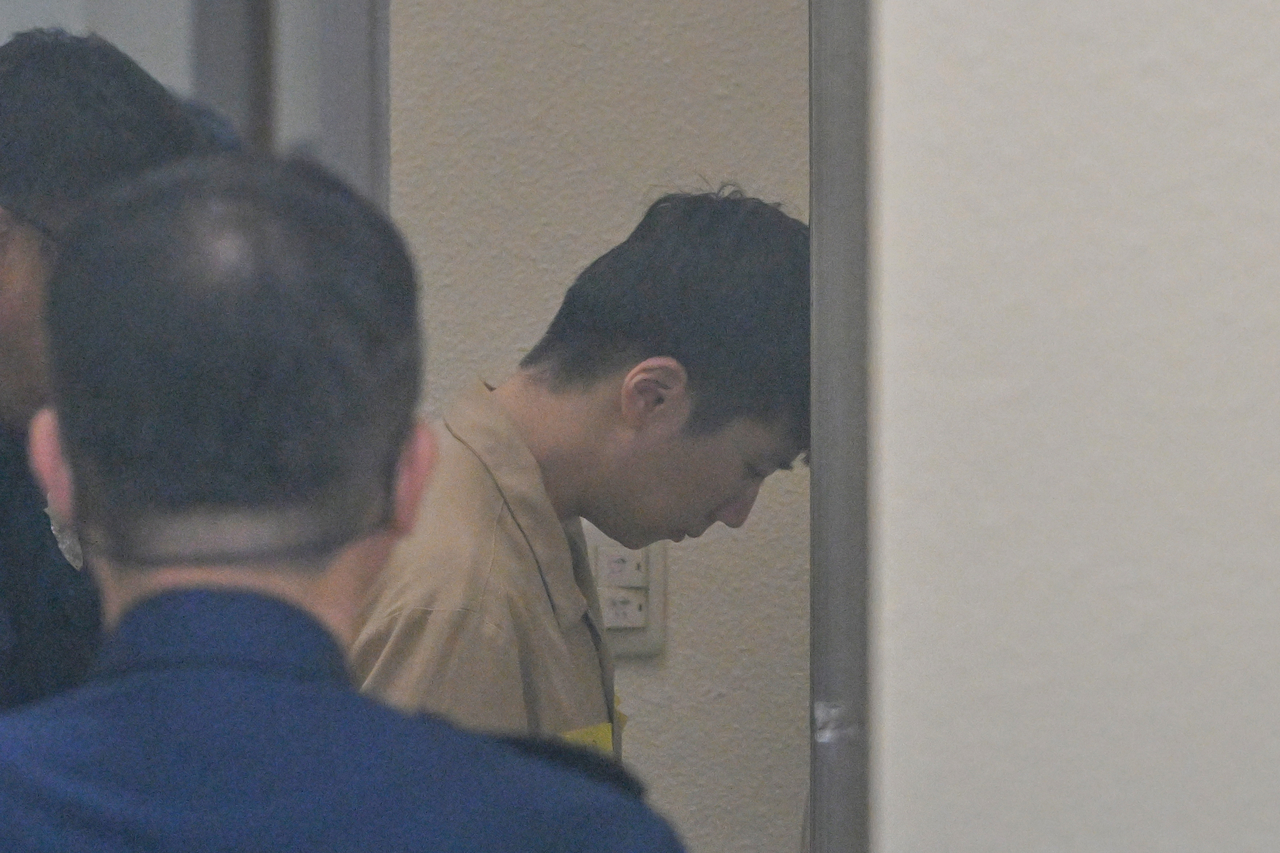
The life sentence handed down to Jang Yun-gi (23), convicted of murdering a high school girl, came under sharp criticism Tuesday at the National Assembly's Legislation and Judiciary Committee national audit.
At the audit of the Gwangju High Court and its affiliated district courts, People Power Party lawmaker Yoon Sang-hyun said prosecutors had sought the death penalty for Jang but that the first-trial court imposed life imprisonment, reasoning it could "comfort the bereaved family and prevent similar crimes by keeping him permanently incarcerated without parole." Yoon questioned whether a parole ban carries any binding legal force and asked what institutional measures could be taken, Yonhap reported.
Seo Young-gyo, a Democratic Party lawmaker who chairs the Legislation and Judiciary Committee, followed Yoon's questioning by asking the court to share its views on life imprisonment without parole, adding that the Assembly would also take up the issue.
When her own turn came, Seo said she believed Jang should have been sentenced to death, calling the question of whether the sentence would actually be carried out a separate matter.
People Power Party lawmaker Kwak Gyu-taek said he had watched the victim's mother break down in anguish immediately after the first-trial life sentence was handed down, and questioned whether the bereaved family's testimony had been sufficiently reflected in the sentencing.
Democratic Party lawmaker Park Ji-won said 100,000 citizens had signed a petition calling for the harshest punishment for Jang, urging the appeals court to take that public sentiment fully into account and impose the maximum sentence.
Gwangju District Court Chief Judge Jang Yong-gi said the victim's bereaved family had been given sufficient opportunity to testify in court, and that introducing a statutory life-without-parole sentence was a matter to be decided through legislative policy after gathering public opinion and expert deliberation.
'A ruling that ignored the family's grief'
The Gwangju District Court's Criminal Division 13, presided over by Judge Lee Jeong-ho, sentenced Jang to life imprisonment on Sept. 30 on charges of rape-murder under the Act on Special Cases Concerning the Punishment of Sexual Crimes.
The court ruled that all charges against the defendant were proven by the evidence presented, and that prosecutors were right to argue he must be permanently removed from society.
On the sentencing rationale, the court noted that South Korea is a de facto abolitionist state on capital punishment and that there is no absolute life sentence to bridge the gap between the death penalty and ordinary life imprisonment, citing Supreme Court precedent among other considerations.
The court said the true reason for imposing life imprisonment was to permanently isolate the defendant from society and compel him to spend the rest of his life in penitence amid the hardships of incarceration — not to leave open any possibility of leniency at the execution stage.
The mother of victim Lee Chae-won, 16, a second-year high school student, remained in her seat in the public gallery for about 15 minutes after the ruling, weeping uncontrollably.
Lee's parents and their legal representatives held a press conference outside the courthouse, saying the ruling was unacceptable as it failed to consider the family's grief. They called for the legal institutionalization of a parole-ineligible life sentence if the death penalty was not to be imposed, so that violent criminals could be permanently removed from society.
yul@heraldcorp.com