Democratic Party says no timeline set, vows to pursue social consensus
Bill filing delayed once in September amid labor-management deadlock
President to chair deregulation committee meeting Friday
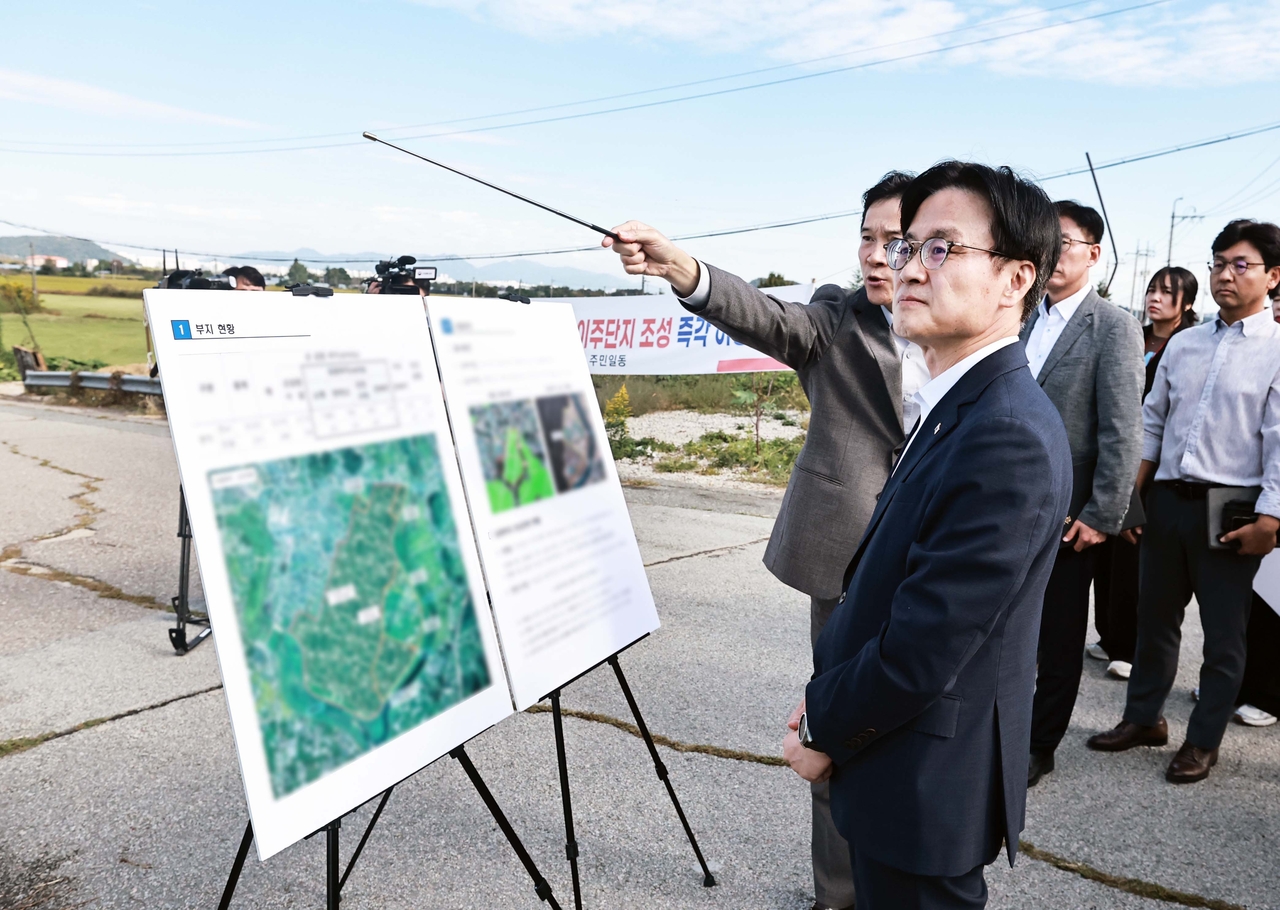
The Democratic Party of Korea on Tuesday filed two competing versions of the so-called "supra-regional special zone" bill, the centerpiece legislation underpinning President Lee Jae Myung's three mega-projects in semiconductors, AI data centers and physical AI. One version includes labor exemptions — such as exceptions to the 52-hour workweek — while the other does not, with the party saying it will seek broader social consensus before settling on a final text.
The dual filing comes even as Lee has repeatedly urged the government to move with urgency on the mega-projects, saying the effort must go "beyond a war of speed to an all-out blitz." Critics warn that a prolonged search for consensus could undermine the initiative's momentum from the outset.
Democratic Party Floor Leader Han Byung-do, speaking at a National Assembly strategy session on the national audit Tuesday, said the party was well aware of the wide range of views surrounding the bill's most contentious element — exemptions to working-hour rules. "The Democratic Party will submit two bills: one that includes the exemptions and one that does not," he said.
According to the ruling party, the legislation would establish supra-regional special zones that consolidate multiple local governments into a single broad economic area, streamlining permits and providing corporate support through fiscal, financial and tax incentives alongside deregulation. The version containing labor exemptions — including exceptions to the 52-hour rule — will be introduced by Rep. Park Sang-hyeok, who leads his party's side on the National Assembly's Political Affairs Committee. The version without labor exemptions will be introduced by Rep. Choi Gi-sang, who leads his party's side on the Climate, Energy, Environment and Labor Committee.
The two most contentious provisions — a white-collar exemption that would free high-income and research workers from the 52-hour weekly cap, and a proposal to extend the maximum contract period for fixed-term workers from two years to four — will be subject to further deliberation and debate before a final version is drafted.
Labor groups have strongly opposed the exemption clauses, arguing that carving out exceptions to the 52-hour rule would erode hard-won labor protections. Business groups, by contrast, say greater flexibility in working hours and workforce deployment is essential to securing competitiveness in advanced industries.
Han said the party would not set a fixed deadline for passing the bill, pledging instead to "listen broadly to voices from all sectors" and produce a final version through a combined review process. He added that the party would "make every effort to reach social consensus" and said it would "actively consider establishing a special National Assembly committee" to tackle issues spanning multiple ministries and standing committees.
The Ministry of Employment and Labor also issued a statement Tuesday saying it would "prepare measures that consider both strengthening competitiveness in advanced industries and protecting workers, following sufficient deliberation and debate on the labor exemptions."
However, with labor and management still far apart on the exemptions, reaching a social consensus is expected to be a protracted and difficult process.
The Democratic Party had originally sought to file the bill in September but postponed after disagreements inside and outside the party over the labor deregulation provisions. The government has been running a "single-point social dialogue" involving labor, management and related ministries to narrow the gaps; a vice-minister-level preparatory meeting was held Sept. 18, followed by five working-level sessions. The core divide between labor and management, however, remains unresolved.
Amid this standoff, Lee is set to chair the second plenary session of the Regulatory Rationalization Committee at Cheong Wa Dae on Friday. According to Cheong Wa Dae, the meeting — the first since the inaugural session in April, roughly six months ago — will take up deregulation measures aimed at nurturing cutting-edge industries, driving locally led growth and ushering in a new era of national entrepreneurship.
In the first session, the Office for Government Policy Coordination will present a report on the direction of regulatory reform to support the mega-projects and the government's "five poles, three special zones" growth engine strategy, after which individual ministries will outline plans to ease regulatory burdens in the fields of robotics, semiconductors, AI data centers, self-driving cars and biotech. The second session will open with the Ministry of SMEs and Startups presenting its startup deregulation plan, followed by presentations from other ministries. About 100 participants from the private sector, government and Cheong Wa Dae are expected to attend, with heated debate anticipated over the supra-regional special zone bill and related measures.
bigroot@heraldcorp.com
thanks@heraldcorp.com
fact0514@heraldcorp.com