Government introduces two-tier 'recommended' and 'excellent' rating system with on-site inspections and three-year renewal cycles
Global hansik restaurant map, domestic ingredient supply links and specialist workforce support also planned
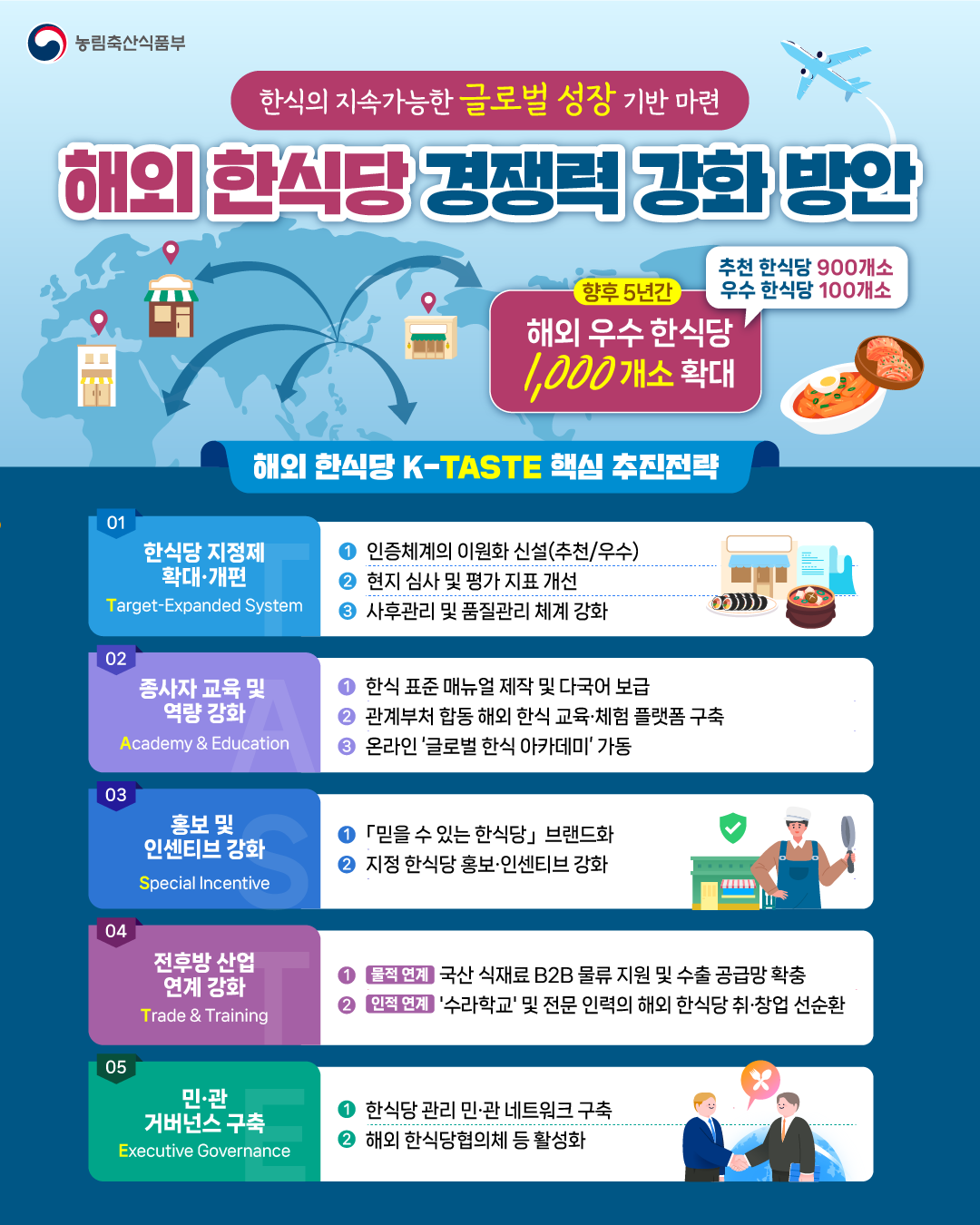
The number of overseas Korean restaurants carrying a government quality designation will grow to 1,000 over the next five years, with the program expanding beyond upscale establishments to include popular eateries serving everyday dishes. Restaurants will be graded according to their hygiene and service standards, and the initiative is designed to simultaneously drive exports of domestic food ingredients and support the overseas placement of Korean culinary professionals.
The Ministry of Agriculture, Food and Rural Affairs announced the plan Tuesday, framing it as a "strategy to strengthen the competitiveness of overseas hansik restaurants."
The initiative stems from recognition that while hansik has been gaining popularity worldwide, the quality of cooking and service varies widely from one restaurant to the next. Overseas consumer awareness of hansik rose from 60.0 percent in 2023 to 65.7 percent in 2024 and 68.6 percent last year. Demand has grown not only for bibimbap and bulgogi but also for everyday dishes such as fried chicken, tteokbokki and kimbap.
At the same time, concerns have been raised that restaurants with limited knowledge of hansik or insufficient culinary expertise are using the Korean food label, creating uneven quality and service. The government said it would move beyond simply increasing the number of Korean restaurants abroad and instead tighten the management framework to ensure a consistent standard of quality.
The centerpiece of the plan is an overhaul of the overseas hansik restaurant designation program. Previously focused on upscale establishments, the program will now be opened to a broader range of popular Korean eateries.
Designations will be split into two tiers: "recommended" and "excellent." Restaurants that meet baseline service and hygiene requirements will qualify for the recommended tier, while the excellent tier will require a higher standard of service and hygiene along with additional criteria, including the use of domestically sourced Korean ingredients.
The assessment process will also change. Previously, domestic chefs and professors were dispatched overseas to conduct evaluations; going forward, local offices of the Korea Agro-Fisheries and Food Trade Corporation and other in-country bodies will carry out inspections. Objective indicators — including the proportion of hansik dishes on the menu and the level of culinary expertise — will be strengthened.
Post-designation oversight will be stricter as well. Designations will carry a three-year validity period under a new renewal system. Annual checks on operating status and compliance with hygiene regulations will be conducted, and designations can be revoked if a restaurant falls below the required standard or commits a serious violation.
A training framework for overseas hansik restaurant workers will also be established. The government plans to build a "hansik digital library" by the second half of next year, providing cooking manuals and instructional videos in multiple languages. A mobile-based "Global Hansik Restaurant Academy" will offer short video lessons of 10 to 20 minutes covering cooking techniques, hygiene and ingredient management. Completion records will factor into designation applications, renewals and tier upgrades.
The ministry also plans to expand hansik curricula through partnerships with overseas culinary institutions, including the Culinary Institute of America and Italy's ALMA, to raise the skill level of local kitchen staff and maintain consistent food quality.
A "Global Hansik Restaurant Map" will be built to help overseas consumers locate designated restaurants. The platform will list each establishment's location, rating, signature dishes and photos by country and city, and will be linked to local mapping and reservation services. Joint promotional events such as a "Korean Restaurant Week" involving multiple participating restaurants are also planned.
The plan also includes using overseas hansik restaurants as a stable demand channel for domestically produced ingredients. Through 31 overseas hansik restaurant associations currently operating across 22 countries, the ministry will identify opportunities for collective purchasing of Korean ingredients and connect domestic food exporters with local importers and distributors. Procurement information — including which domestic ingredients can be imported by country, available suppliers and deliverable regions — will also be provided.
Support for Korean culinary professionals seeking to work abroad is another pillar of the plan. The ministry said it will formally launch the "Sura School" program next year and connect job openings at overseas hansik restaurants with trainees and graduates. Designated restaurants will also be tapped as partner sites for overseas field training and internships.
Jeong Gyeong-seok, the ministry's director general for food industry policy, said securing the competitiveness of overseas hansik restaurants is essential for K-food's global popularity to evolve from a passing trend into sustainable growth. "Through the redesigned designation system and tailored support, we will expand the number of hansik restaurants that people around the world can trust and seek out," he said.
adastra@heraldcorp.com