Yoo Hong-june, director of the National Museum of Korea, said he was personally convinced the calligraphy work in question was authentic when he introduced it as the writing of a patriotic independence activist — a claim later found to be wrong.
Yoo made the remarks Monday during a national audit by the National Assembly's Culture, Sports and Tourism Committee, responding to a question from People Power Party lawmaker Kim Seung-su about whether the calligraphic work "Ilban Siguguen" had ever been formally appraised. "I was confident because I myself specialize in the history of calligraphy," Yoo said.
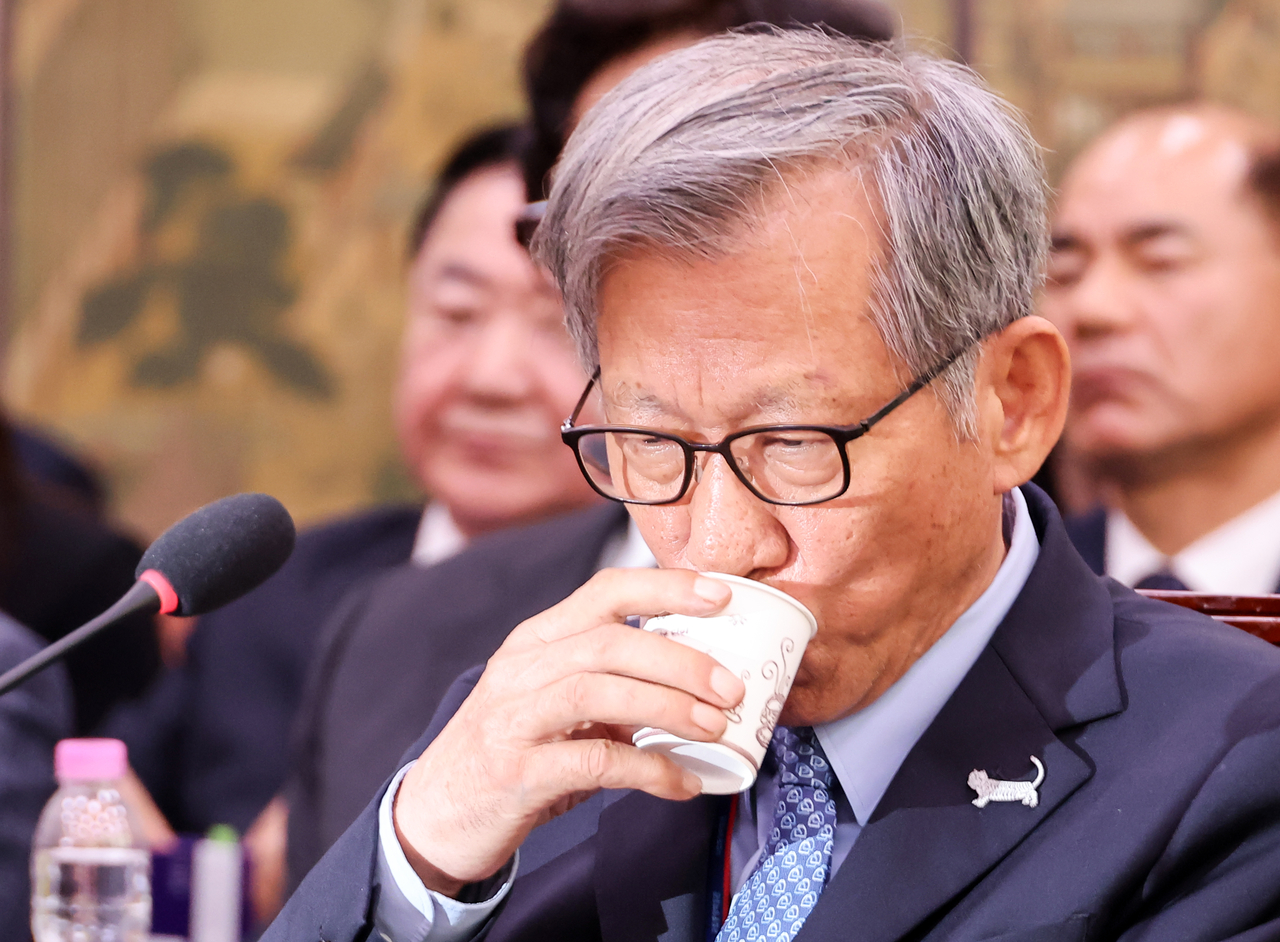
Yoo also let out a sigh as he explained why he had not disclosed the piece as his own when he first presented it. "I did not reveal that 'Ilban Siguguen' was from my personal collection because I was worried it would look like I was showing off," he said.
He added that he felt deep shame as an art historian after the work was later identified as that of Park Jung-yang, a pro-Japanese collaborator. "I am embarrassed and deeply remorseful," he said.
He went on to quote Tolstoy's "Resurrection," saying that love and pride become memories with the passage of time, but mistakes and guilt remain in the present tense. "I will take this as a lesson and work to restore the museum's honor," he said.
The title "Ilban Siguguen" carries the meaning "even a bowl of rice is entirely the grace of the nation."
The National Museum of Korea had introduced the piece at its exhibition "Our Table," held in July, as the work of independence activist Park Won-geun (1912–1950), based on the signature "Han-in Park Won-geun" written on it.
A tip from outside the museum later raised suspicions that Park Won-geun was another name used by Park Jung-yang (1874–1959), a pro-Japanese collaborator designated as having committed anti-national acts. Expert consultation confirmed the calligraphy was indeed Park Jung-yang's work.
Yoo purchased the piece at an online auction in 2019, where it was listed as the work of "Park Deok-won," described as a member of a Joseon diplomatic mission to Japan. The starting bid was 10,000 won ($7) and the final sale price was 50,000 won.
'Failing to disclose my mistake was a grave error'
At the audit, Yoo said the deep trust the public had placed in the museum and the value built through the efforts of its staff had "collapsed in an instant due to my grave negligence." He added that no academic rationale or explanation could serve as an excuse in the face of the public's disappointment. "This is a serious personal failing," he said.
He went on to say the authentication error had "deeply wounded the honor of the independence movement and the hearts of the bereaved family," and apologized to independence activist Park Won-geun and his family.
Addressing museum staff, Yoo said he was "deeply sorry and apologetic" for drawing public criticism through a controversy that stemmed from his personal collection.
He also said that when the museum announced the removal of the exhibit and the results of its verification, he had issued a public apology but had not openly stated that the piece was from his own personal collection. "Failing to publicly disclose my mistake as an art historian is a grave error and a serious lapse on my part. I once again apologize to all those who have been disappointed," he said.
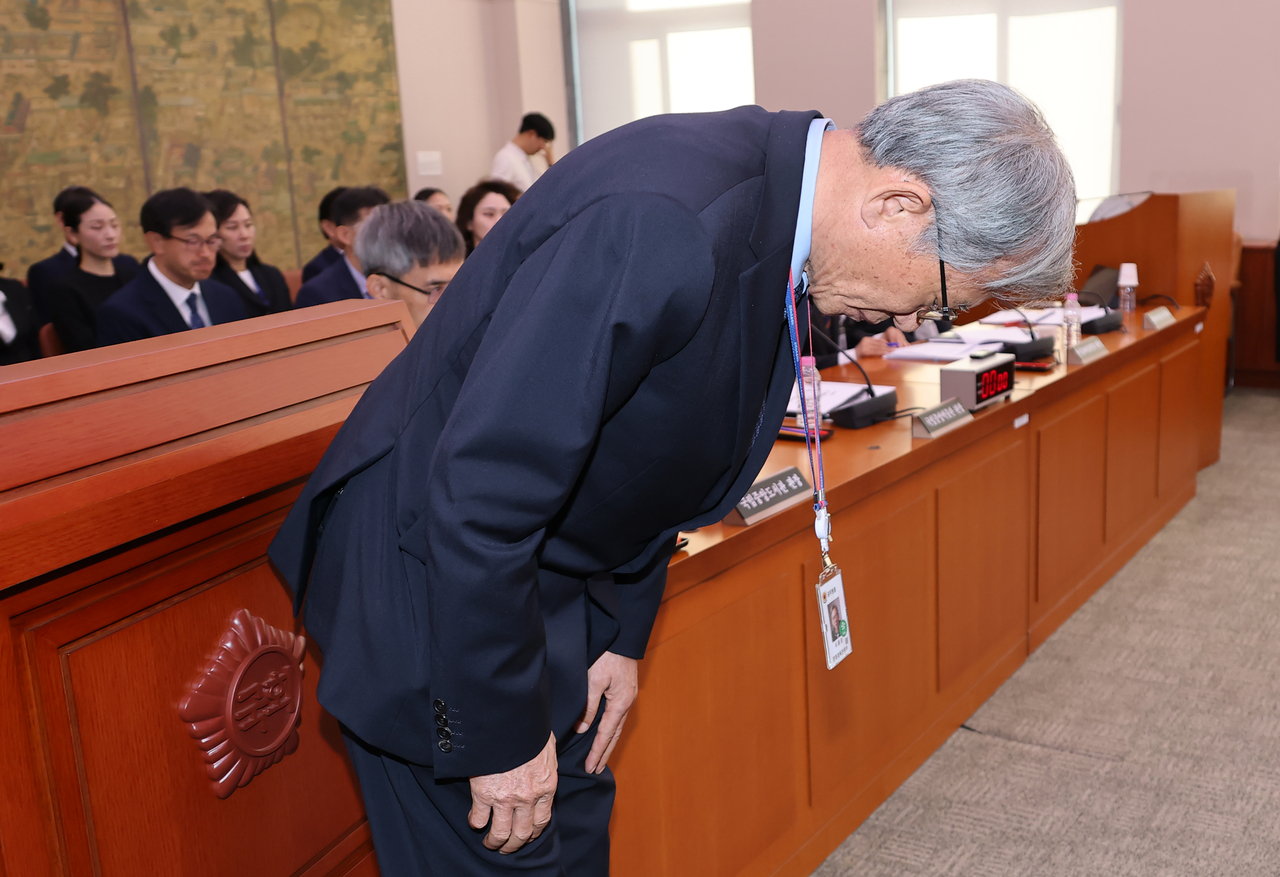
Yoo bowed his head twice while reading his statement of apology.
The museum and Yoo had previously apologized on four separate occasions, acknowledging shortcomings in the verification of the exhibited work, but had not disclosed that the piece came from Yoo's personal collection.
Meanwhile, Park Jung-yang served during the Japanese colonial period as a member of the Central Advisory Council, governor of Hwanghae Province, governor of North Chungcheong Province, and as an imperially appointed member of the Japanese Imperial Diet's House of Peers. He is also known to have participated in the suppression of the March 1 Independence Movement of 1919.
The Encyclopedia of Korean Culture, operated by the Academy of Korean Studies, notes that according to the 1935 edition of "A Register of Meritorious Persons in Joseon," Park Jung-yang was regarded as one of the greatest contributors to Japan's 25 years of colonial rule over Korea.
yul@heraldcorp.com