Rate concerns, AI profitability doubts cited behind market correction
Tax breaks eyed for rental apartment sales to LH, other public bodies
Sovereign wealth fund cooperation discussed with Saudi Arabia, Singapore
Deputy PM completes 25 official engagements on first multilateral trip
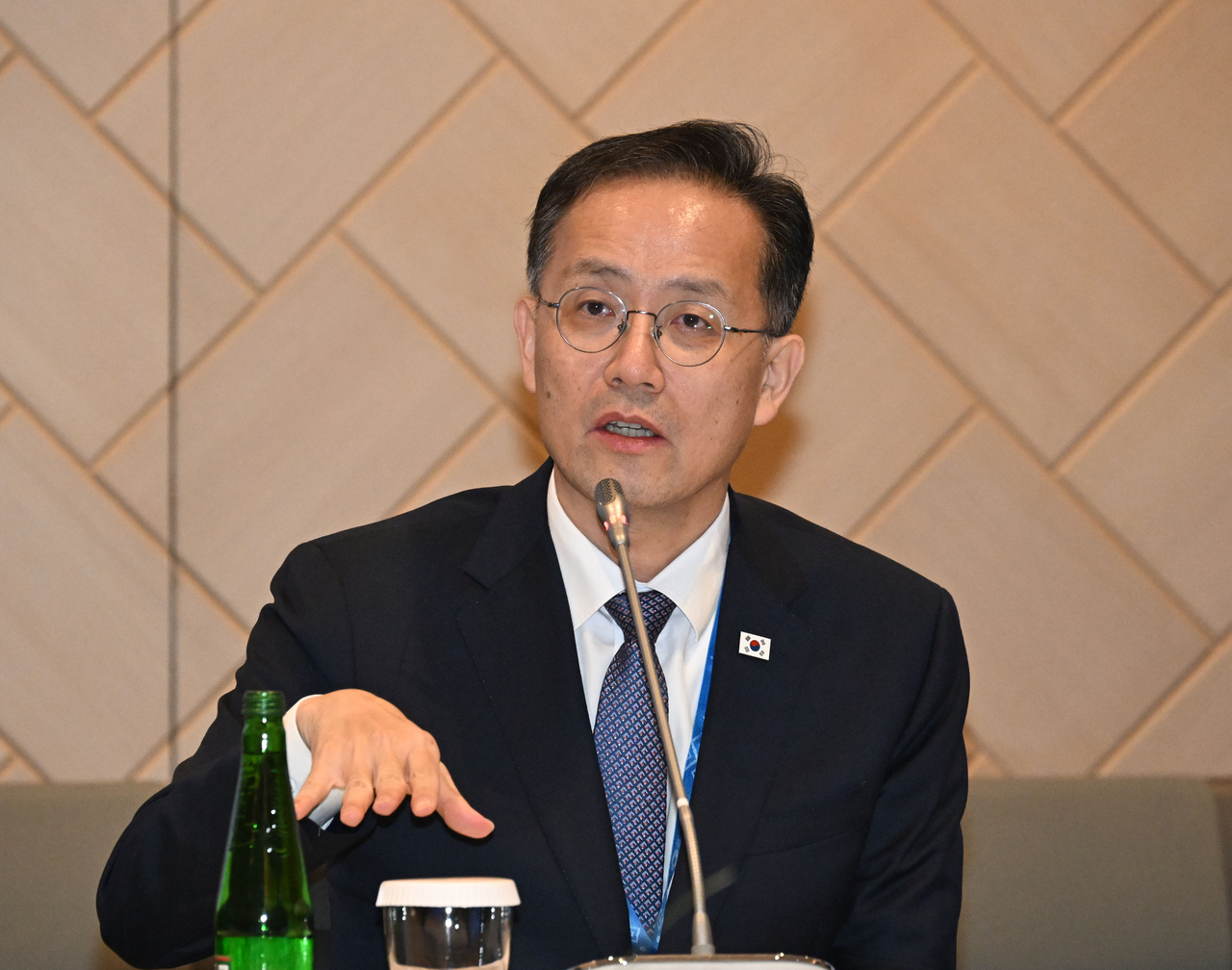
Deputy Prime Minister and Finance Minister Lee Hyung-il has left open the possibility of activating the stock market stabilization fund and temporarily suspending short selling in response to heightened market volatility. While he said specific measures would depend on market conditions, he indicated the government stands ready to act at the right moment if needed.
Speaking at a press briefing at the Queen Sirikit National Convention Center in Bangkok on Friday (local time), Lee was asked whether the government might activate the stabilization fund or halt short selling if volatility worsened. "We are continuously monitoring market conditions and are prepared to deploy the market stabilization measures at our disposal if necessary," he said.
He added that disclosing specific steps in advance could undermine their effectiveness. "What measures we take will depend on the situation, and announcing them ahead of time could reduce their impact," he said. "We will communicate at the most appropriate time from a market management standpoint."
Lee identified rising global interest rates, questions over the profitability of AI and semiconductor investment, and geopolitical risks in the Middle East as the main factors behind the recent market correction. He said the domestic market's heavy weighting in semiconductors had amplified volatility.
"Korea's market has an exceptionally high semiconductor weighting, so the impact has been relatively large," he said, while adding that the country's economic and market fundamentals remain solid given its large current account surplus. He also said he expects growth momentum driven by investment to eventually spread to consumption.
To strengthen stock market competitiveness, Lee said the government needs to cultivate new growth engines beyond semiconductors — including seven strategic seed industries, a Korean green transition initiative and the service sector — while continuing to improve the structure of capital markets. He also cited the productive finance ISA and the Child Independence Fund as policies that would bolster market conditions.
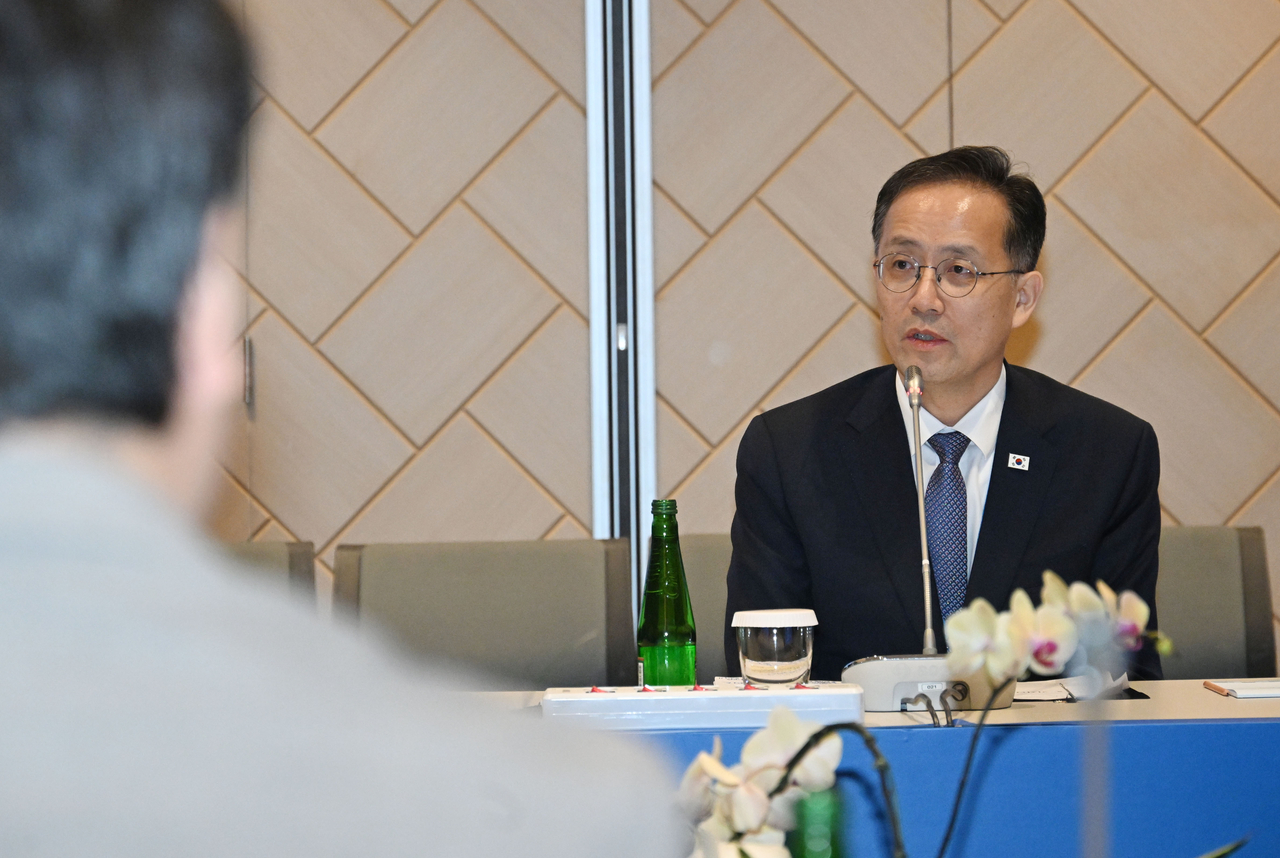
On real estate taxation, Lee said the government is considering additional capital gains tax relief for landlords who sell purchase-rental apartments in regulated zones to public-sector entities such as the Korea Land and Housing Corporation.
"If purchase-rental apartments in regulated zones are sold to the public sector for public use, we are considering additional capital gains tax reductions," he said. "There is still some work to be done in defining exactly which public-sector entities qualify, but LH is the prime example."
The government had earlier decided to exempt such apartments from the heavier capital gains tax rate only when sold by the end of 2027 in principle. Lee cited sluggish transactions and tenant anxiety over jeonse and monthly rent as the reasons behind the review of further relief.
On the real estate tax reform package awaiting review by the National Assembly's Finance and Economy Planning Committee tax subcommittee next month, Lee said the government is open to reasonable input. "If constructive opinions are offered, we are fully prepared to consider them," he said.
Lee reaffirmed that a decision on virtual asset taxation would follow additional rounds of public consultation. "We are still gathering opinions through our channels," he said. "We are currently in a listening phase to consolidate views before making a judgment." He did not indicate whether a tax deferral or other specific direction was under consideration.
Lee also said the government would maintain the petroleum product price ceiling system in light of Middle East tensions and volatility in global oil prices. On the planned sovereign wealth fund, he said he had discussed potential cooperation with the finance ministers of Saudi Arabia and Singapore and received positive responses. Once the relevant legislation passes, the government plans to explore investment cooperation frameworks with overseas sovereign wealth funds both at home and abroad.
Lee attended the G20 finance ministers' meeting and the IMF-World Bank Annual Meetings in Bangkok from Thursday through Saturday, marking his first multilateral diplomatic engagement since taking office. Over three days, he completed 25 official engagements — five multilateral meetings, 19 bilateral talks and one foreign media interview.
y2k@heraldcorp.com