International surcharge reaches level 27, highest since June
Jet fuel averages $173.89 per barrel, up 9.7 percent from previous period
Record quarterly sales driven by inbound tourism, semiconductor cargo
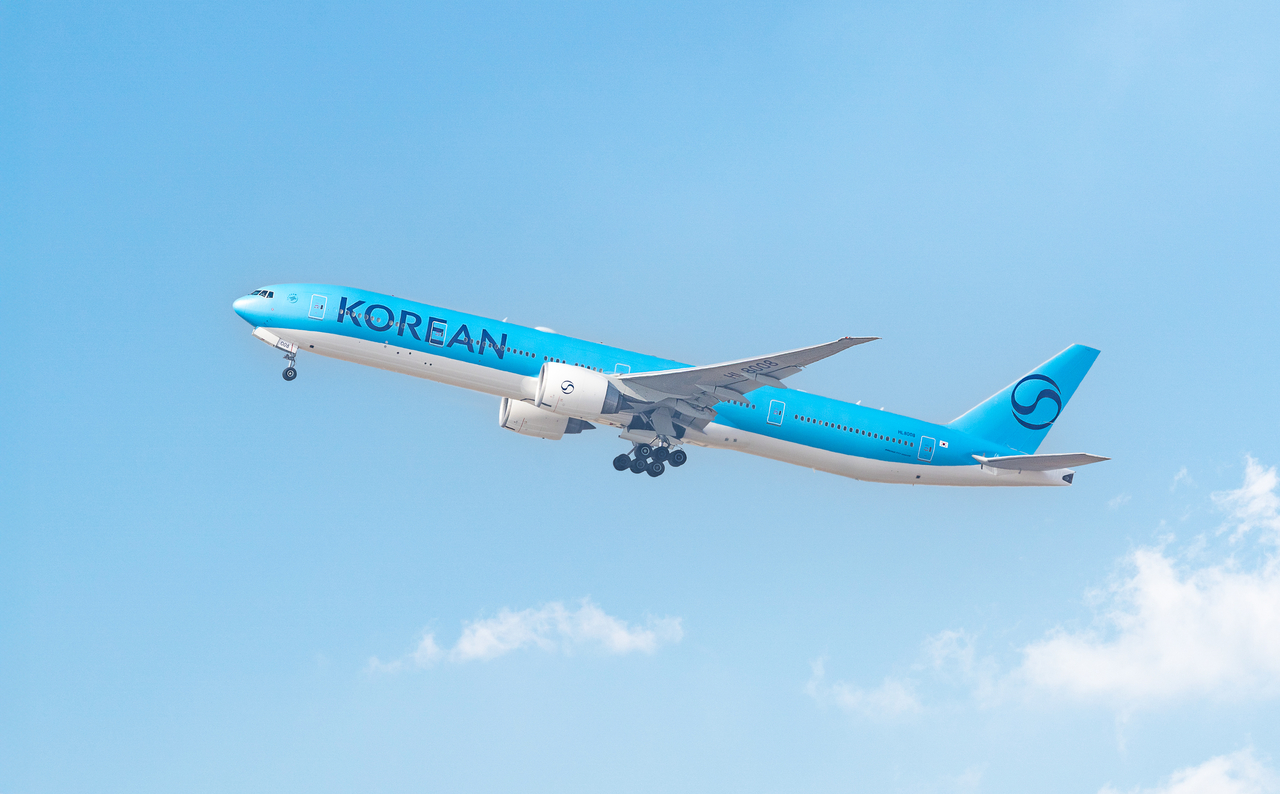
Korean Air said Friday it will set the fuel surcharge for international flights departing South Korea in November at level 27, four levels higher than October. The surcharge has risen for three consecutive months since September and is now at its highest level since June.
On a one-way basis, the surcharge ranges from a minimum of 55,600 won ($41) to a maximum of 408,100 won. Compared with October's range of 49,000 won to 362,600 won, the minimum rose by 6,600 won (13.5 percent) and the maximum by 45,500 won (12.5 percent).
Surcharges on the longest routes — to New York, Dallas, Boston, Chicago and Washington — have exceeded 400,000 won one-way. By route, the Incheon–Osaka and Incheon–Beijing corridors are set at 76,000 won, Incheon–Bangkok and Incheon–Singapore at 185,800 won, and Incheon–London, Incheon–Paris and Incheon–Los Angeles at 370,100 won, with most routes seeing increases of 12 to 15 percent.
The surcharge is calculated based on the average Singapore jet fuel price (MOPS) from the 16th of the preceding month through the 15th of the current month. The average price for the November calculation period — Sept. 16 through Thursday — came to $173.89 per barrel, up 9.7 percent from the $158.57 recorded during the October calculation period (Aug. 16 to Sept. 15). On a per-gallon basis, the price rose from 377.54 cents to 414.03 cents.
The surcharge system is divided into 33 levels. After hitting the maximum level 33 in May, it fell to level 27 in June, level 19 in July and level 14 in August, before climbing back to level 21 in September and level 23 in October, reaching level 27 for November.
Despite rising fuel costs, Korean Air posted strong earnings. In a regulatory filing Thursday, the airline said its preliminary standalone sales for the third quarter reached 5.04 trillion won, up 26 percent from a year earlier and a record high on a quarterly basis. Operating profit rose 12 percent to 421.2 billion won, while net profit for the period surged to 929.7 billion won, boosted by a falling won-dollar exchange rate.
In the passenger segment, inbound demand to South Korea and transit traffic through Incheon Airport increased, while outbound demand from Korea softened somewhat due to fuel surcharge costs and a weaker won. In the cargo segment, high-value freight tied to AI and semiconductors drove growth.
Korean Air expects fuel cost pressures to persist in the fourth quarter as the conflict in the Middle East drags on. The airline plans to manage passenger capacity by targeting inbound and transit demand, while focusing cargo capacity on AI and semiconductor shipments ahead of the fourth-quarter peak season.
eyre@heraldcorp.com