Cheongdam Le El rental unit carries deposit of 1.17 billion won
Long-term jeonse prices rise in step with surging market rents
Nearly 25% of contracts go unsigned despite 69-to-1 competition
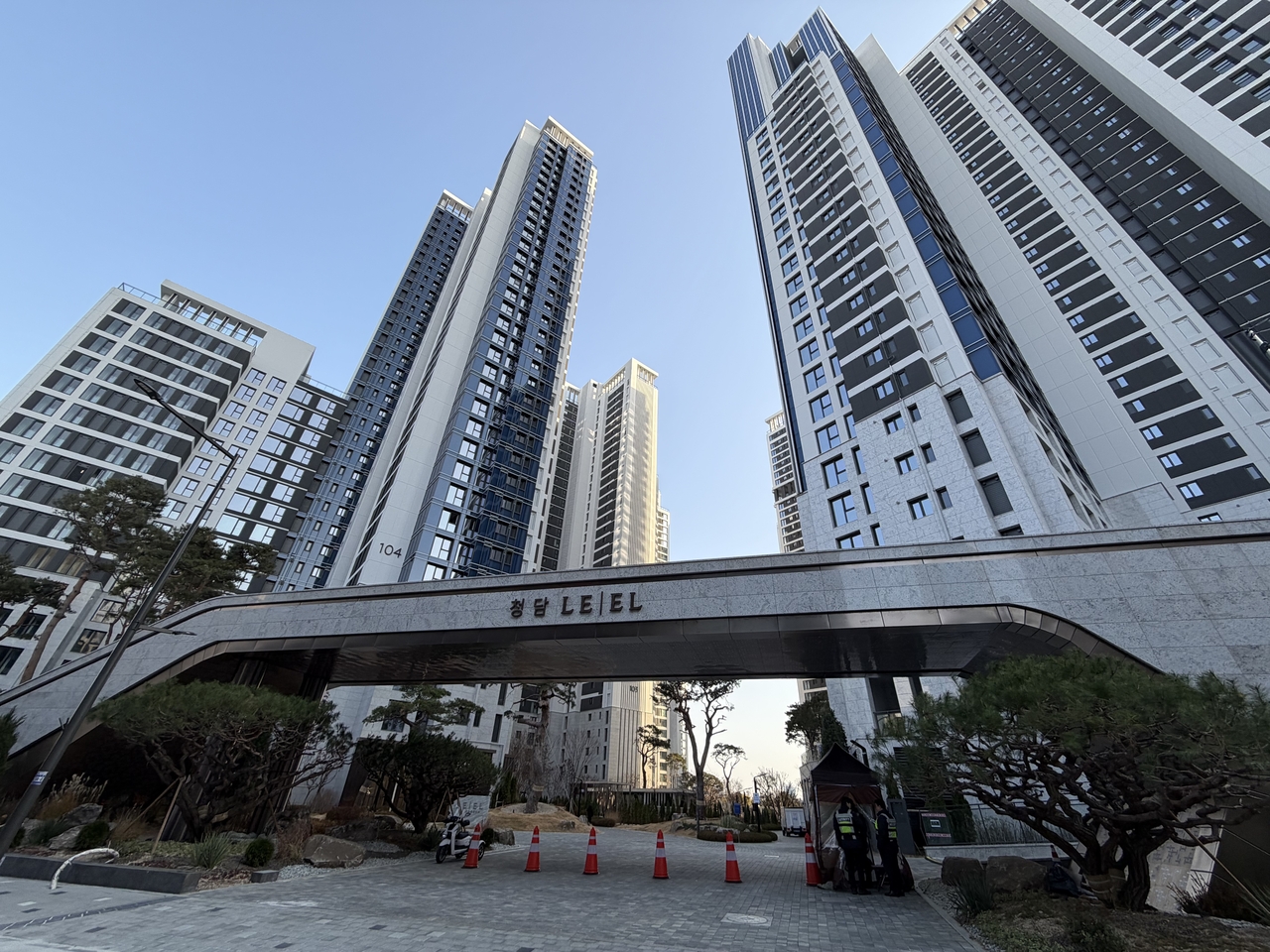
I was selected as a document review candidate for Cheongdam Le El in the eighth round. When it comes down to it, looking at the down payment and the balance, I think the interest alone will run about 3.5 million won a month — it feels like I'm stretching every last resource I have. I'm wondering whether this is really the right call and thinking about walking away.
— Newly married applicant A, long-term jeonse housing (Mirinaezip) applicant
[The Herald Business = Kim Hee-ryang] Some applicants selected for Seoul's newlywed-only rental housing program, known as Mirinaezip (long-term jeonse housing type 2), are walking away from their contracts because of the deposit burden. Although the program was designed to ease housing costs by offering units below market price, surging jeonse prices across the city have pushed Mirinaezip deposits up in tandem.
According to the Seoul Housing & Communities Corporation (SH), 89 of 364 contracts — about 24.5 percent — went unsigned in the sixth round of Mirinaezip, whose winners were announced in March. Under the program's rules, if a selected applicant declines to sign or no eligible candidate exists, the opportunity passes to the next person on the waiting list.
That means roughly one in four contracts fell through, a striking contrast to the program's fierce subscription competition rate. The sixth round, which accepted applications in December last year, drew 27,874 subscriptions for 400 units — including alternate candidates — recording an average competition rate of 69.7 to 1.
The higher the deposit, the more likely applicants were to walk away. Among the 59 units priced above 800 million won, 21 went unsigned, giving that tier the highest non-contract rate at 35.6 percent. Twelve of 36 units at Jamsil Le El in Songpa-gu — 59-square-meter exclusive use area units with a deposit of 842.4 million won — were left unsigned, and 6 of 18 units at Maple Zi in Seocho-gu (deposit: 819 million won) also went uncontracted. Non-contract rates for the remaining price tiers were, in order: 24.6 percent for units priced above 400 million won up to 600 million won, 21.4 percent for units at 400 million won or below, and 20 percent for units priced above 600 million won up to 800 million won.
Mirinaezip was introduced to allow long-term residency in apartments in prime Seoul neighborhoods — including Gangnam and Seocho — at below-market prices. Units are offered at up to 80 percent of market value, but as jeonse prices have surged, deposits for Gangnam-area Mirinaezip units have in some cases crossed the 1 billion won mark.
That has left many newlywed couples who made it through the selection process wrestling with how to come up with the deposit. Because Mirinaezip carries an asset ceiling of 662 million won, applicants whose required deposit exceeds that threshold must turn to loans to cover the gap.
The Mirinaezip unit inside the Cheongdam Le El complex — a 59-square-meter exclusive use area apartment — carries a jeonse deposit of 1.17 billion won, requiring a down payment of 117 million won at signing and a balance of 1.05 billion won upon move-in. Under a deferred-payment scheme the Seoul Metropolitan Government introduced in April, the immediate deposit requirement drops to 819 million won — 70 percent of the total — but applicants must then pay an average of 800,000 won a month in interest on the deferred portion at a rate of 2.73 percent annually. Even with that option, residents in effect face a deposit of around 800 million won plus monthly housing costs approaching 1 million won, including maintenance fees.
A newlywed couple, identified as couple B, who applied for a Mirinaezip unit requiring a deposit in the 800 million won range, said they have 600 million won of their own but must borrow the rest. "Even for a couple earning 10 million won a month, it's tight once you factor in interest, maintenance fees and the deposit increases that come every two years," the applicant said. Another newlywed, identified as couple C, who was selected as a document submission candidate for a Gangnam-area rental unit, said they applied because they wanted to raise children in the Seocho school district but hesitated when it came time to submit the paperwork. "With the same amount of money, we could buy a place on the outskirts instead of going with long-term jeonse — we haven't made up our minds yet," the applicant said.
In the eighth round of Mirinaezip, for which subscriptions were accepted last month, deposits exceeded 1 billion won at roughly 90 units across seven complexes, including Raemian Daechi Palace (59 square meters, 1.17 billion won) and Raemian One Pentas (59 square meters, 1.15 billion won). While the program still offers access to prime locations at below-market rates, those deposits exceed the average jeonse price for apartments in Seoul's Gangnam area — 832.7 million won across 11 districts, according to KB real estate data. Industry observers expect the number of rental units with deposits above 1 billion won to keep rising, given the upward trend in jeonse prices and strong demand for newly built apartments.
Policy-backed loans offer little relief for applicants facing high deposits. The government's Buttimok jeonse loan for newlyweds who do not own a home requires the lease deposit to be 400 million won or less in the greater Seoul area, making it unavailable for most Mirinaezip units. As a result, the vast majority of applicants must rely on general bank loans. The financing difficulty has already produced shortfalls: the Raemian Daechi Palace 59-square-meter unit included in the eighth round's announcement — deposit 1.17 billion won — drew only two applicants for five units, falling short even before the document review stage.
The Seoul Metropolitan Government is reviewing a plan to link long-term jeonse deposits to applicants' income levels in order to ease the burden on prospective tenants. Some rental housing programs, including the newlywed and newborn purchase-rental housing scheme, already calculate rent on a sliding scale based on the applicant's average monthly income bracket.
"As concerns about deposit burdens have grown with the recent rise in home prices and jeonse and monthly rent levels, we will continue to monitor feedback from the field and put together any necessary remedies," a Seoul Metropolitan Government official said.
hope@heraldcorp.com