2026 Idea Festival held at Namyang R&D Center
Six teams compete with ideas ranging from adaptive car seats to motion-sickness tech
Researchers spent four months building working prototypes
Past winners have made it into Santa Fe, Tucson production models
A car seat that reshapes itself to fit a growing child. Cabin lighting designed to ease motion sickness. Smart glasses that help visually impaired pedestrians navigate safely. Ideas that might seem far removed from the automotive world took physical form Monday at the hands of Hyundai Motor and Kia researchers — each one rooted not in grand technological ambition but in the kind of everyday frustration almost anyone can relate to.
The six prototypes made their debut at the 2026 Idea Festival, held at Hyundai Motor and Kia's Namyang R&D Center in Hwaseong, Gyeonggi Province. Researchers handled every stage themselves, from concept and design through to fabrication.
Among the most eye-catching entries was the "Pin Print Seat," a child car seat engineered to reconfigure itself around a child's body. Car seats are a safety essential for fast-growing children, but finding one that fits properly is a persistent headache for parents. The Pin Print Seat was conceived precisely to address that frustration, adjusting its shape to match the child's physique.
Another team tackled one of the most common complaints among vehicle passengers: motion sickness. Their entry, straightforwardly named "Motion Sickness Zero," uses the vehicle's ambient lighting and rear-seat displays to reduce the sensation of nausea. The idea goes beyond improving ride comfort, aiming to address passenger discomfort through a combination of in-cabin technologies.
Parents of young children were also a focus. "Neulbom" is an AI-powered system that monitors the condition of infants and toddlers, designed to ease the burden on caregivers who must constantly keep an eye on small children.
One entry looked beyond the vehicle itself. "Eye-Bridge" is a pair of smart glasses intended to support safe walking for visually impaired people — extending the idea of freedom of movement from drivers to pedestrians.
Two other ideas centered on cargo space and the daily lives of drivers. The "Trifold Luggage Board" was designed to make trunk space more efficient, while the "Hero Recorder" captures a commercial vehicle driver's workday in a one-minute video — a new way of documenting the lives of drivers who spend most of their day on the road.
What set Monday's entries apart was that they were not mere proposals. Hyundai Motor and Kia opened a company-wide call for innovative ideas in April, then selected six finalist teams through a preliminary screening.
Each team received production funding and a dedicated workspace. For roughly four months, the researchers poured themselves into turning concepts into working prototypes — employees who normally focus on automotive research and development stepping outside their usual roles to test new possibilities.
The final round had each team present and demonstrate its prototype before a panel of five R&D judges and 100 employees. Judges evaluated entries on originality, technical feasibility, real-world viability, customer focus and future potential. Winning teams receive prize money along with opportunities to visit overseas trade fairs and production facilities.
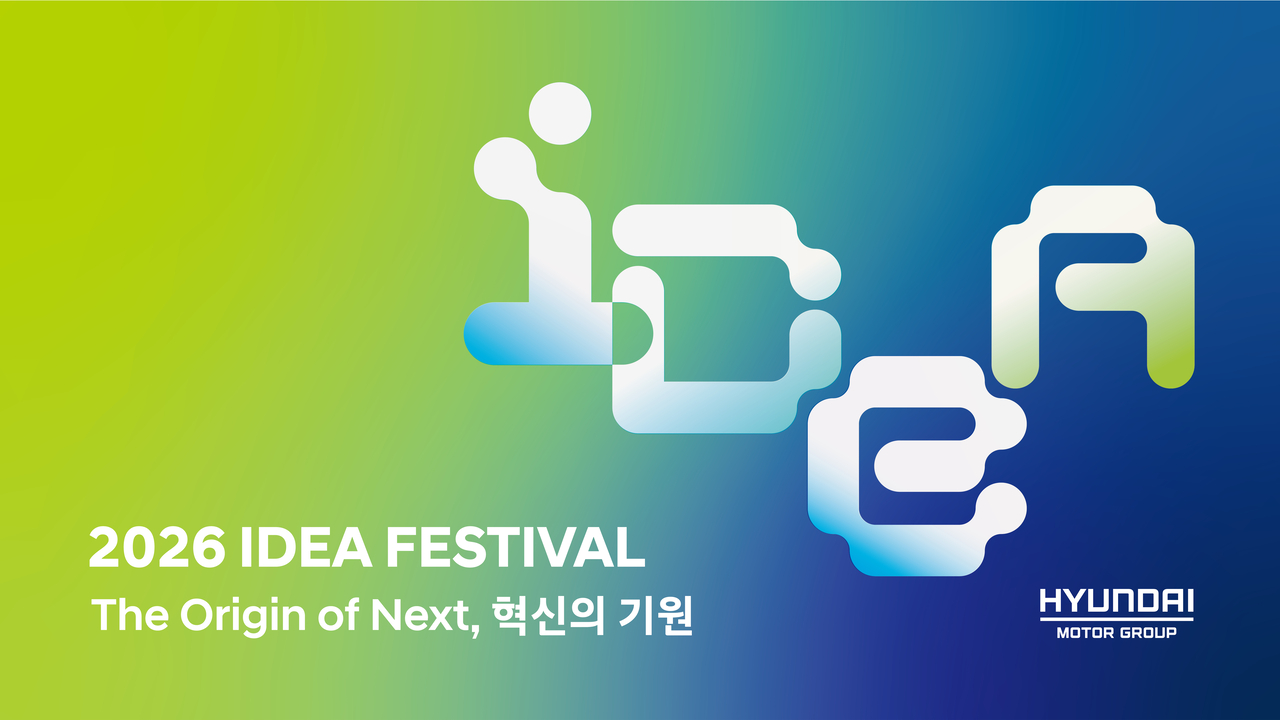
Now in its 17th edition, the Idea Festival is an in-house R&D competition Hyundai Motor and Kia has held since 2010. This year's event carried special significance, coinciding with the 30th anniversary of the Namyang R&D Center's completion, and was held under the theme "Origin of Innovation."
The competition has a track record of turning ideas into production reality.
The "Multi-Function Console," which took the top prize in 2021, evolved into the bidirectional multi-console fitted to the Santa Fe, allowing both front and rear passengers to access storage space. Last year's top winner, "Trailer Towing Performance Enhancement Software," was incorporated into the fifth-generation Tucson sold in North America and Europe.
"Daisy," which won the grand prize in 2023, is a technology that helps visually impaired people board buses. A pilot test was conducted in collaboration with LG Uplus, making it an example of automotive R&D expanding into technology that improves mobility for people with disabilities.
This year also saw a new initiative aimed at spurring software innovation. Hyundai Motor and Kia held their first in-house hackathon, the "24H Code Race," centered on developing apps for the company's vehicle software platform "Pleos."
The overnight hackathon, held over two days last August, awarded its grand prize to "TaleSync," an audio app that adapts a children's story in real time based on the child's reactions. Hyundai Motor and Kia plan to review whether ideas from the competition, including TaleSync, could be integrated into actual vehicles.
"The Idea Festival, now in its 16th year, has been the starting point from which Hyundai Motor and Kia has been able to keep innovating in mobility," said Lee Jae-gyu, executive vice president of vehicle development at Hyundai Motor and Kia. "We will continue to build innovation into our R&D culture so we can lead the future mobility market."
kwater@heraldcorp.com