'Three cables snapped, 182 corroded — yet inspections kept rating it good'
'Has Mayor Oh Se-hoon already forgotten the lesson of Seosomun overpass?'
Allegations have emerged that the Seoul Metropolitan Government concealed the corrosion and damage to external tendons — steel cables — on the Jeongneungcheon overpass, a bridge used by more than 100,000 vehicles a day, by applying its own unofficial rating system and repeatedly classifying the structure as B-rated in official safety inspections.
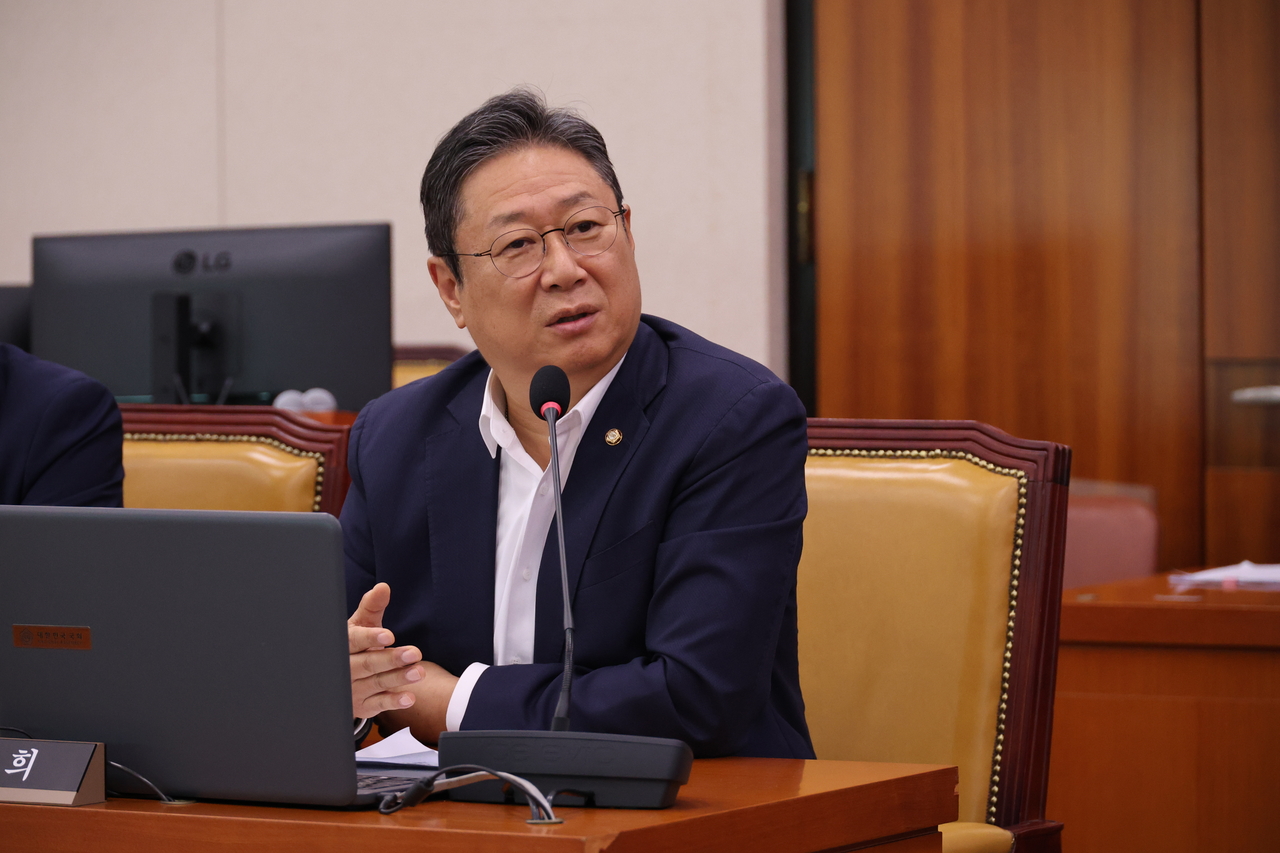
Rep. Hwang Hee of the Democratic Party of Korea, a member of the National Assembly's Land and Transportation Committee, said Monday that an analysis of documents obtained from the Seoul Metropolitan Government and the Korea Infrastructure Safety Corporation confirmed that the city had downgraded and mismanaged safety ratings on the Jeongneungcheon overpass even as cable failures recurred.
The overpass has experienced three tendon fractures — in 2016, 2024 and 2026. Tendons are steel cables that run through concrete bridge decks, keeping them under tension so they can bear the weight of traffic. Experts warn that a fracture in a tendon, a critical structural component, could trigger a catastrophic collapse similar to the Seosomun overpass disaster.
According to Hwang, the failures continued despite the city's inspections. After the first fracture in 2016, the city replaced 32 damaged cables, sealed water leaks and introduced quarterly inspections as preventive measures — yet cables were found snapped again in 2024 and 2026.
"The problem is that the city's detailed safety inspections and comprehensive safety diagnoses failed to detect the danger in advance," Hwang said. The city awarded the bridge a B rating — indicating no critical defects — in both a 2023 comprehensive safety diagnosis and a 2025 detailed safety inspection. Yet a tendon snapped just six months after the 2023 diagnosis concluded, in September 2024, and another broke after the 2025 inspection, in 2026, raising serious doubts about the reliability of the current inspection system.
Meanwhile, a full survey of all 300 tendons conducted after the 2024 fracture found 25 tendons with multiple corroded and damaged strands. Under the Ministry of Land, Infrastructure and Transport's detailed guidelines for facility safety and maintenance, corrosion accompanied by cross-sectional loss in a cable constitutes a "critical structural defect" warranting a D rating. The city, however, classified these tendons under its own internal standard as "C3," a designation that critics say made severe defects appear to be only moderate damage, effectively concealing their true severity.
Replacement work has been even slower. Not a single one of the 25 damaged cables identified in the full survey has been replaced. Despite meeting the national standard for a D rating, the cables — still carrying 100,000 vehicles a day — have been left in place, with replacement deferred until 2027. The city's overall response has also drawn criticism.
"Issuing 'good' ratings three times after tendons have snapped, and leaving 25 critically damaged cables untouched for two years, represents a total failure of Seoul's safety management system," Hwang said. "This is a clear case of administrative negligence caused by Seoul Mayor Oh Se-hoon's lack of safety awareness and delayed safety budget allocation. To prevent a repeat of the Seosomun overpass tragedy, all tendons on the Jeongneungcheon overpass must be reassessed in accordance with national guidelines, and the results along with a concrete replacement schedule must be disclosed transparently to Seoul citizens," he urged.
bigroot@heraldcorp.com