The Goryeo Cheontae International Seon Tea Research and Preservation Society holds the Northeast Asian Tea History and Culture Festival in Suncheon.
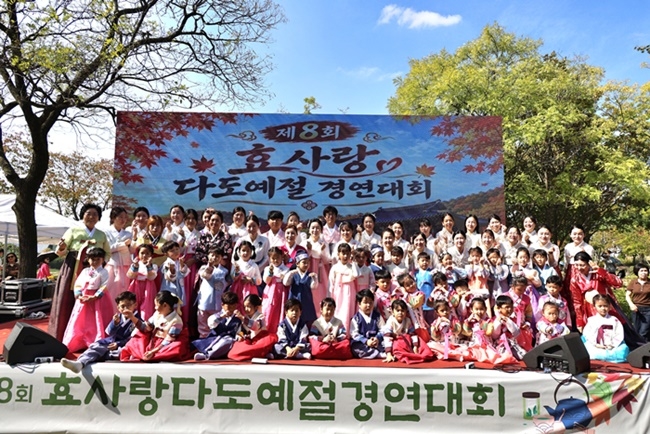
A festival bringing together the tea histories, cultures and traditional tea-making practices of Korea, China and Japan was held in Suncheon, South Jeolla Province.
The Goryeo Cheontae International Seon Tea Research and Preservation Society hosted the 8th Northeast Asian 2,000 Years of Tea History and Culture Festival from Friday through Sunday at Jukho Hall of Suncheon National University and a special outdoor stage at Suncheonman National Garden's Myeongwonjeong pavilion.
The event was supported by the South Jeolla-Gwangju integrated special city and Suncheon city, and organized in collaboration with Suncheon National University, China's Zhejiang University, Zhejiang Shuren University, Japan's Kobe Design University, Kyoto University of Foreign Studies and the Korea Tea Central Council.
This year's festival centered on the theme "A Thousand Years of Tea and Communal Labor on Jogyesan."
The tea history of the Jogyesan area in Suncheon traces back more than a millennium to the monk Uicheon, the national preceptor who founded the Goryeo Cheontae order. Its legacy survives in numerous Goryeo and Joseon texts, including the "Daegakguksa Oejip," "Dongguk Isanggukjip," "Sejong Sillok Jiriji" and "Sinjeung Dongguk Yeoji Seungnam."
"Cha-ullyeok" refers to the tradition of cooperative labor in which village communities gathered to pick tea leaves and make tea together.
The festival reexamined this millennium-old tea-making tradition within the broader sweep of 2,000 years of Northeast Asian tea culture, welcoming residents and tourists with a diverse program spanning academic symposiums, performances, exhibitions and hands-on experiences.
The festival opened Friday at 1 p.m. at Jukho Hall of Suncheon National University's Natural Products and New Drug Research Institute with the 6th Korea-China-Japan International Tea-Making Symposium and Cultural Exchange.
The only international academic event dedicated to tea-making, this year's symposium was organized around the theme "East Asia Connected by Tea: Encounters of Tradition, Science and Culture, and New Values."
On Saturday, the 8th Filial Piety and Tea Ceremony Etiquette Contest was held, with participants competing in the art of setting a tea table and preparing and serving tea, reflecting on the values of respect and filial piety embodied in tea culture.
At 3 p.m. that day, the 8th "Ichajeocha" Concert took the stage — a performance blending tea and music, as its name suggests — allowing residents and tourists to enjoy the show over a cup of tea amid the autumn scenery of the national garden.
A Korea-China-Japan tea ceremony performance gave tea masters from all three countries the opportunity to demonstrate their respective tea rituals and practices, offering a rare chance to compare side by side the distinct tea ceremonies each nation developed from the same leaf.
Exhibition and hands-on programs were also on offer. A temple food exhibition showcased the culinary culture of Buddhist monastic communities as it has evolved alongside tea.
A tea flower arrangement exhibition introduced the aesthetics of floral decoration at the tea table, while a world famous tea tasting event let visitors sample renowned teas from around the globe alongside Korea's own "jakseol-cha," comparing the varied aromas and flavors of different varieties.
On Sunday, Korean, Chinese and Japanese participants joined a tea culture and tea-making history field trip, touring heritage sites in Gangjin, Jangheung and Boseong in the southern Jeolla region and experiencing firsthand the tea history and tea-making traditions that have endured there.
The Northeast Asian 2,000 Years of Tea History and Culture Festival has established Suncheon year after year as a hub for Northeast Asian tea-making cultural exchange.
Suncheon city aims to position itself as Korea's global tea-making platform, drawing on the millennium-old tea-making traditions of the Jogyesan area and its wild jakseol-cha resources.
Suncheon National University operates the Department of Global Tea Culture and Tea-Making Industry — the country's only graduate program dedicated to tea-making — training the next generation of tea-making specialists.
Jang Mi-hyang, chairwoman of the Goryeo Cheontae International Seon Tea Research and Preservation Society, said the festival was "a moment in which the spirit of Jogyesan's tea and communal labor, carried down through a thousand years, came alive again within the 2,000-year history of Northeast Asian tea." She added that the festival had helped Suncheon emerge as a central city of tea-making culture, one that comprehensively illuminates the tea-making traditions of Korea, China and Japan.
parkds@heraldcorp.com