Fatal fire and explosion cases rise from 16 to 32; ministry to run self-checks Monday through Oct. 30, followed by intensive inspections from Nov. 2; heads of 49 regional offices to visit sites in person
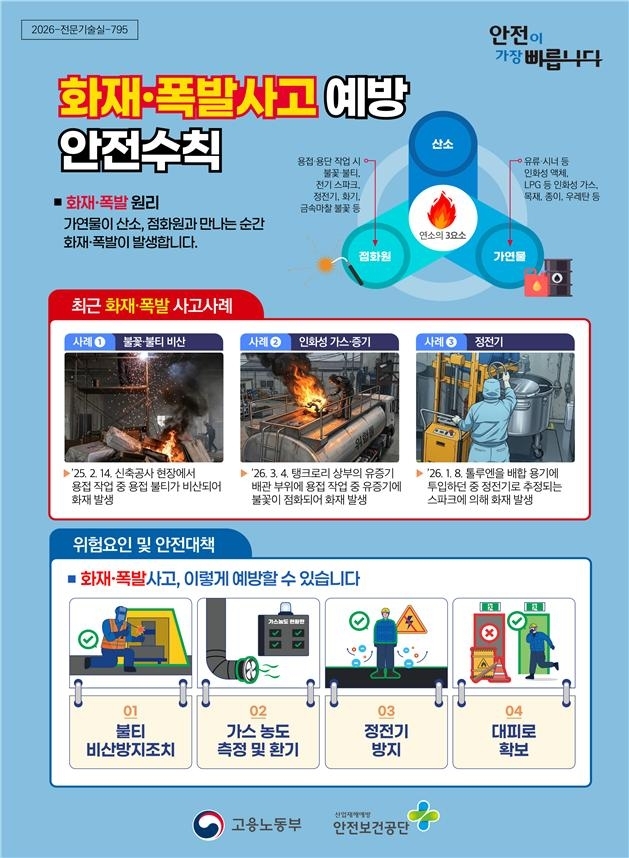
The number of workers killed in workplace fires and explosions during the first half of this year doubled compared with the same period last year, even as overall industrial accident fatalities declined. The Ministry of Employment and Labor said it will launch unannounced inspections of high-risk workplaces nationwide to prepare for the heightened fire and explosion dangers of the winter months.
According to the ministry, the total number of fatal workplace accidents subject to disaster investigation reached 253 through the second quarter of this year, down 34, or 11.8 percent, from 287 in the same period last year. Deaths from fires and explosions, however, surged 100 percent — from 16 to 32. Their share of all fatal workplace accidents more than doubled, rising from 5.6 percent to 12.6 percent.
Fire and explosion incidents are particularly dangerous because a single event can quickly turn into a mass casualty disaster. A fire at Anjeon Industrial in Daejeon in March killed 14 workers, and an explosion at Hanwha Aerospace's Daejeon plant in June claimed five more lives.
In response, the ministry will run a voluntary self-inspection period for fire- and explosion-prone workplaces from Monday through Oct. 30, followed by a two-week intensive inspection from Nov. 2 through Nov. 13 to verify compliance with key safety requirements.
The inspection will focus on five areas: preventing sparks and embers from scattering during fire-risk operations, stationing fire monitors on site, measuring gas concentrations and ensuring ventilation, suppressing and eliminating static electricity, and securing firefighting equipment and emergency evacuation routes. The emphasis will be on confirming that basic fire and explosion prevention measures are actually being followed on the shop floor.
The heads of 49 regional labor offices across the country will take part in the inspections directly, conducting unannounced visits to high-risk workplaces to assess safety management practices. The Korea Occupational Safety and Health Agency will also focus on identifying hazards during its patrol inspections and technical guidance visits.
If violations are found during the inspections, the ministry said it will immediately impose fines and order corrective action. Workplaces that fail to comply with improvement orders will face legal measures and other strict responses.
Ryu Hyeon-cheol, head of the ministry's Occupational Safety and Health Bureau, said prevention — identifying and eliminating hazards before a fire or explosion occurs — is both the best and the most powerful safety measure available. "Please use the self-inspection period to check every risk factor without exception, and make sure any deficiencies are corrected before the intensive inspection begins," he said.
fact0514@heraldcorp.com