
National Assembly agriculture and fisheries committee lawmaker Moon Geum-ju raises concern at national audit
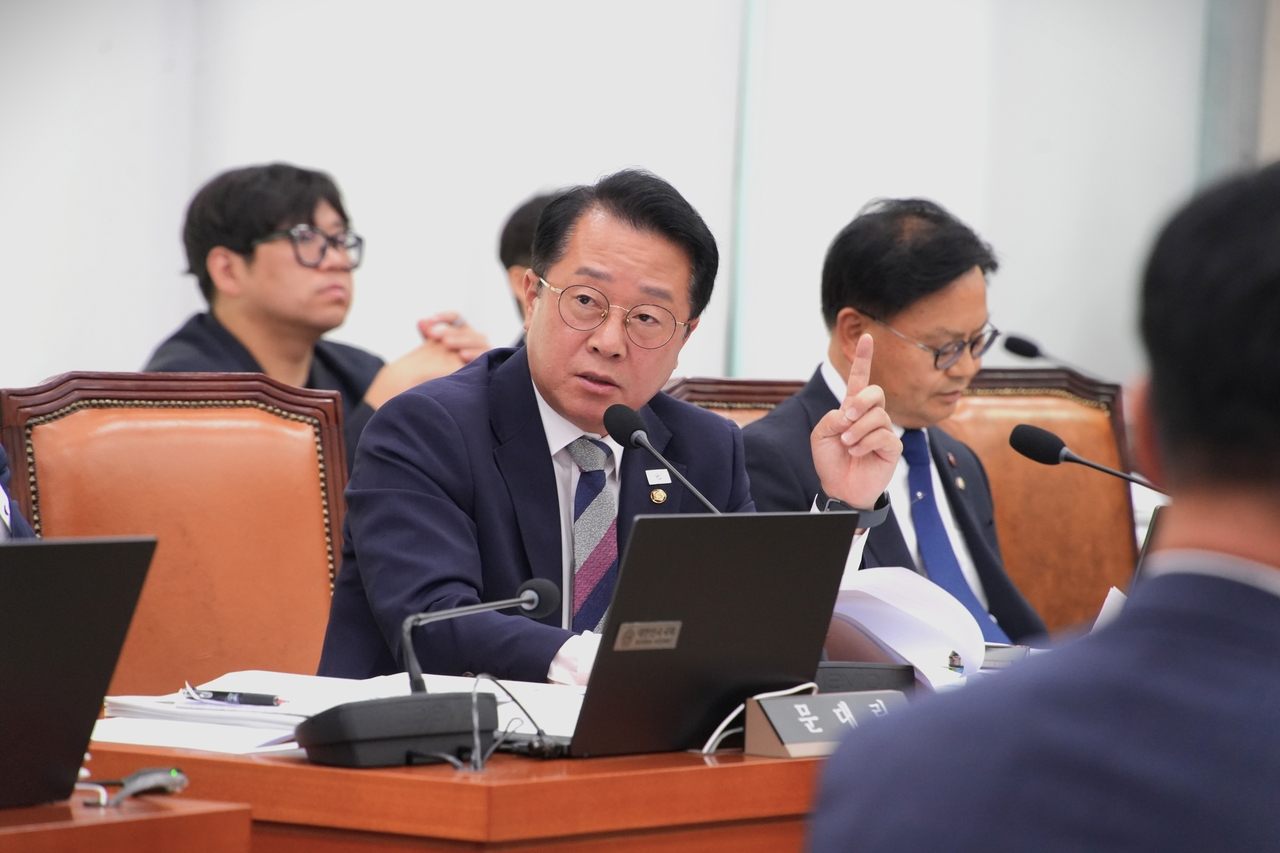
Despite a recovery in research and development funding, the number of marine and fisheries R&D projects has fallen sharply.
Moon Geum-ju, a Democratic Party of Korea lawmaker on the National Assembly's agriculture, food, rural affairs, oceans and fisheries committee representing Goheung, Boseong, Jangheung and Gangjin, said Sunday that an analysis of national audit materials submitted by the Korea Institute of Marine Science and Technology Promotion showed that while the marine and fisheries R&D budget has returned to pre-cut levels, the number of research projects has dropped 43.2 percent over three years.
According to the audit data, the number of marine and fisheries R&D projects fell every year — from 331 in 2022 to 322 in 2023, 263 in 2024 and 188 in 2025. That represents a decline of 143 projects over three years, a 43.2 percent drop compared with 2022.
The decline became pronounced after the Yoon Suk Yeol administration cut the national R&D budget in 2024. The marine and fisheries R&D budget fell 25.9 percent — by 132.6 billion won — from 511.1 billion won ($379 million) in 2023 to 378.5 billion won in 2024, and the number of projects shrank from 322 to 263 over the same period.
The 2026 marine and fisheries R&D budget has since risen to 518.1 billion won, recovering to the 2023 level before the cuts, but as of August the number of active research projects stands at 182, still well below past levels.
R&D rarely yields results from short-term investment alone; follow-on research and technology development must continue to build on existing findings. A sharp drop in research projects can hinder not only new technology development but also efforts to advance existing results and apply them in the field.
If the decline in projects continues, it could affect the retention of researchers and research capacity, making it urgent to identify new and follow-on projects and restore a stable foundation for research.
Moon said the promotion institute itself, in its submitted materials, stated that active investment is needed to restore the research ecosystem that contracted in 2024 and 2025.
Alongside the drop in research projects, the workload on research management staff has also emerged as a significant concern. As of 2026, each employee at the Korea Institute of Marine Science and Technology Promotion manages an R&D budget of 5.1 billion won — about 2.4 times the per-person figure at the Korea Institute of Planning and Evaluation for Technology in Food, Agriculture and Forestry, indicating a comparatively heavy management burden.
The institute's research management responsibilities have been expanding further. Since June, it has taken on additional management of strategic R&D projects for three government-funded research institutes: the Korea Institute of Ocean Science and Technology, the Korea Research Institute of Ships and Ocean Engineering, and the Korea Polar Research Institute.
Those projects launched this year with nine new tasks worth 33.6 billion won and are set to grow to 150 billion won by 2030. Moon said the institute has not secured dedicated staff or a separate budget for the added workload and is managing it with personnel seconded from the affiliated research institutes and its own existing budget.
With the number of projects under management growing, Moon warned that without adequate dedicated staff and budget support, the burden could intensify across the full cycle — from project planning and evaluation to execution and performance management.
"After the Yoon Suk Yeol administration's R&D budget cuts, marine and fisheries research projects fell by more than 40 percent, and while this year's budget has recovered, the number of projects still has not returned to past levels," Moon said. "Since continuity and consistency are critical in R&D, we must go beyond restoring the budget and draw up a concrete plan to actively identify new and follow-on projects to rebuild the contracted research ecosystem."
Moon added that "research management staffing and budgets must be reinforced to ensure stable performance across the full cycle from project planning and evaluation to performance management, and the causes of the decline in research projects must be carefully analyzed," stressing that "restoring the research ecosystem and strengthening management capacity must be pursued together so that the expanded marine and fisheries R&D investment translates into real technology development and research outcomes."
abc@heraldcorp.com




