
At 51, Seo Jun-o is Seoul's youngest district mayor in the ninth round of local elections — drawing on nearly three decades of political experience to lead with humility and hands-on administration. A falling tree near Madeu Station sharpened his sense of responsibility; he replies personally to staff messages and greets employees on their morning commute. Building on his predecessors' welfare, environment, nature and culture legacies, he now sets his sights on reconstruction, redevelopment and a biotech industrial complex to drive Nowon's economy forward.
One of the more notable developments among Seoul's 25 autonomous districts in the ninth round of local elections is the emergence of younger district mayors.
Seo Jun-o, 51, is the youngest district mayor in Seoul under the current administration — but age alone does not define him. He is a veteran who has spent nearly 31 years on the front lines of politics, having joined the campaign of then-Seoul City Council candidate Woo Won-shik during the first nationwide simultaneous local elections in 1995.
Since then, Seo has served as an aide to former National Assembly Speaker Woo Won-shik, chief of staff to former Nowon District Mayor Kim Sung-hwan, an administrative official at Cheong Wa Dae and a Seoul City Council member. His manner — youthful but grounded, experienced but never authoritarian — appears to stem directly from that background.
The defining thread of his tenure so far is what he calls "low-level communication": listening to residents in the field, reaching out to staff first, and working to close the distance that comes with the title of district mayor.
A crisis within a month of taking office — the falling tree near Madeu Station
The full weight of his responsibilities hit Seo barely a month after he took office.
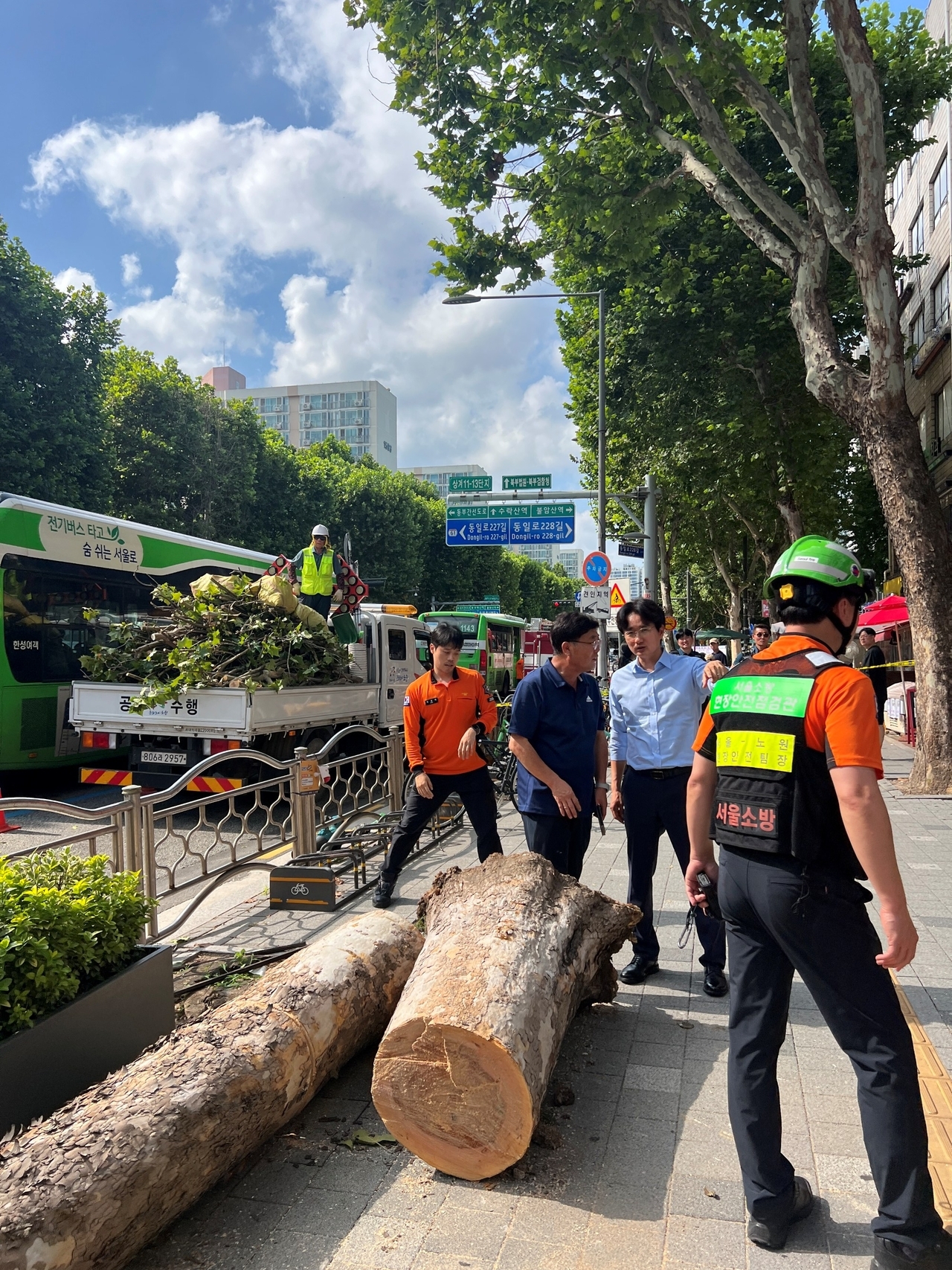
On July 30, a decades-old street tree toppled along Dongil-ro near Madeu Station in Nowon-gu. The accident occurred on a road with heavy foot and vehicle traffic. Had a passing resident or vehicle been struck, the consequences could have been fatal.
Fortunately, no one was injured. Seo arrived at the scene shortly after the incident, assessed the cleanup operation and directed follow-up measures. He personally checked on nearby residents and pledged to put preventive measures in place.
Investigators determined that the cause was trunk-base rot in an aging London plane tree. With the hazard posed by old street trees now exposed, the district launched a comprehensive inspection of tree health and risk levels — covering not only roadsides but also parks, green spaces and waterways throughout residential areas.
A single accident had become the catalyst for a broader review of the district's safety net.
Those close to Seo said the episode gave him a visceral sense of how heavy the district mayor's responsibility truly is. He reportedly told people around him that he was losing sleep over the safety issue.
"Public safety is the foremost value of governance, and governance builds trust on the foundation of residents' safety and peace of mind," he said. "We will pursue fundamental prevention through thorough inspections, while at the same time establishing a swift and accurate response system to protect the precious daily lives of our residents."
A district mayor's role does not end with managing the aftermath of an accident. It lies in identifying hazards before they materialize and keeping the administrative system running so that residents never feel unsafe in their daily lives. The Madeu Station tree incident reminded Seo of the importance of both on-the-ground administration and preventive governance.
From KakaoTalk replies to water cups — small habits that reveal a communication style
The changes Seo has introduced stand out less in grand proclamations than in everyday behavior.
When staff send him work-related messages on KakaoTalk, he replies personally. A short response — "Thank you. I will make sure it is reflected" — but one that acknowledges the effort of the person who reported and signals that their input is valued.
The atmosphere inside the district mayor's office has shifted as well. He has moved away from the practice of having a secretary prepare tea before every meeting, instead setting out water cups and a pitcher in advance so attendees can help themselves. Chairs have also been arranged so that those present can sit comfortably and take notes.
These may seem like minor changes. Yet organizational culture often shifts through small habits rather than sweeping declarations. The starting point is refusing to impose unnecessary burdens on others simply because of rank, and creating an environment where staff feel free to speak up in meetings.
It would be premature, of course, to declare that these gestures alone have transformed the organization's culture. What matters is whether the consideration shown in daily interactions carries through consistently into work directives, personnel decisions, performance reviews and policy-making.
On the 100th day — greeting employees in person
Seo's approach to communication drew renewed attention when he marked his 100th day in office.
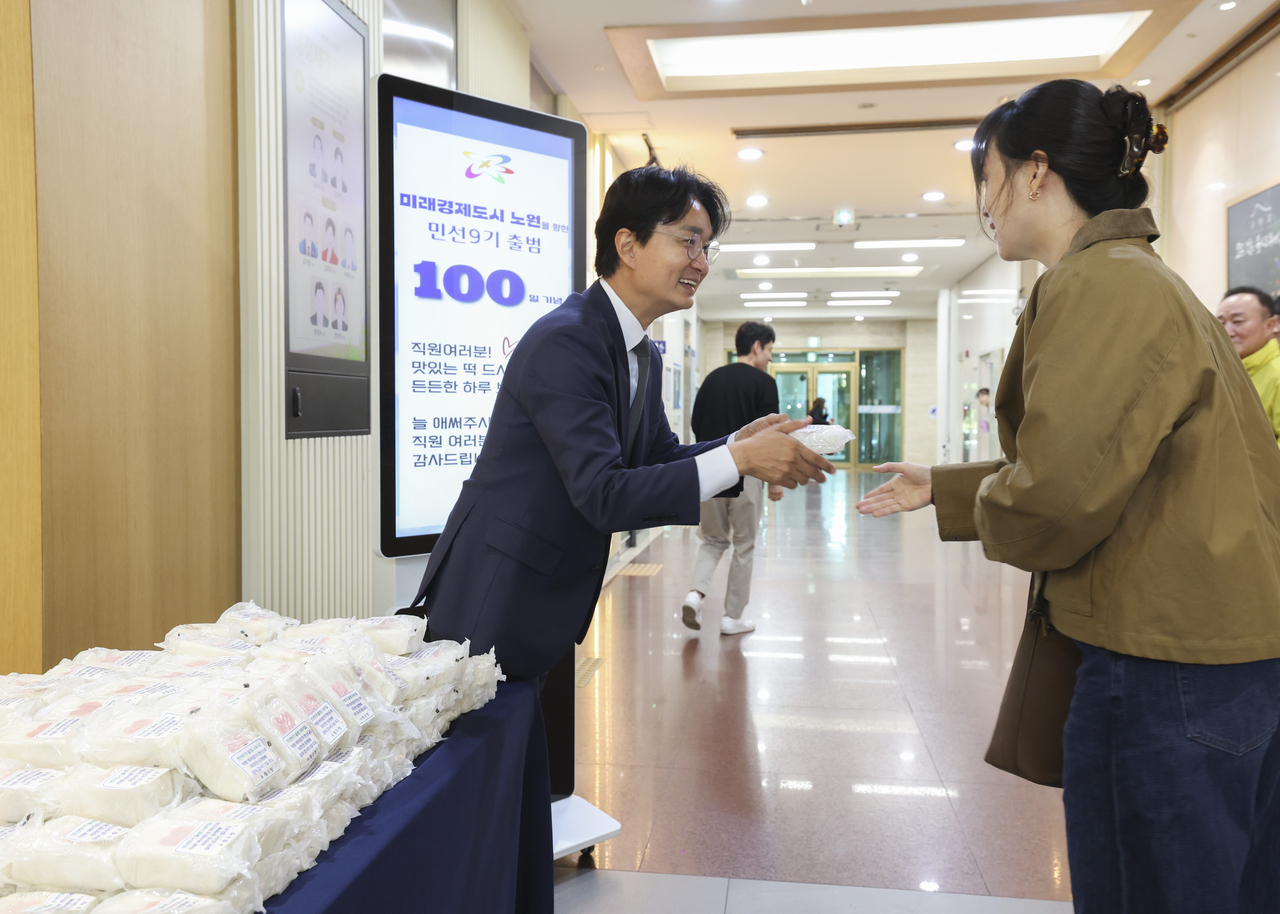
On Wednesday morning, he stood in the first-floor lobby of the district office to welcome employees as they arrived for work. Reflecting on the spirit with which he had taken office, he offered words of thanks to each staff member and expressed appreciation for their efforts over the previous 100 days.
Employees caught off guard by the unexpected greeting initially seemed unsure how to react, but soon responded with warm smiles. Some exchanged high-fives with him. What had been a routine morning commute turned naturally into a moment of laughter and greeting.
Staff also received a personal letter of thanks signed by the district mayor, along with small portions of white rice cake. Rather than using the 100-day milestone to promote his own achievements, Seo chose to mark it by recognizing the hard work of the people around him.
The gesture reads as an attempt to treat employees not as passive executors of administrative directives but as partners in running the district. For a district mayor's message to earn genuine trust within an organization, staff must be able to feel, in their day-to-day experience, that they are respected.
After welfare and environment, then nature and culture — now an economic leap
The changes Seo is pursuing extend beyond organizational culture. He has a clear vision for the direction in which he wants to shape Nowon-gu's future.
In a recent conversation with a reporter, he referenced the welfare and environment policies of former District Mayor Kim Sung-hwan, who served during the fifth and sixth rounds of local elections, and the nature and culture policies of former District Mayor Oh Seung-rok, who served during the seventh and eighth rounds, as context for explaining his own governing priorities.
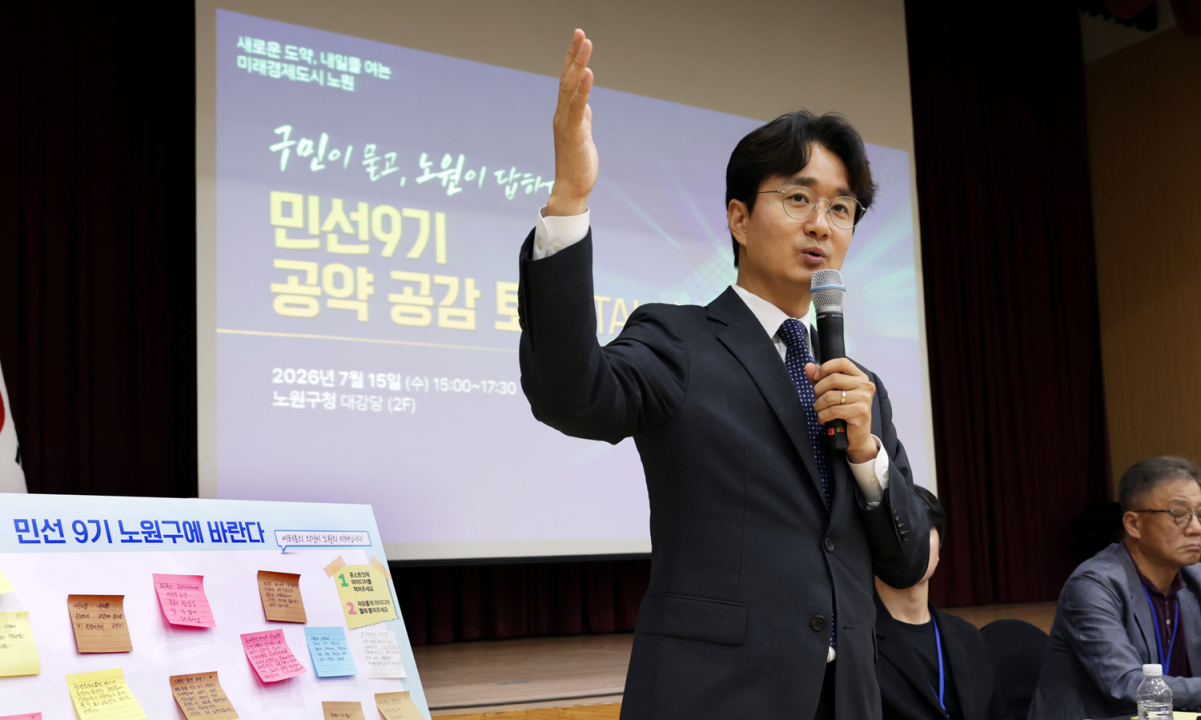
"Under District Mayor Kim Sung-hwan, the main focus was welfare and the environment; under District Mayor Oh Seung-rok, it was nature and culture," Seo said. "My focus will be on pushing ahead in earnest with reconstruction and redevelopment, and on reviving the local economy through projects such as the development of a biotech complex on the Changdong rail depot site."
The plan is to pursue improvements to Nowon's residential environment alongside the cultivation of future industries — using reconstruction and redevelopment to upgrade aging housing stock, and turning the Changdong rail depot area into a foundation for new industries and jobs.
However, translating that vision into tangible results will require resolving a range of challenges beyond the pace of project execution: gathering resident input, securing project viability, expanding transportation and daily-life infrastructure, and generating sustainable employment. The biotech sector, too, can only deliver on the goal of energizing the local economy if it is backed by corporate investment, research and industrial infrastructure, and a pipeline of talent.
Accountability matters more than youth — communication must translate into results
What stands out in Seo's conduct since taking office is not his age but his attitude. At 51, he is a young district mayor, yet he draws on nearly 31 years of political experience to reach out first to residents and staff alike — and when confronted with an unexpected safety incident, he took the weight of his responsibility seriously.
Checking on residents at the scene, personally replying to staff messages, offering words of thanks on the morning commute — these are all different expressions of the same commitment to communication. They represent an attempt to put dialogue before authority and respect before directives.
Yet a district mayor's humble manner and a healthy organizational culture are a starting point for administrative achievement, not an end in themselves. The value of that communication will become clearer when residents feel genuinely safer, when reconstruction and redevelopment projects show real progress, and when quality jobs are created.
Seo inherits the welfare and environment legacy of former District Mayor Kim Sung-hwan and the nature and culture legacy of former District Mayor Oh Seung-rok, while setting his sights on opening the next chapter for Nowon through reconstruction, redevelopment and future industries. Whether the ground-level communication he embodies can move beyond changing the organization and translate into administrative results that improve residents' lives remains to be seen. The real transformation of Nowon-gu under the ninth round of local elections is only just beginning.
seouldream01@heraldcorp.com



