
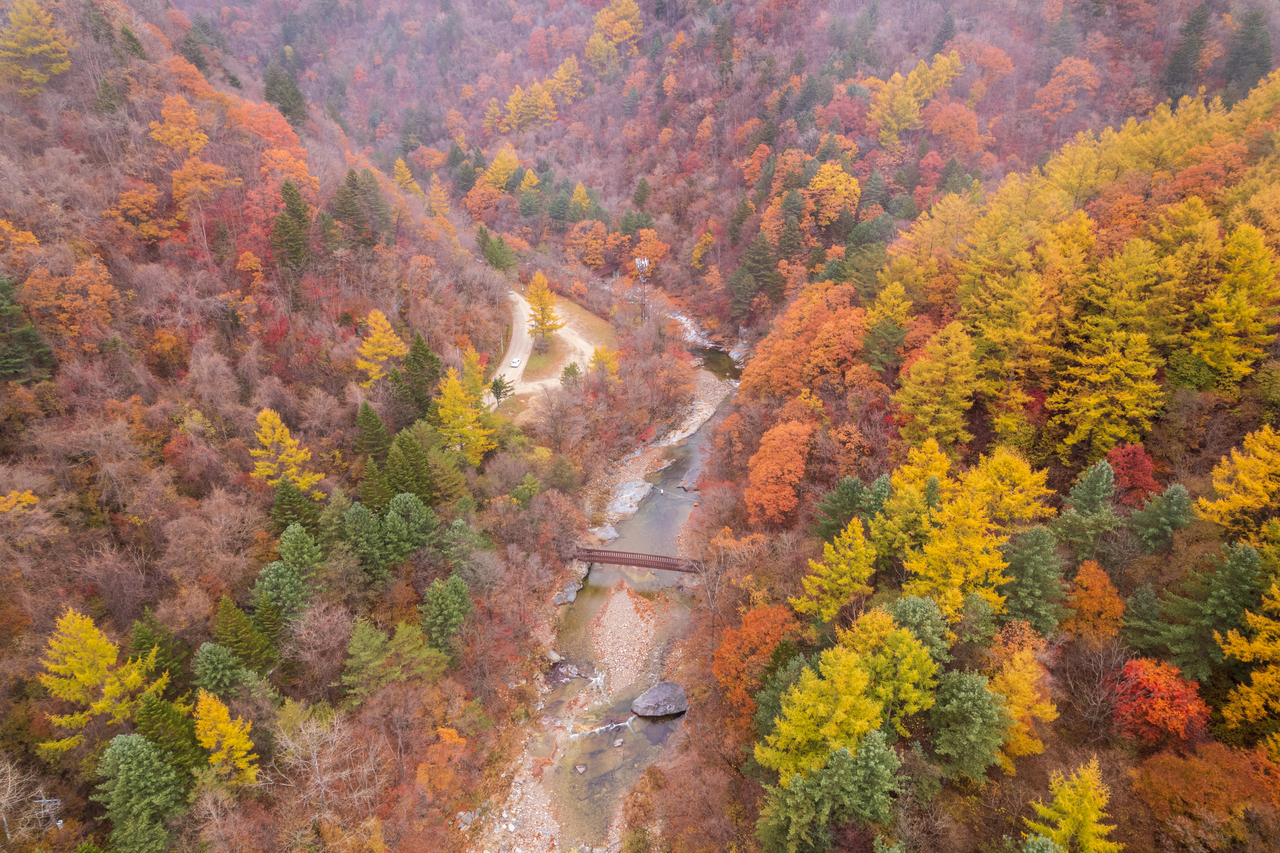
Autumn has fully arrived in Pyeongchang-gun. The sweeping grandeur of the Baekdudaegan mountain range, rolling meadows that evoke "The Sound of Music," wind turbines dotting hillsides reminiscent of the Teletubbies' landscape, the literary village of Yi Hyo-seok, and caves of geological intrigue are all now draped in fall color.
The highland zone known as "Happy 700" — named for its elevation of roughly 700 meters above sea level, where people are said to feel their most refreshed, at ease and content — has turned a deep, vivid red.
![Pyeongchang's meadows, which call to mind "The Sound of Music" [provided by Samyang Roundhill]](https://wimg.heraldcorp.com/news/cms/2026/10/16/news-p.v1.20261016.90c16111381842fa924c8962ef30f6a9_P1.jpg)
According to Choi Su-gyeong, head of the tourism marketing team at Pyeongchang-gun's tourism policy division, the county's signature destinations — Odaesan, Woljeongsa, Balwangsan, Daegwallyeong Ranch, Bongpyeong's Hyoseok Culture Village, Mitan (a filming location for The King's Warden), and the Yukbaengmaegi highland meadow on Cheongoksan — are each showing off their own distinct autumn splendor.
Moving through Odaesan along the fir-tree path and the Seonjae Trail, the foliage deepens in color. Within the temple grounds of Woljeongsa and Sangwonsa, visitors encounter Buddhist cultural treasures including the National Treasure octagonal nine-story stone pagoda and the Sangwonsa bronze bell, while the National Joseon Royal Archives Museum and the Seongbo Museum at the mountain's base offer a window into Korea's history.
The National Korean Native Plant Garden, Odaesan Food Village, and the mountains of Gyebangsan, Balwangsan and Taegisan have also taken on the colors of autumn.
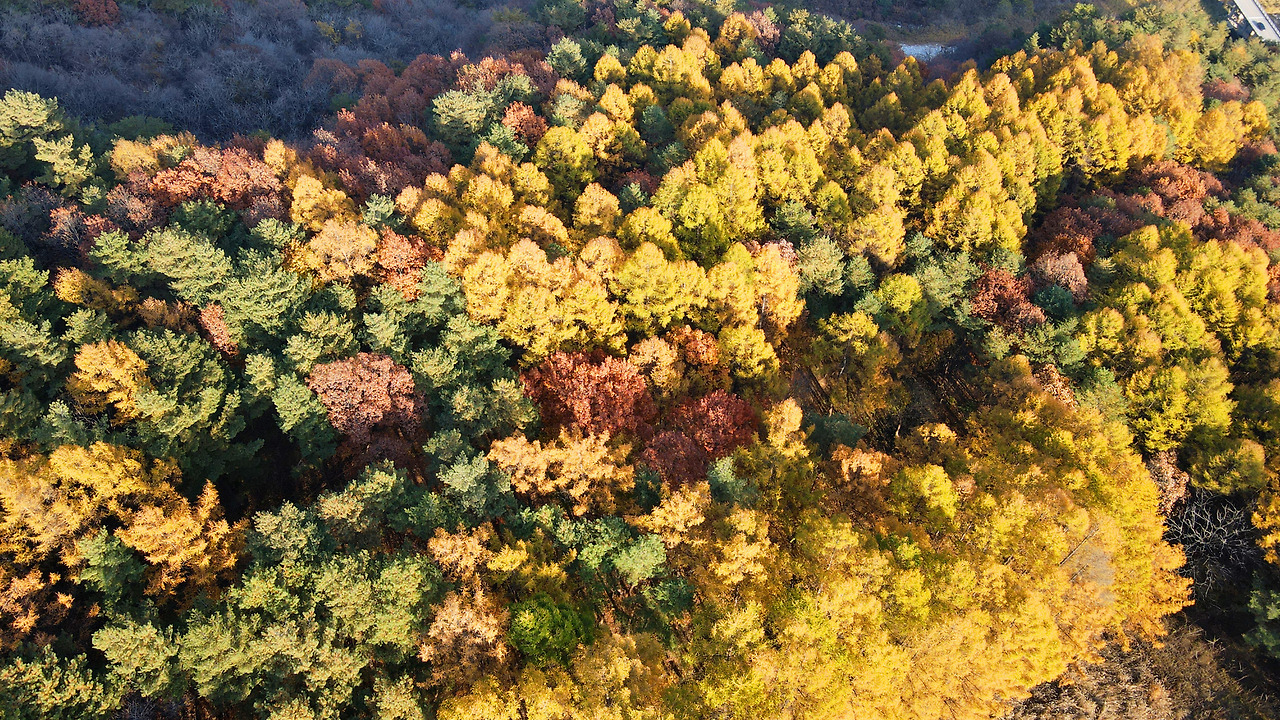
Riding the Balwangsan gondola to the summit, visitors take in a rich spectrum of autumn colors that shift with every meter of elevation gained. A walk through the ancient yew forest offers a quiet lesson in resilience — trees that have withstood fierce winds for thousands of years.
The ranches of Daegwallyeong sit between 850 and 1,470 meters above sea level, commanding views that stretch across the Baekdudaegan all the way to Donghae. The sight of vast pastures gradually turning golden in the autumn light is a scene hard to find anywhere outside Pyeongchang.
Samyang Roundhill offers wellness programs including sound walking and singing bowl meditation, the sheep ranch lets visitors hand-feed the animals, and Daegwallyeong Sky Ranch runs tractor-wagon rides — giving travelers plenty to choose from. Open grazing ends in November due to the weather.
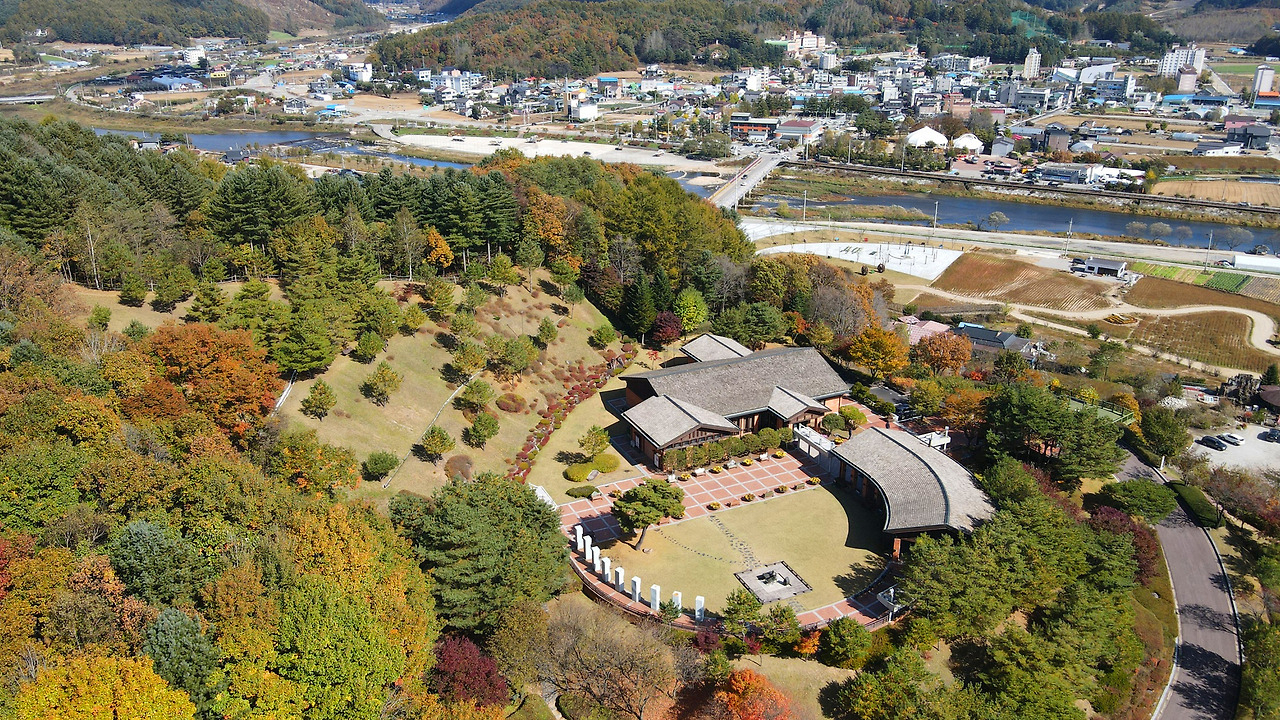
In Bongpyeong, the hometown of writer Yi Hyo-seok, the buckwheat blossoms have faded and a full autumn palette has taken their place. Local residents and the county government have transformed the Changdong-ri woodland where the author reportedly played as a child into the Yi Hyo-seok Literary Forest. The trail through it — shaped to capture both the atmosphere of his fiction and the natural beauty of Bongpyeong — offers an autumn literary walk unlike anything else in the region. Food options include buckwheat noodles, buckwheat pancakes and buckwheat crepes, while newer additions such as buckwheat coffee, buckwheat cookies and buckwheat dakgangjeong (sweet-spicy fried chicken) are drawing fresh interest.
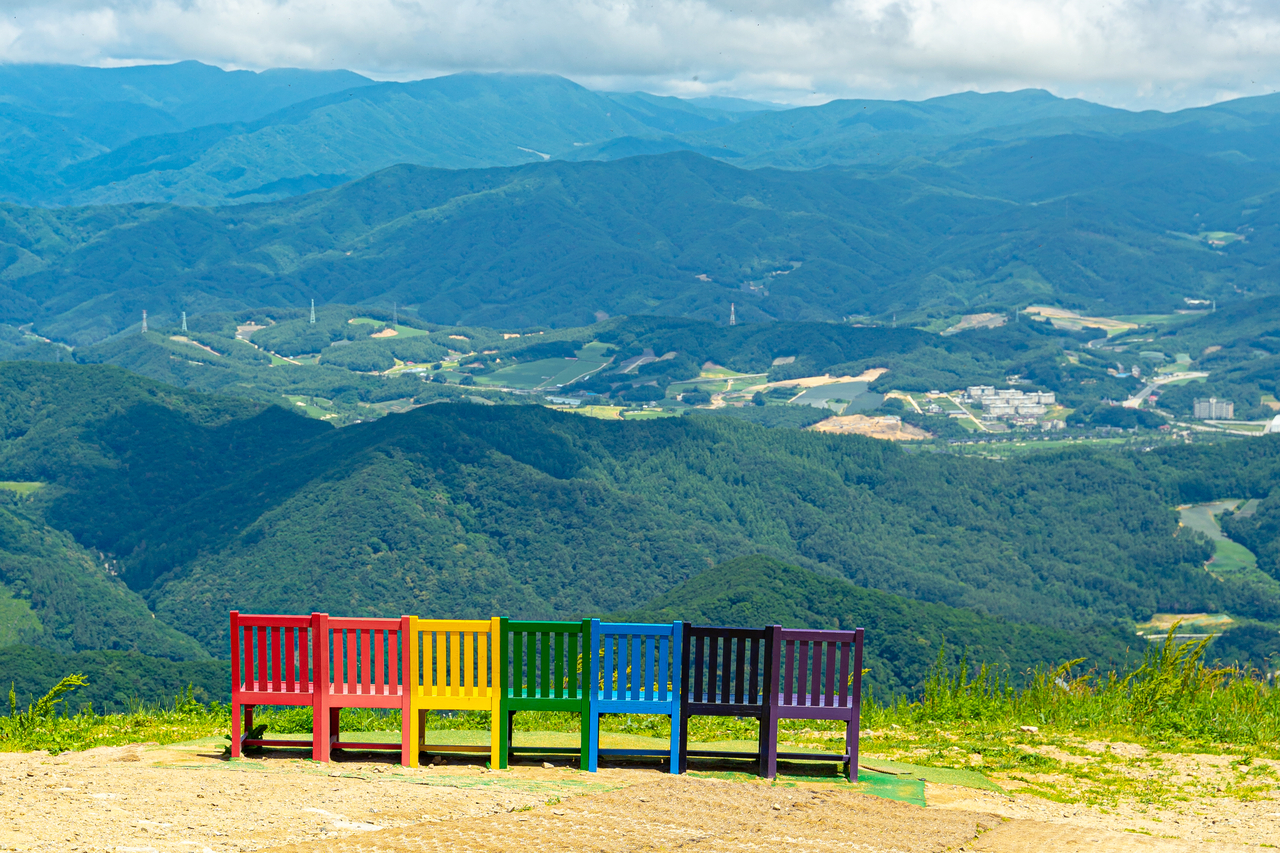
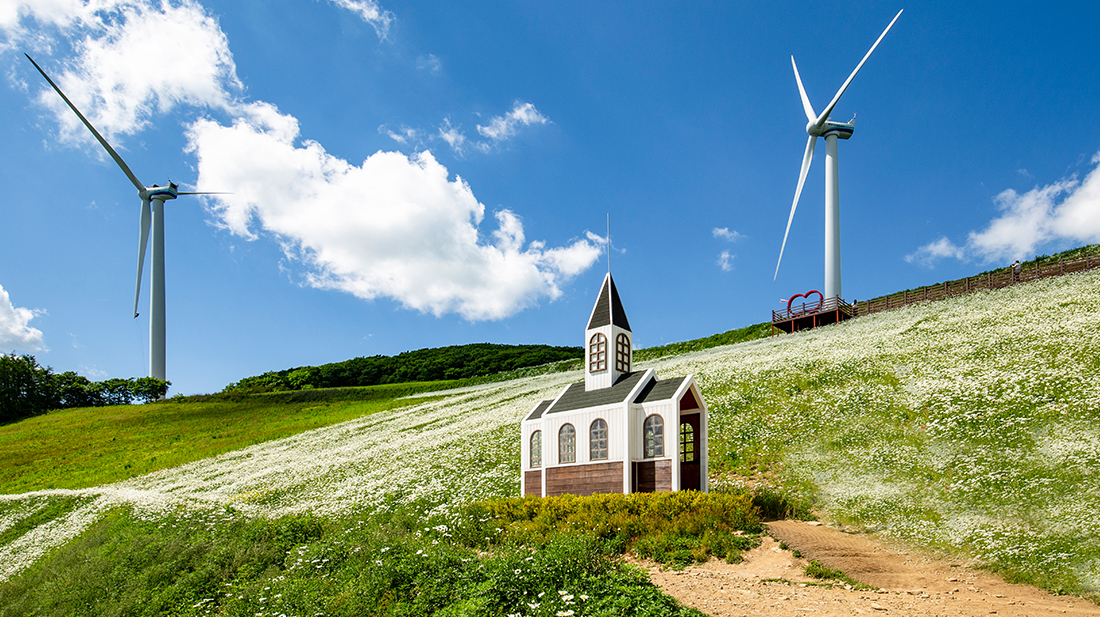
At the Yukbaengmaegi highland on Cheongoksan, the shasta daisies have given way to silver grass, open meadows and towering wind turbines, together creating an unusual autumn panorama. A small chapel and a rainbow-colored bench along the barrier-free walking path have become popular spots for a memorable photograph.
Mitan — which recently welcomed its first baby in two years — served as a filming location for both "Welcome to Dongmakgol" and The King's Warden, and has become a must-visit stop on any Pyeongchang itinerary. The village is known for its trout, raised in natural spring water; Pyeongchang was the first place in Korea to successfully farm trout, making a plate of fresh trout sashimi a local essential. Nearby attractions include Baengnyong Cave, while Daehwa-myeon has Gwangcheon Cave and Pyeongchang-eup offers a stone culture experience center and a rock park.
Pyeongchang is broadening its appeal, shifting from sightseeing to immersive, experience-based travel.
Pyeongchang Tourism Dure, a community-led initiative, develops and runs tourism programs built around residents' own everyday culture. This autumn's lineup includes "Wow Pyeongchang," a fly-fishing experience with local anglers at the site where trout were first farmed in Korea; "Shaping Pyeongchang," a program in which visitors travel with local youth, document the journey by drone and craft ceramic objects; and "Pyeongchang Campnic," which combines a barbecue using produce from local farms in a birch forest with an overnight stay.
Pyeongchang DMO is going beyond tourism information and car rental services to expand its lineup of extended-stay travel products. Through November, it is running "Pyeongchang Stay" packages that combine accommodation with hands-on experiences, and has selected 25 businesses to lead resident-driven local programs covering wellness, crafts, food and drink, and more across the county.
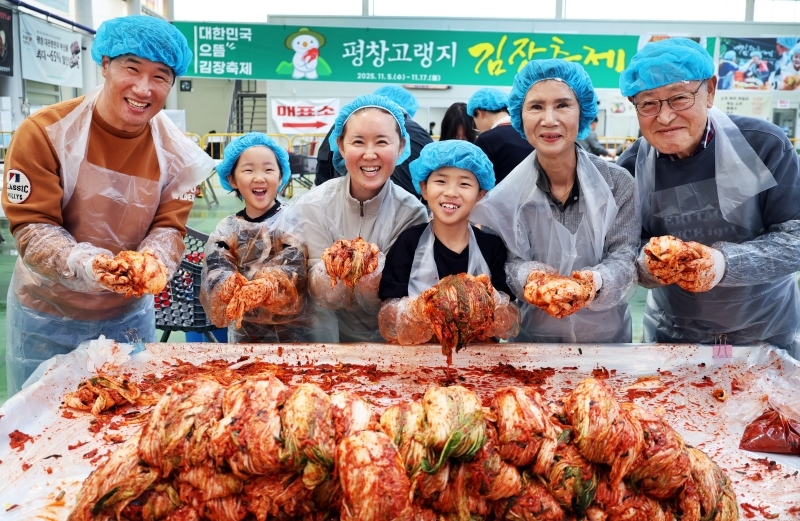
The Pyeongchang Highland Kimchi-Making Festival runs from Nov. 4 to 16. The Pyeongchang City Tour's "Autumn Healing Tour" — visiting the fir-tree forest path at Odaesan, Woljeongsa, the Balwangsan gondola and Olympic Plaza — continues through Nov. 28.
abc@heraldcorp.com




