
Korea National Park Service issues autumn hiking safety guide, covering trail selection and proper walking techniques on flat, uphill and downhill terrain
The Korea National Park Service, an agency under the Ministry of Climate, Environment and Energy, released a guide Friday on autumn hiking safety and proper walking techniques ahead of the peak fall foliage season.
Fall foliage typically begins near mountain summits in mid-October, reaches its peak from late October through early November, and then spreads southward.
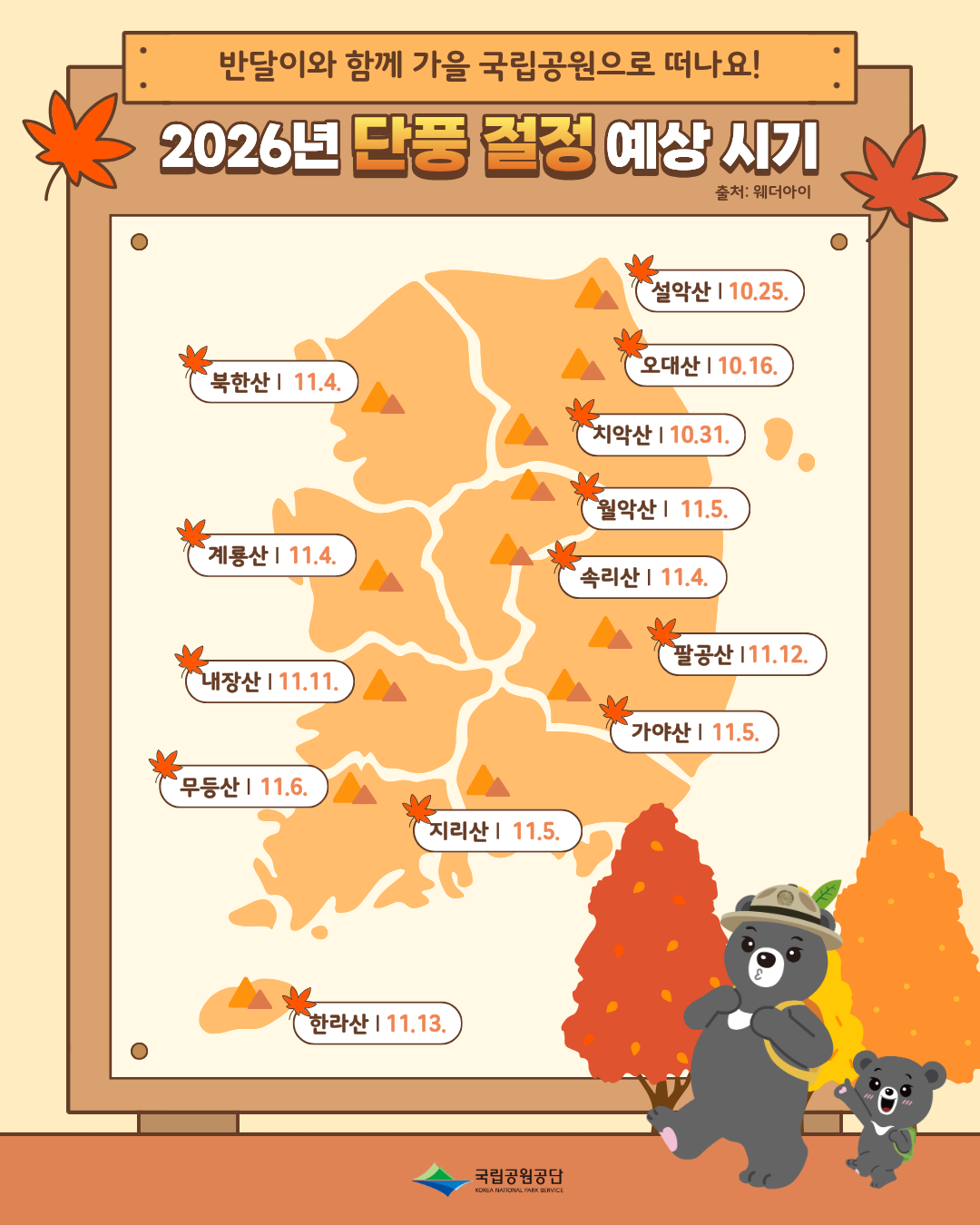
Even within the same national park, timing can vary depending on elevation and terrain, so hikers are advised to check current foliage conditions and trail information before setting out.
Visitor numbers rise in autumn, and large daily temperature swings combined with fallen leaves can make trails slippery, requiring extra caution.
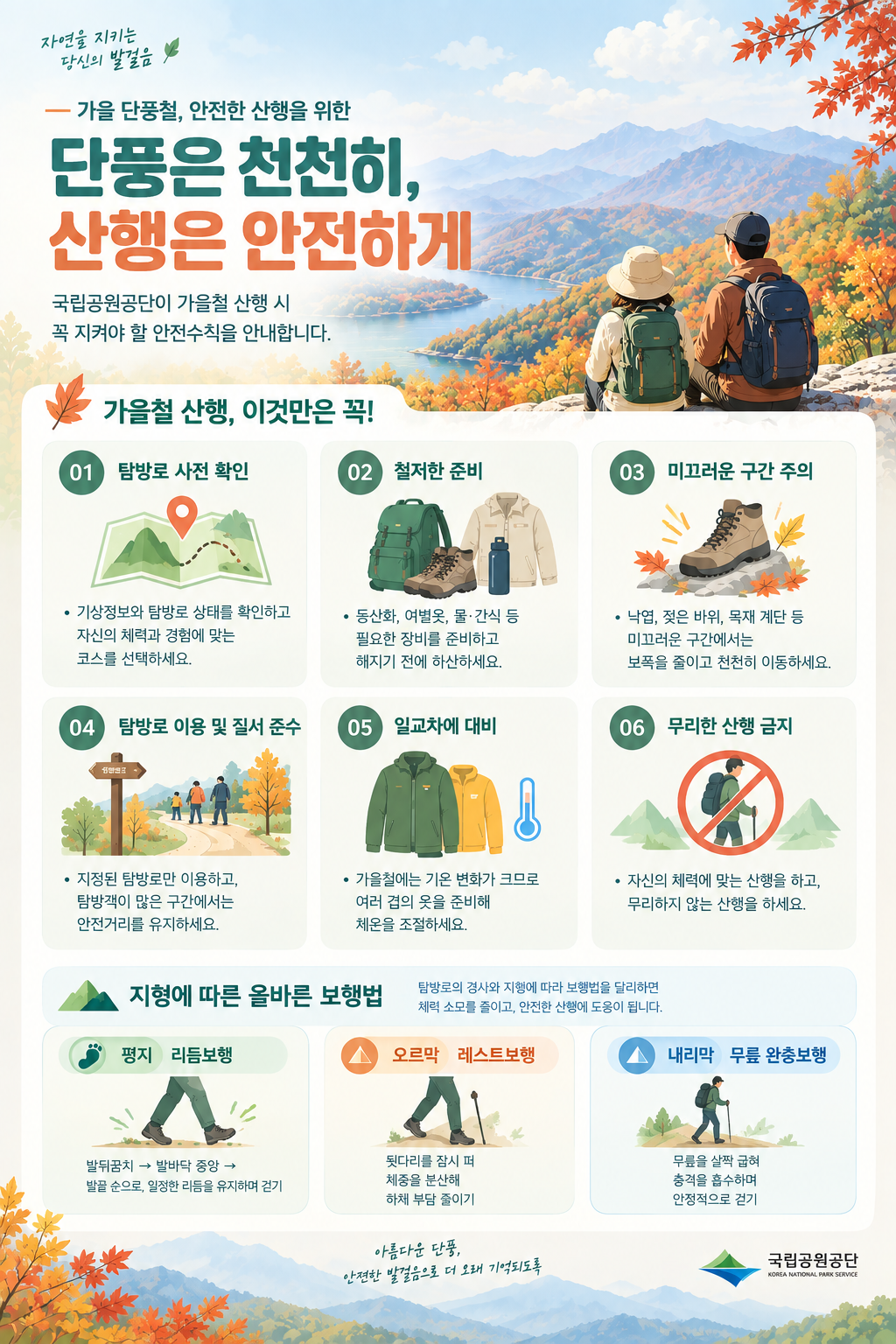
Before heading out, hikers should choose a trail suited to their fitness level and check the distance, gradient, estimated time and surface conditions in advance. National park trails are classified into five difficulty ratings, allowing visitors to select a route that matches their physical condition and experience.
Hikers should also check the weather forecast and pack essentials — hiking boots, an extra layer of clothing, water and snacks — and warm up the major muscle groups in the legs, lower back and shoulders before starting, to prepare for steep sections.
Because temperatures fluctuate widely and elevation changes are significant in autumn, hikers should dress in layers. Those with high blood pressure or heart conditions should make full use of rest areas along the way to avoid overexerting the heart. Planning a generous schedule to allow for descent before sunset is also recommended.
On the trail, hikers should shorten their stride and slow down on slippery sections such as leaf-covered ground, wet rocks and wooden stairs. When admiring the foliage or taking photos, they should stay within safety barriers and marked trails, and maintain distance from the person ahead in crowded sections to keep order on the path.
Particular care is needed on the descent, when accumulated fatigue makes slips and missteps more likely. The Mountain Safety Education Center at the Korea National Park Education Institute recommends the following walking techniques based on trail terrain.
On flat ground, hikers should use "rhythm walking" — maintaining a steady pace and cadence, landing heel-first and rolling naturally through the midfoot to the toe. On uphill sections, "rest-step walking" is recommended: briefly straightening the rear leg while climbing a slope or stairs shifts body weight onto the skeleton and reduces strain on the lower-body muscles. On descents, "knee-cushion walking" — gently bending the knees as each foot lands — absorbs impact. On steep slopes, a zigzag technique that traverses the terrain diagonally can help hikers descend more safely.
Korea National Park Service Chairman Ju Dae-young said autumn is the season when many people visit national parks to enjoy the fall foliage. "We hope visitors will choose trails suited to their fitness and experience, prepare thoroughly before setting out, and have a safe and enjoyable autumn hike," he said.
thlee@heraldcorp.com




