
Phase 1 trial on 65 Japanese subjects establishes bioequivalence, building trust with local physicians; lower price to ease patient costs and expand insurance coverage; prescription network to extend into pediatrics, ENT and dermatology

"Omlyclo is the first omalizumab biosimilar approved in Japan. It will be a turning point — delivering real therapeutic benefits to patients with severe asthma, chronic spontaneous urticaria and seasonal allergic rhinitis who have had limited access to treatment because of the high cost burden, and addressing the unmet needs at the prescription level."
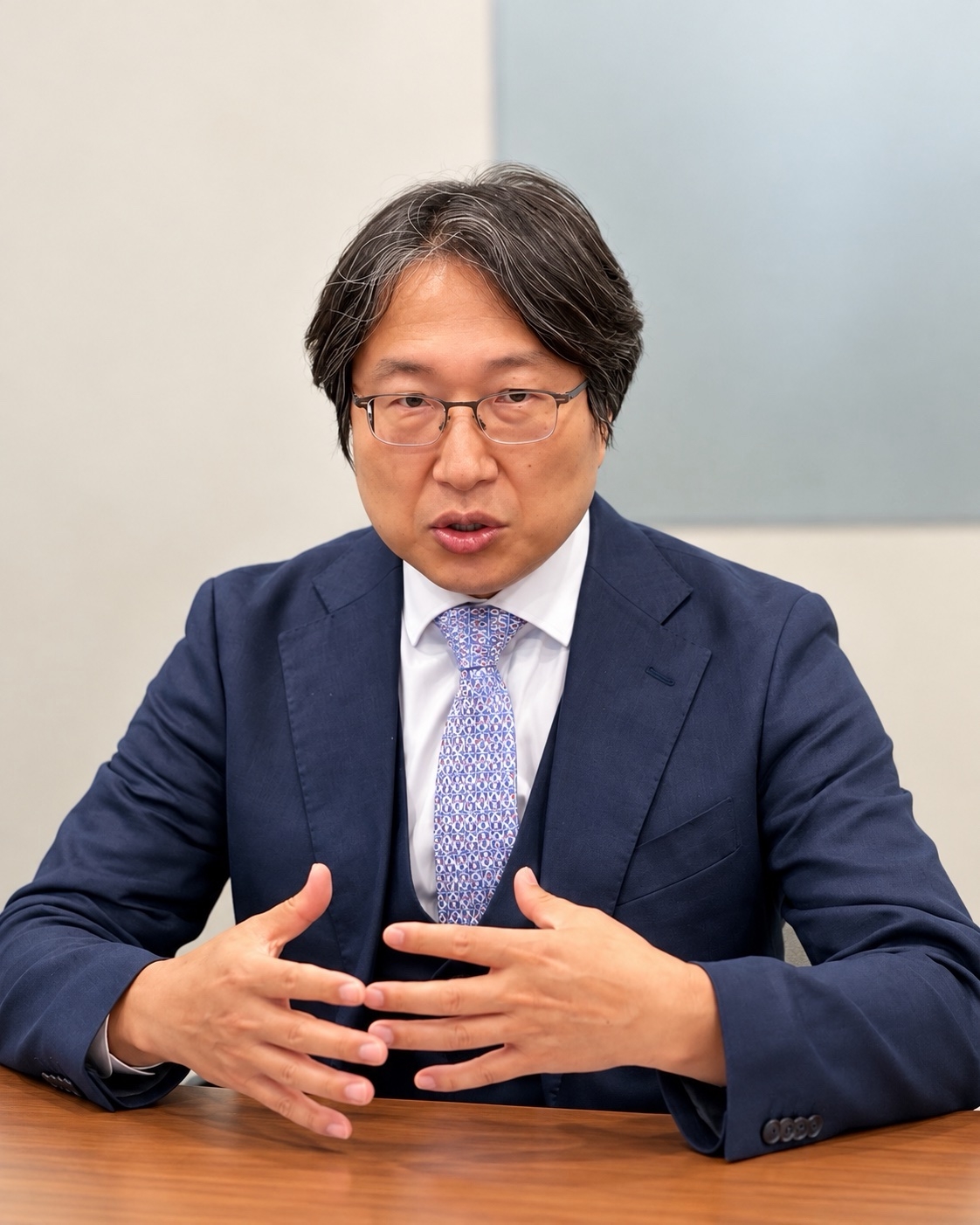
Kim Ho-woong, executive vice president and head of Celltrion's Japan, Asia-Pacific and Latin America division, expressed strong confidence in Omlyclo's competitiveness and market penetration strategy in an interview in Kyoto on Thursday, the opening day of the World Allergy Congress 2026, ahead of the product's planned launch in Japan before year-end.
Omlyclo is the first biosimilar of Xolair, a blockbuster original biologic with global sales of 7 trillion won ($5.23 billion). Celltrion received marketing approval from Japan's Ministry of Health, Labour and Welfare in March for the indications of bronchial asthma, chronic spontaneous urticaria and seasonal allergic rhinitis, and has since been preparing for a first-mover launch.
"Japan is a market that verifies evidence data and safety in a very conservative and rigorous manner when it comes to switching prescriptions, even amid pressure to contain healthcare fiscal spending driven by its super-aging population," Kim said. "Omlyclo was designed from the earliest stages of development with a close eye on the unique characteristics of the Japanese market."
To that end, Celltrion conducted a Phase 1 trial in Japan involving 65 healthy adult subjects, demonstrating bioequivalence with the original biologic across key pharmacokinetic parameters including area under the curve and maximum concentration.
"Japanese physicians do not easily open their minds based solely on overseas global data — they want to see clinical results from studies conducted on their own population," Kim said. "Having secured robust bioequivalence data from a Japanese-subject trial in advance allowed us to build a high level of trust in academic exchanges with local medical societies and key hospital physicians."
Celltrion's Japan strategy for Omlyclo goes beyond simply substituting existing prescriptions. The company's Japanese subsidiary has put forward three strategic pillars: market development to grow the overall market, first-mover market penetration, and market protection to sustain its dominant position.
"Japan's omalizumab market has remained relatively underdeveloped compared with other major markets globally, due to high drug prices and stringent prescription criteria," Kim said. "Omlyclo has been listed at a price roughly 30 percent lower than the original, which will immediately reduce out-of-pocket costs for severe allergy patients who require long-term treatment."
He added that as the introduction of the biosimilar generates savings for the national health insurance system, Celltrion plans to work closely with local specialists and medical societies to actively propose an expansion of insurance prescription guidelines — channeling those savings back into broader patient access to treatment. "Our goal is to lower the treatment threshold so that potential patients who have not responded to standard therapies can gain early access to biologics," he said.
The Omlyclo launch marks a major strategic inflection point for Celltrion's Japanese subsidiary, dramatically expanding its reach across medical specialties. The company had previously built its prescription network in Japan around rheumatology, gastroenterology and oncology through products including Remsima, Yuflyma, Herzuma and Vegzelma. With Omlyclo, it moves at once into pediatrics, respiratory medicine, otolaryngology and dermatology.
"In line with our entry into new specialty areas, we have built a hybrid organizational structure that pairs product managers dedicated to deep academic expertise for each product with regional specialists focused on key hospital networks in each area," Kim said. "Through this organic network, we are aggressively expanding our academic touchpoints with physicians on the ground."
Celltrion is also erecting preemptive defenses against the competition it expects from later entrants. "We anticipate rival companies entering the market within two to three years, but as the first mover we will move quickly to capture the early market and then activate a protection strategy to sustain the prescribing experience once it has been established," Kim said.
Beyond equivalent therapeutic efficacy, Omlyclo also offers formulation advantages that significantly improve patient convenience. The product uses a special thin-wall needle to reduce injection pain, eliminates the risk of natural rubber latex allergy, and excludes citrate — a buffering agent widely cited as a major cause of injection-site pain.
In addition, Celltrion has secured stability data extending room-temperature storage at up to 25 degrees Celsius from two days to seven days compared with the original, and enabling re-refrigeration — improvements expected to boost medication adherence among long-term patients and enhance inventory management efficiency at healthcare facilities.
"Omlyclo is not simply another biosimilar — it is a product that innovates access to allergy treatment in Japan by a full step," Kim said. "We will firmly establish it as a sustainable treatment alternative that improves patients' quality of life and contributes to the fiscal soundness of the national healthcare system."
silverpaper@heraldcorp.com




