
Applications and selections both rise through September
Korea Military Academy 3 fills all 550 cadet slots
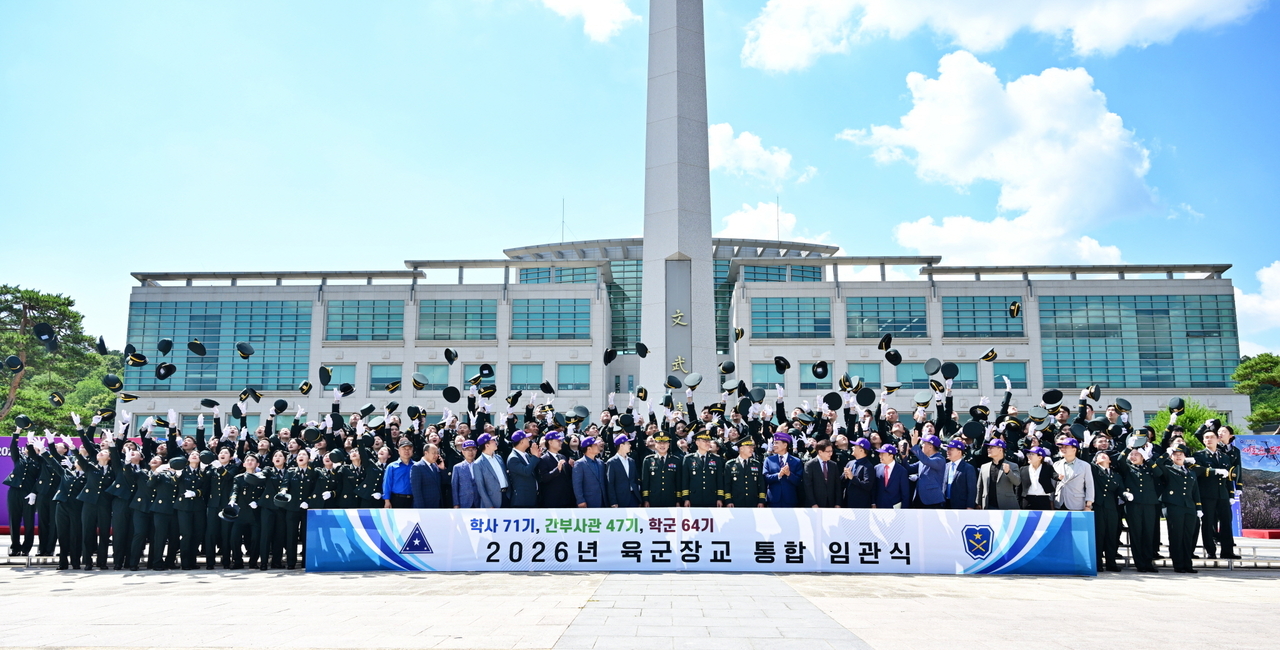
More than 51,000 people applied to become Army officers or noncommissioned officers through September this year, offering some relief to the military's struggle to fill junior leadership positions. Applications for officer posts rose by about 5,500 compared with the same period last year, while NCO applications climbed by roughly 2,100. However, national audit data showing that last year's Army NCO commissioning rate reached only about half of the planned figure underscores that translating rising applications into actual field unit assignments remains an unfinished task.
The Army announced the recruitment and selection figures Thursday. As of the end of September, officer applications stood at more than 34,000 — up roughly 5,500 from the same period last year — while NCO applications reached more than 17,000, an increase of about 2,100 year on year.
Selection numbers also expanded. The number of candidates either already selected or currently in the selection process reached roughly 3,700 for officers and about 6,900 for NCOs — increases of approximately 390 and 1,700, respectively, compared with the same period last year.
Conditions for recruiting through major officer training programs also showed improvement. The Reserve Officers' Training Corps candidate selection process, which wrapped up its first-half round on Sept. 10, filled about 2,600 of the roughly 2,800 slots needed this year, an acquisition rate of approximately 94 percent — up about 7 percentage points from roughly 87 percent during the same period last year. A second-half supplementary recruitment round is currently underway.
Korea Military Academy 3 completed its cadet selection on Sept. 11, filling all 550 slots required for this year. The results came as the military continues to grapple with demographic shifts and a shrinking pool of eligible recruits, making the simultaneous rise in both applications and selections across major programs a notable development.
The Army has been working to improve pay and service conditions for junior officers while broadening its outreach to prospective applicants. Ahead of the second-half recruitment drive for college-graduate officers, it has been conducting on-campus recruitment campaigns at more than 50 universities nationwide since last month. Senior officials from Army headquarters, general-grade commanders and active-duty officers who are alumni of each institution take part, explaining service conditions, job roles and career development opportunities.
At the Armed Forces Job Fair and various government and local government events, the Army has been operating integrated recruitment booths for both officers and NCOs. Targeted promotional campaigns through SNS and YouTube are also being expanded. Based on current application and selection figures and the remaining second-half recruitment schedule, the Army expects to meet its goal of securing roughly 15,000 junior leaders this year.
However, improved recruitment figures do not automatically translate into filled positions. Because selected candidates must complete training programs before commissioning — the length and nature of which vary by status and course — there is an inevitable lag before they are actually assigned to units.
Separate from the recovery in applications and selections, actual commissioning numbers still lag behind the military's needs.
According to data on officer and NCO personnel from 2021 through the first half of 2026, obtained from the Defense Ministry by Reform Party lawmaker Cheon Ha-ram of the National Assembly's Defense Committee, the Army's NCO commissioning rate against its planned target was limited to 50.9 percent last year. While that was higher than the 38.2 percent recorded in 2024, it still represents only about half of the planned figure. Across all branches, NCO commissionings fell 37.9 percent, from 8,700 in 2021 to 5,400 last year.
The figures the Army released Thursday cover applicants and candidates either selected or in the process of being selected, and are distinct from actual commissioning results. Because selected candidates must still complete training before commissioning, improvements in recruitment conditions take time to translate into increased unit staffing.
The Army said it plans to continue improving pay and service conditions and to develop its recruitment, selection and training processes as a whole, in order to convert the upward trend in applications and selections into a stable supply of personnel.
"Securing talented people is a core task that underpins the Army's combat power," said Lee Woo-heon, commander of Army Personnel Command. "We will continue to develop our personnel acquisition policy in light of the changing manpower environment and the values of the younger generation, and work to build a stable foundation for officer and NCO recruitment."
rimsclub@heraldcorp.com




