
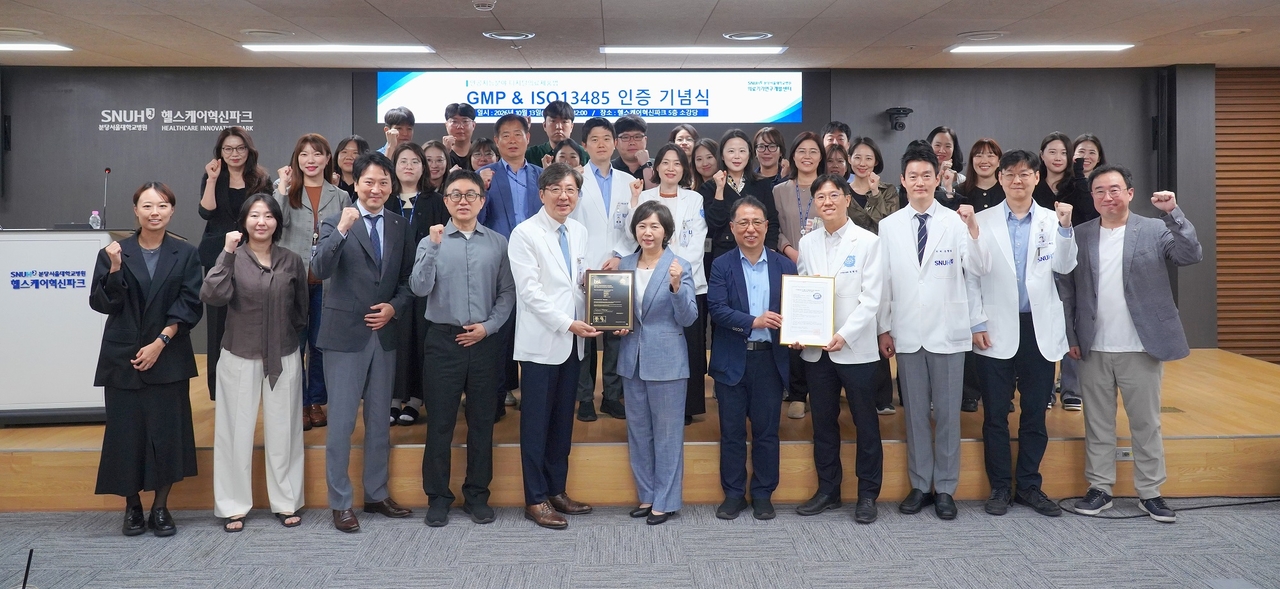
Bundang Seoul National University Hospital held a medical device regulatory science seminar Tuesday to mark its receipt of GMP certification under the Digital Medical Products Act and ISO 13485 accreditation. The event took place in the small auditorium on the fifth floor of the Healthcare Innovation Park.
The hospital obtained ISO 13485 international certification last November in the manufacturing, consulting and testing of AI medical device software.
In June, it received a GMP compliance determination from the Ministry of Food and Drug Safety for digital medical device manufacturing and quality management under the Digital Medical Products Act.
ISO 13485 is the international standard for the medical device industry, while GMP sets the domestic legal requirements that must be met when manufacturing medical devices. With both certifications now in hand, Bundang Seoul National University Hospital became the first advanced general hospital in South Korea to satisfy all international and domestic quality management standards for AI medical devices.
As AI is rapidly being adopted in clinical settings, university hospitals are increasingly expected to go beyond supplying clinical data and develop digital medical devices themselves — as well as support their real-world deployment. Last year, the Digital Medical Products Act took effect, tightening quality management requirements for AI medical devices.
The seminar opened with remarks from Kim Jae-yong, director of the Biomedical Research Institute, followed by congratulatory speeches from Lee Eui-kyung, president of the Korea KFDC Regulatory Science Society and a former commissioner of the Ministry of Food and Drug Safety; Lee Hyeong-won, head of BSI's medical device division for Korea and ASEAN; and others involved in the certification project.
Lectures on advanced medical products and regulation, European medical device regulation, and clinical trial cases involving generative AI followed, covering AI-related regulatory trends and overseas expansion prospects for medical products. Organizers said the seminar was significant as the first occasion on which the quality management framework built through the certifications was shared with in-hospital researchers and industry partners.
"This certification is meaningful because it shows the hospital has built the foundation not just to conduct medical AI research but to bring products to market," Kim said. "We will do our best to ensure that research originating in the hospital leads to products that are safe for patients."
fob140@heraldcorp.com




