
Korea Rural Community Corporation to improve regional budget allocation for farmland purchases next year
Farmland bank to prioritize support for farmers whose leases are terminated following comprehensive survey
aT tightens sanctions on fraudulent school meal suppliers; probes 250,000 transactions on online wholesale market
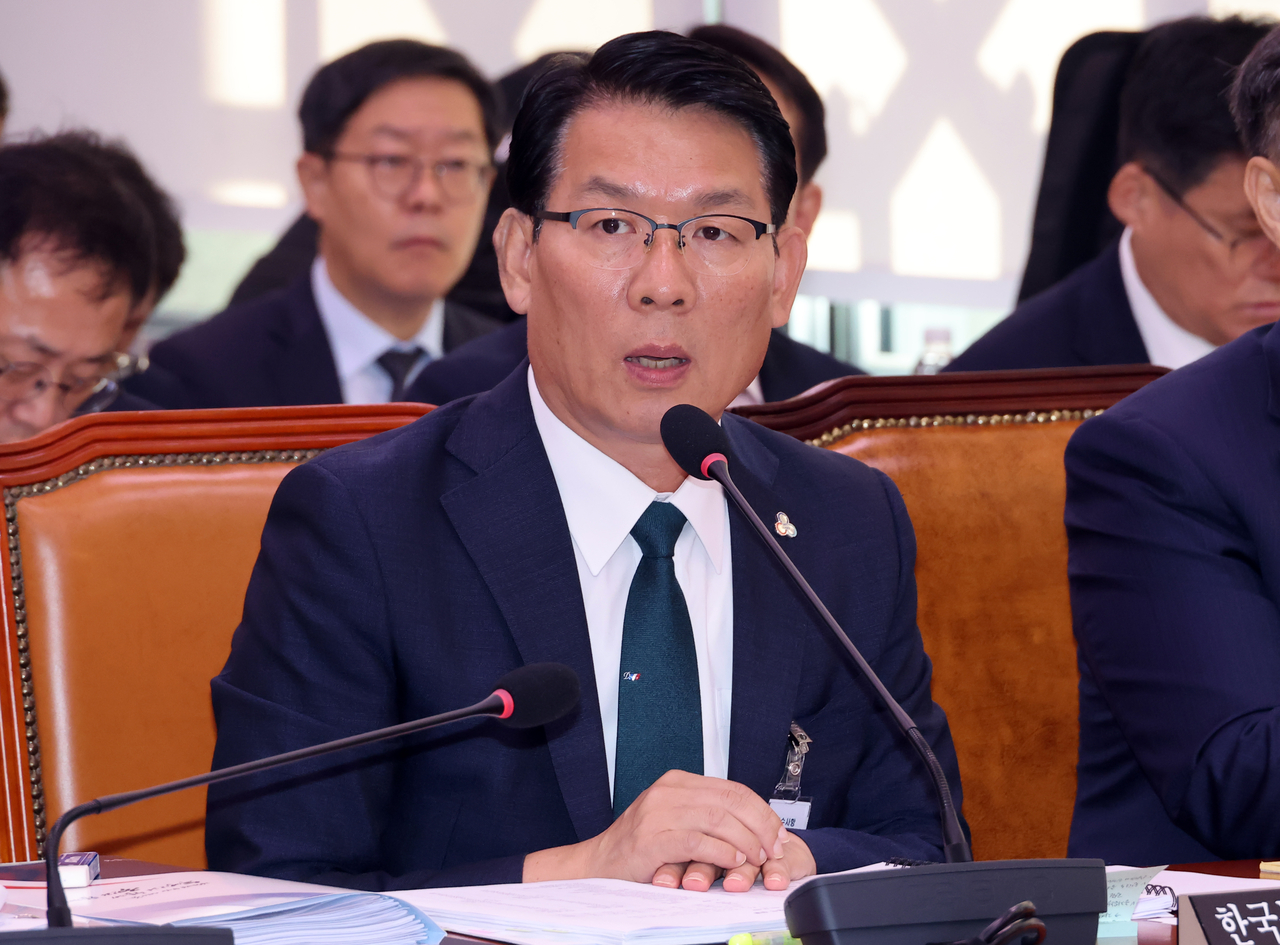
About 3,300 hectares of farmland submitted for sale to the farmland bank are still awaiting purchase, it emerged Wednesday. Suspected cases of suppliers operating jointly under multiple names in the school meal electronic procurement system jumped roughly 100-fold over two years. The Korea Rural Community Corporation said it would work to reduce regional disparities in farmland purchase budgets, while the Korea Agro-Fisheries and Food Trade Corporation, known as aT, pledged to tighten sanctions against suppliers engaged in fraudulent bidding.
At the National Assembly's Agriculture, Food, Rural Affairs, Oceans and Fisheries Committee national audit of agencies under the Ministry of Agriculture, Food and Rural Affairs on Wednesday, Rebuilding Korea Party lawmaker Shin Jang-sik said the farmland bank's backlog of pending purchases had reached approximately 3,300 hectares, with significant disparities in the waiting volume across regions.
Applications to sell farmland to the bank totaled 5,345 hectares, but actual purchases were limited to about 2,000 hectares — a purchase rate of 37.9 percent. Nationally, the backlog represents about 13 months' worth of purchases. North Chungcheong Province alone accounted for 27 months' worth of backlogged land, making up 13 percent of the national total, yet its share of the budget allocation stood at just 5.8 percent.
Korea Rural Community Corporation President Kim In-jung said the corporation distributes budgets to cities and provinces based on past project performance, but that disparities arise because application volumes differ by region. He said the corporation would consider holding back a portion of next year's budget for flexible reallocation based on actual application trends, or adjusting budgets between regions as needed.
"When allocating next year's budget, we will take this year's backlog into account," Kim said. "We will make efforts to minimize regional disparities."
The issue of lease terminations resulting from a comprehensive farmland survey also drew scrutiny. Democratic Party of Korea lawmaker Ju Cheol-hyeon raised concerns that when lease contracts are terminated, the farmers actually working the land could lose access to it, leaving the fields fallow.
In response, Kim said that when a lease is terminated as a result of the comprehensive farmland survey, the affected farming household receives top priority for support through the farmland bank. He added that the corporation had reformed the system so that when farmland is entrusted to the bank for lease management, existing lease relationships are recognized and preserved.
Fraudulent bidding in the school meal electronic procurement system operated by aT also came under sustained criticism. According to Democratic Party of Korea lawmaker Moon Geum-ju, the number of suspected cases of joint operation — where a single operator runs multiple businesses under family members' or acquaintances' names — jumped from two in 2023 to 201 last year.
From 2021 through August this year, 393 businesses were flagged by external investigations. Internal checks for terms-and-conditions violations caught an additional 100 to 280 businesses each year. The cumulative value of contracts those violators secured through the school meal electronic procurement system before being removed exceeded 4.7 trillion won ($3.51 billion).
Moon said the bidding system, which randomly ranks suppliers that submit identical prices, can be exploited by a single operator entering under multiple names to improve their odds of winning contracts.
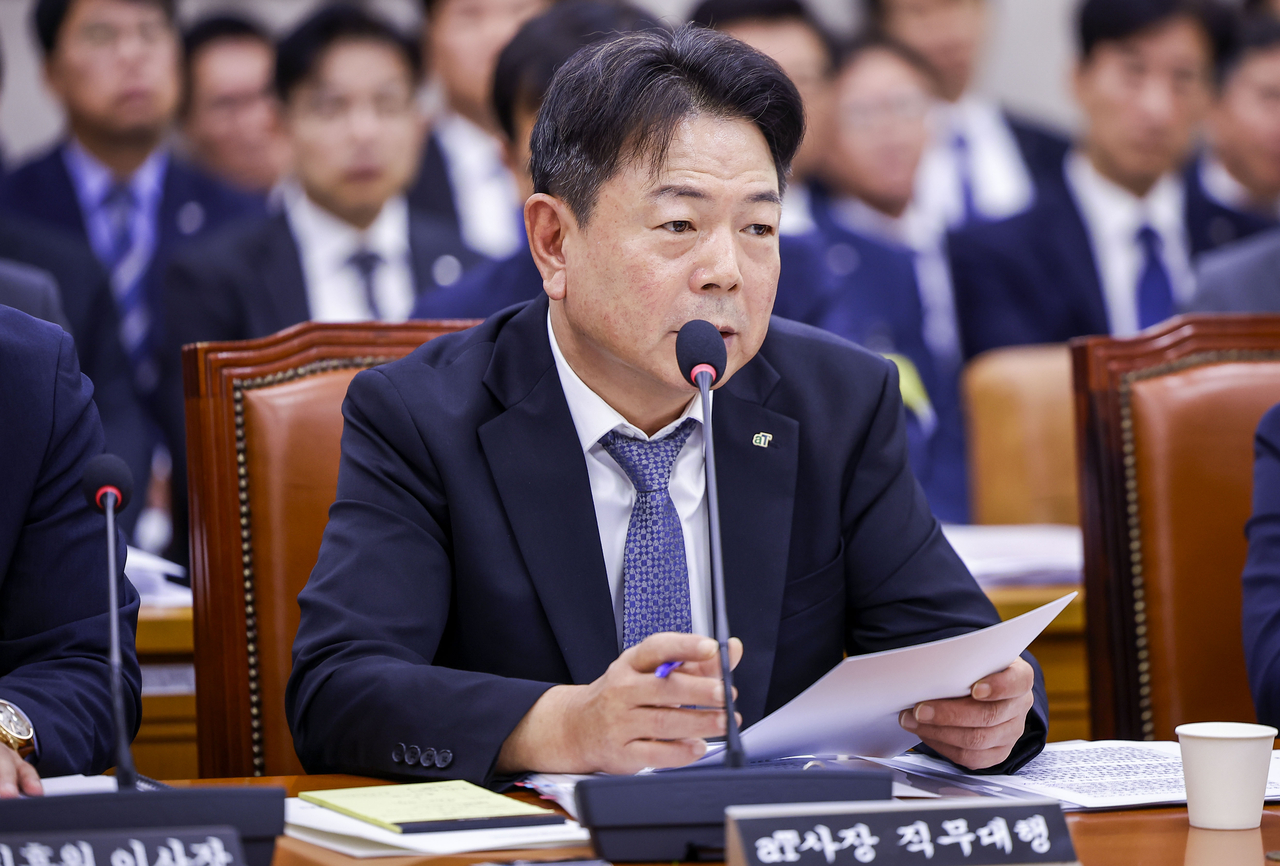
aT Acting President Kim Chang-guk acknowledged that the current sanctions were inadequate and said the corporation would strengthen the legal basis for penalizing fraudulent participants. aT has already introduced a multiple-certification system, a duplicate IP address blocking system, and expanded joint inspections.
Inflated transaction records on the agricultural and fisheries online wholesale market also came under scrutiny. Lawmaker Moon said some operators had boosted their reported figures — and thereby gained access to government support programs — by registering duplicate transactions or recording deals with no real substance.
Kim said aT had conducted a comprehensive probe of 250,000 transactions on the online wholesale market from its launch through last year, identifying irregular cases such as trades between the same individuals, and had excluded those transactions from government support eligibility. Going forward, he said, the corporation plans to develop the market by focusing on transactions that deliver genuine improvements to the distribution chain — such as reducing intermediary stages and cutting costs — rather than simply expanding transaction volume.
adastra@heraldcorp.com




