
First meeting of Population Strategy Committee… 'beyond birth rate metrics'
Birth numbers rebound for 2nd consecutive year, Lee says
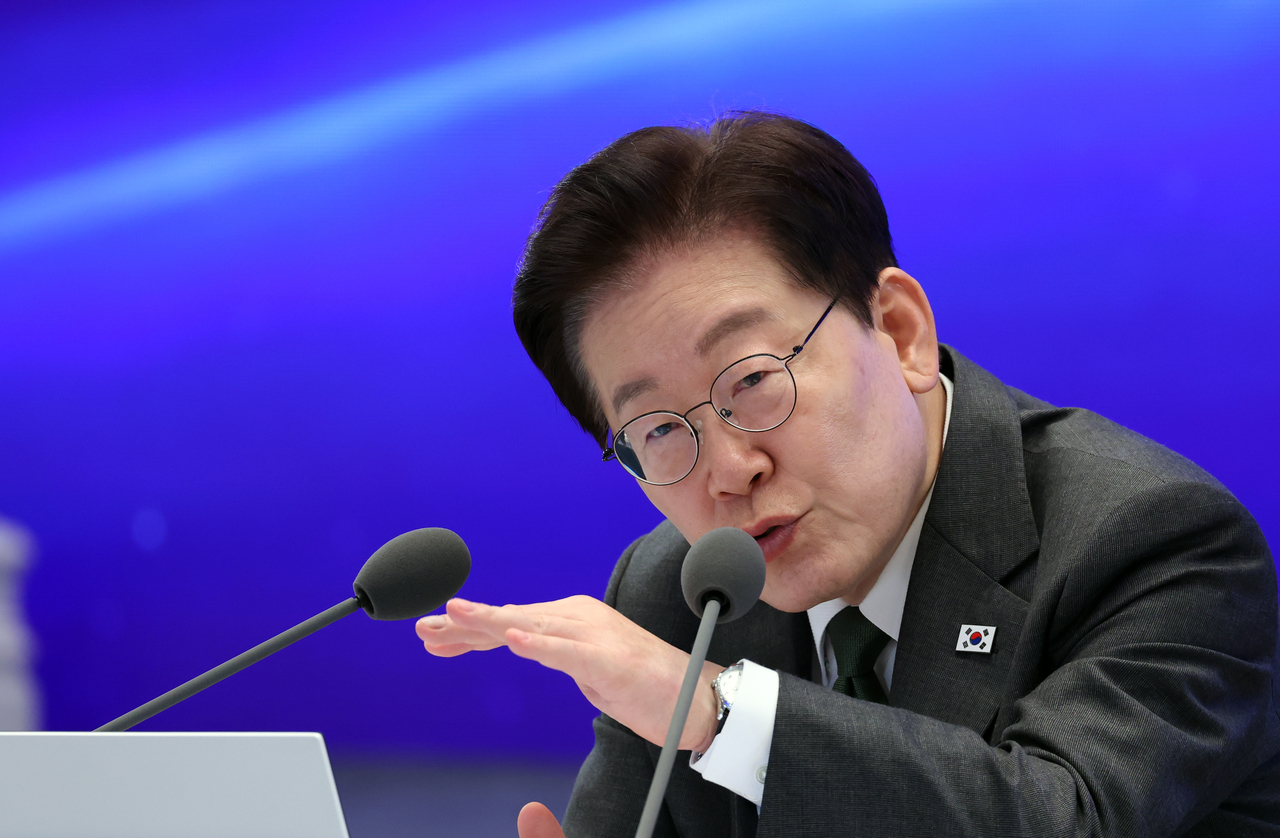
President Lee Jae Myung said Wednesday that South Korea must shift its demographic policy away from a quantitative focus on birth rates and population size toward a qualitative approach aimed at improving quality of life across all stages of citizens' lives. He also said the government would fundamentally redesign the country's social and economic systems — including jobs, education and care services — in line with the AI revolution.
Lee made the remarks at a ceremony held at Cheong Wa Dae to announce the population strategy vision of his administration, which also served as the inaugural meeting of the Population Strategy Committee. "The population strategy vision for South Korea that we are discussing today is truly a critical task on which the nation's fate depends," he said. "Over the past 20 years, successive governments have expanded institutional frameworks to address the low birth rate and aging population and poured enormous fiscal resources into those efforts. Yet the result, as we all know, is that South Korea's demographic challenges have not been resolved so easily."
On the root causes of the demographic crisis, Lee said the country now faces not only the longstanding challenges of a low birth rate, an aging population and a shrinking working-age population, but also new phenomena such as diverse family structures and rising immigration. "The demographic problems we are experiencing appear to be a comprehensive social crisis," he said. "It stems from a traditional environment in which childcare and child-rearing remain the responsibility of individuals, anxiety about the future, a lack of opportunity, and the concentration of even those scarce opportunities among a small few."
He called for a fundamental shift in policy direction. "Quantitative concerns such as birth rates and population size are important," Lee said. "But beyond that, I believe a major transformation in demographic policy — one that pursues qualitative growth — is now necessary. Ultimately, this means fundamentally redesigning South Korea's entire social and economic system to align with demographic change."
He added that demographic policy must serve multiple functions at once. "The population policy we build must be a labor policy, a welfare policy, and at the same time a jobs and residential policy, as well as an education policy," Lee said. He urged the committee to develop comprehensive measures covering marriage, birth and child-rearing while strengthening the state's responsibility for care and improving the quality of the working environment.
Lee also expressed optimism about recent improvements in key indicators. "I think now may be a turning point at which we can change the very structure and landscape of South Korea's demographic policy," he said. "Births have rebounded for two consecutive years. Statistics from January through July this year show that the number of marriages rose 6.1 percent compared with the same period last year, while survey data show growing shares of people saying they intend to marry and have children."
Looking further ahead, Lee said the AI revolution presents a historic opportunity. "In the long term, I believe the AI revolution — a historic transformation — has given us the chance to redesign our entire social systems, including industry, jobs, education and care," he said. "I trust that the population vision announced today will serve as the starting point for that change."
sunpine@heraldcorp.com




