
Lawmaker Song Jae-bong says most of 74 publicity-right violation cases shared with entertainment agencies could not be traced to specific suspects; calls for legislative reform if needed
Cases of generative AI being used to synthesize or mimic the faces and voices of public figures without consent are on the rise.
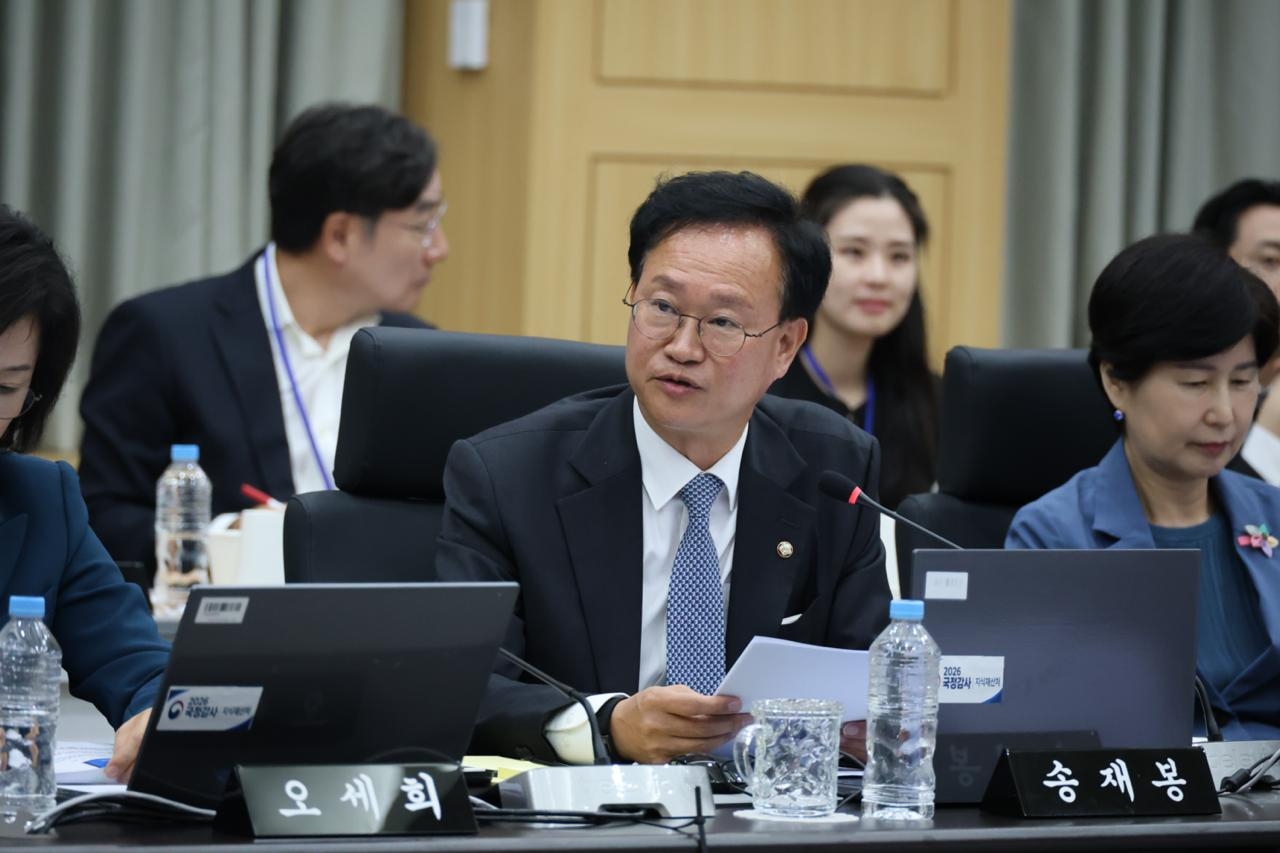
Song Jae-bong, a Democratic Party of Korea lawmaker representing Cheongwon-gu in Cheongju, North Chungcheong Province, said at the national audit of the Korean Intellectual Property Office that AI technology has advanced to the point where it can generate a face or voice that evokes a specific person without directly copying that person's actual photos or recordings. He said the technology is being exploited not only in investment and gambling advertisements impersonating celebrities, but also in commercial services such as paid apps and education platforms.
Song added that of 74 publicity-right violation cases the Korean Intellectual Property Office shared with major entertainment agencies, only nine were referred for administrative investigation, while 62 could not be traced to specific suspects due to factors including offshore activity. He said legislative reform should be pursued without delay if necessary.
The current Unfair Competition Prevention Act protects identifying markers such as a person's name, likeness and voice, but no concrete criteria exist for determining how far AI-generated composites, imitations or alterations — which do not directly replicate a real face or voice — can be considered a violation of an individual's personal identity markers.
"AI can now create an entirely new face that anyone would immediately associate with a specific person, without copying that person's actual face," Song said. "We need to first establish concrete standards for similarity and identifiability — how closely something must resemble a person before it is considered an infringement of their rights."
Identifying online posters or sellers often requires user information held by platforms, but the Korean Intellectual Property Office currently lacks sufficient legal grounds to obtain such data during administrative investigations. In cases involving overseas platforms, foreign court procedures are sometimes required to access user information, creating significant obstacles to swift investigation and victim relief.
"We need to spell out investigation standards for responding to AI-based infringements of faces and voices, establish inter-agency cooperation on cases, and build a framework for online platforms to provide information and carry out takedowns and blocks," Song said. "Judgment criteria and investigation guidelines for AI-related personal identity infringement must be put in place, along with a cooperative system for platforms to provide information and remove or block content."
kwonhl@heraldcorp.com




