
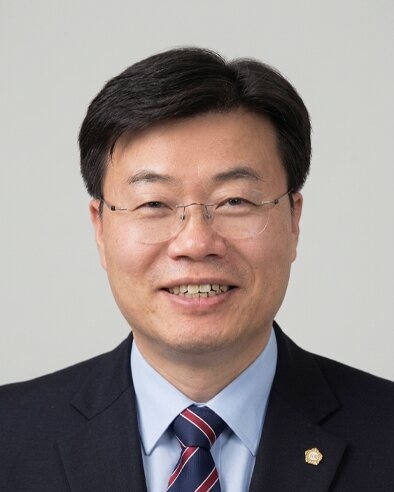
A Gangwon Provincial Council lawmaker has called for expanding surgical capacity and medical staffing at public hospitals in Gangwon Province, citing estimates that residents spend nearly 20 billion won ($14.9 million) a year traveling to the Greater Seoul area for medical care.
Choi Jong-hyeon, a Democratic Party of Korea lawmaker representing Sokcho (District 1), raised the issue Monday during the first policy question session of the 349th extraordinary session of the Gangwon Special Self-Governing Provincial Council. He focused on structural problems in the province's public healthcare system and urged the provincial government to take fundamental steps to guarantee residents' right to life and health.
Choi said that as of 2022, residents traveling to the Greater Seoul area for treatment spent 19.4 billion won on transportation and caregiving costs alone. He called for reorganizing the current six medical service zones into four zones that better reflect actual healthcare usage and daily life patterns, and urged the expansion of surgical functions and medical staffing at regional public hospitals.
"Guaranteeing residents the right to receive treatment in their hometown without having to travel elsewhere when they fall ill is the most important duty of local government," Choi said. "Gangwon Province must stop settling for stopgap measures and draw up substantive plans for a full overhaul of the public healthcare system and the normalization of Sokcho Medical Center."
During the session, Choi pressed the provincial government on five issues: the actual scale and economic cost of residents traveling outside the province for care; the realignment of medical service zones around residents' daily life areas; the expansion of surgical capacity and medical staffing at public hospitals; the normalization of Sokcho Medical Center's functions; and measures to address the revocation of Sokcho Medical Center's designation as a regional emergency medical center.
Choi particularly pressed the provincial government on its failure to find a lasting solution to the years-long shortage of medical staff and disruptions to emergency room operations at Sokcho Medical Center — problems that ultimately led to the facility losing its regional emergency medical center designation.
He also called for a concrete roadmap to secure emergency medicine specialists, upgrade facilities and equipment, and achieve early redesignation as an emergency medical center. He proposed building a tailored emergency medical system for the Seoraksan area that accounts for the large number of tourists and seasonal visitors.
In response, Yoo Ji-young, director of the welfare and health bureau, said the province would actively work to strengthen medical capacity through measures including expanding the dispatch of specialists from university hospitals and upgrading facilities and equipment at public medical institutions. On the proposed reorganization of the six medical service zones into four, she said the province would comprehensively review the results of government research and local healthcare conditions before actively submitting Gangwon's recommendations to the central government.
Regarding the revocation of Sokcho Medical Center's emergency medical center designation, she added that the province is currently recruiting two additional emergency medicine specialists and four nurses, and will actively pursue redesignation as a regional emergency medical center as soon as the legally required staffing and facility standards are met — even before the next scheduled redesignation review in 2029.
abc@heraldcorp.com




