Interview with Ashish Birla, CEO of Evernorth
Holding about 473 million XRP, listing on NASDAQ on Monday
Developing institutional DeFi; reinvesting yield into XRP purchases
Tokenized stock market up 33% in a month; XRP role seen expanding
"The problem with tokenized stocks today is that they can sometimes cost more than on traditional markets. If you call an Uber and the car doesn't show up for 20 minutes, or the fare is three times that of a taxi, you won't use it. The on-chain market also needs to be accessible to investors around the world while remaining price-competitive."
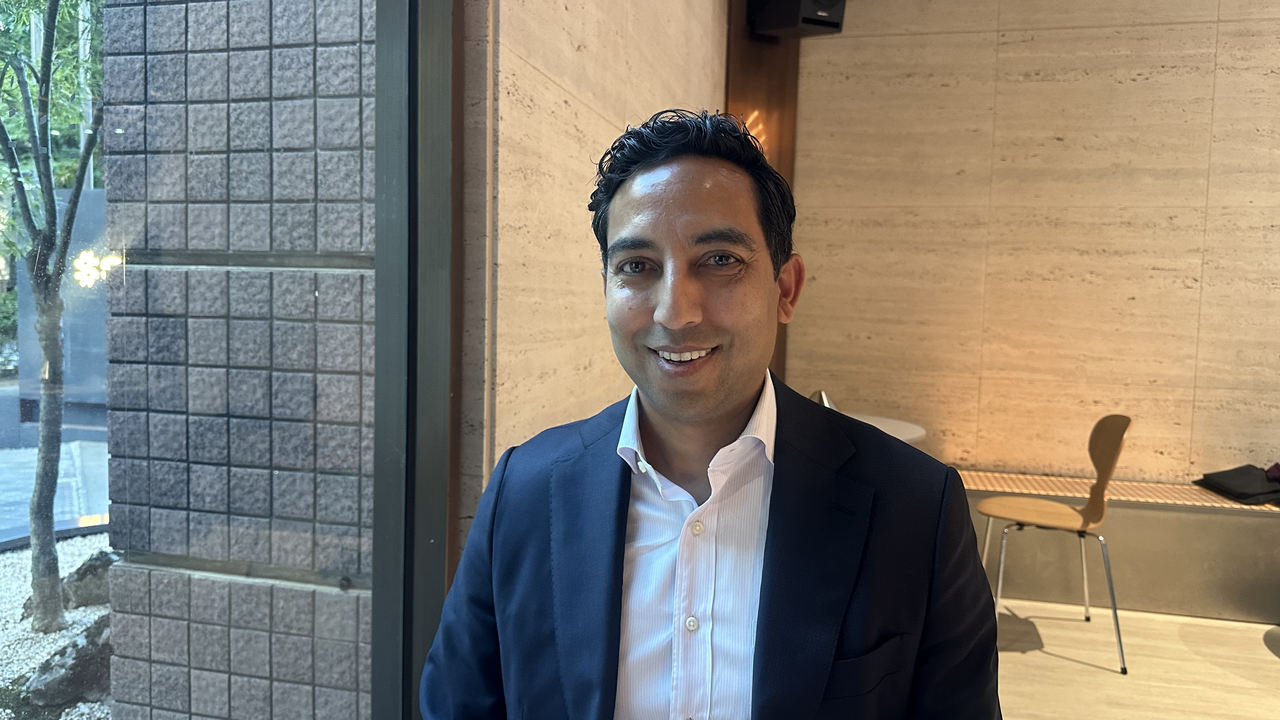
Ashish Birla, CEO of Evernorth, made the remarks in an interview ahead of Evernorth Holdings' NASDAQ listing, emphasizing "liquidity" as the key condition for on-chain market growth. His point: it is not enough to simply move stocks and bonds onto a blockchain — the market must allow investors to trade freely at reasonable prices.
Digital asset treasuries, or DATs, which hold and manage XRP as a primary treasury asset, face the same challenge of market activation. Birla identified three conditions for a DAT's success: accumulating digital assets, increasing XRP holdings per share, and building businesses that contribute to the market. Simply buying and holding assets is not enough, he said — the model must be backed by operations that generate returns from those assets.
Evernorth positions itself as a "second-generation DAT" built around that strategy. "First-generation DATs used financial engineering — buying and holding digital assets while raising debt in capital markets to deliver leveraged exposure," Birla said. "The second generation provides digital asset investment opportunities while also running real businesses that put those assets to work."
Birla joined Ripple in 2013, where he led the development of enterprise blockchain financial products and the expansion of RippleNet, the company's global payments network. "Putting assets to work productively means deploying them to earn yield or using them as collateral to secure loans," he said. "Right now, even if you hold dollars or Korean won, the process of deploying them efficiently is complicated — but blockchain will change that."
Evernorth plans to generate yield through decentralized finance, or DeFi, to be introduced on the XRP Ledger, known as XRPL. The company is also developing features to enable institutions to access DeFi on XRPL. "We are working with XRP developers to build new functionality that supports institutional DeFi," Birla said.
The key metric for measuring the company's performance will be XRP holdings per share. "If you hold one share of Evernorth, the amount of XRP represented by that share should grow over time," Birla said. "We will reinvest the yield we earn back into purchasing more XRP."
He doubled down on the importance of real business operations, citing Strategy, the world's largest DAT. "I don't think Strategy contributes to the growth of the Bitcoin ecosystem — having that company around doesn't bring more developers building on Bitcoin," Birla said. "Evernorth will help activate the market and grow its business alongside that effort."
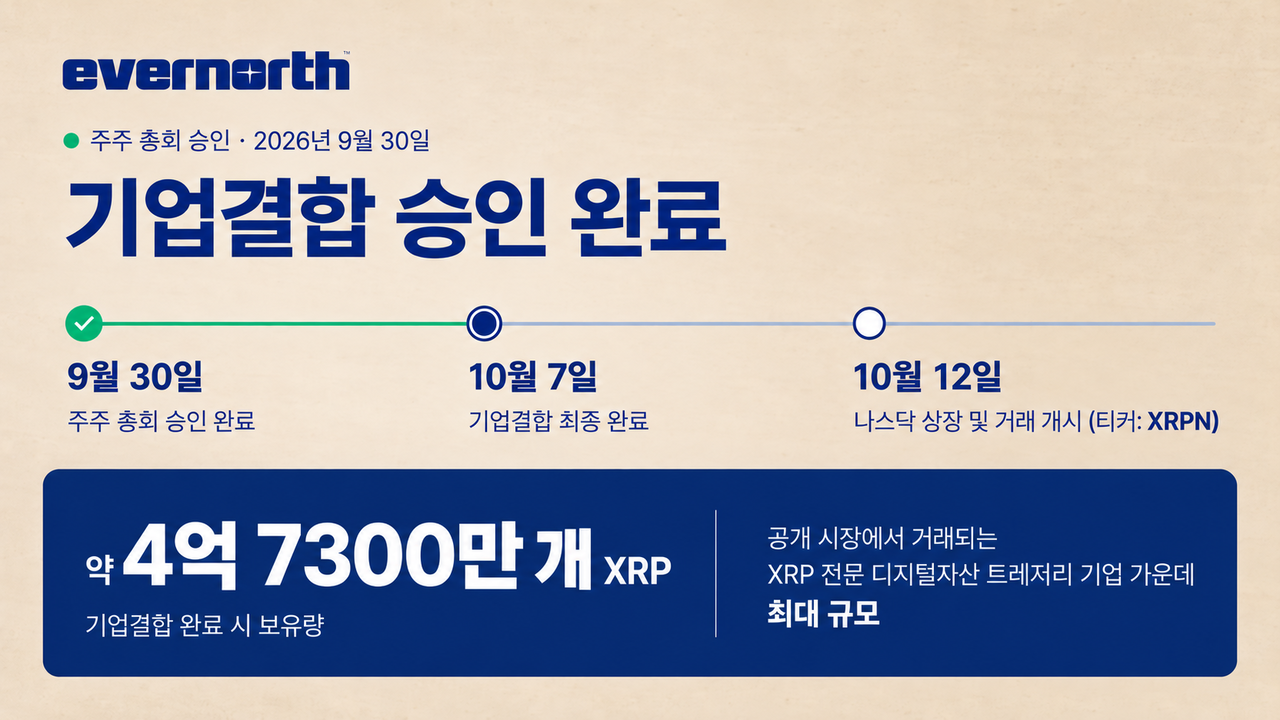
Retail investors have recently gained more ways to gain XRP exposure. Evernorth completed its merger with special purpose acquisition company Armada Acquisition Corp. II on Friday. The combined entity will operate under the name Evernorth Holdings and is set to begin trading on NASDAQ on Monday (local time) under the ticker "XRPN."
Evernorth raised about $300 million in cash through the merger, comprising $225 million in private investment, $30 million from an additional convertible note issuance, and approximately $48 million from trust account funds. Evernorth holds about 473 million XRP, making it the largest listed DAT focused on XRP.
"Evernorth is by far the largest XRP-focused DAT, having secured more than $1.2 billion," Birla said. "The network effects that come from that scale, combined with synergies from partners such as SBI and Ripple, are our key strengths." Major investors in Evernorth include Arrington Capital, SBI Group, Ripple, Pantera Capital, Kraken and GSR.
Despite the close collaboration with strategic investor Ripple, Evernorth operates independently. "Ripple holds only one seat on the Evernorth board and has a minority voting stake," Birla said. "Ripple focuses on developing enterprise payment and treasury management services, while Evernorth concentrates on holding XRP and deploying it on-chain."
Birla said the growth of the stablecoin market would be a positive development for XRP. Just as the dollar serves as the dominant currency for transactions and settlement in international financial markets, the on-chain market also needs a stable dollar-denominated stablecoin, he explained. "XRP alone is not enough," he said. "Dollar stablecoins will serve as the gateway for funds flowing in and out of the XRP ecosystem."
He also highlighted what sets XRP apart from stablecoins. "XRP is the only native asset on the XRP Ledger — anyone can hold it without the counterparty risk that comes with a stablecoin issuer," Birla said. He added that XRP can be used as collateral across a wide range of liquidity pools, whereas stablecoins can only be used in pools that support that specific asset.
He also said the tokenization of traditional financial assets such as stocks and funds would expand XRP's utility. "The tokenized stock market grew 33 percent over the past month," Birla said, adding that expectations are rising that regulators, including the SEC, will embrace the space.
He paid particular attention to XRP's role in the trading and financing of tokenized assets. "Tokenized stocks on XRPL can be traded against XRP as a trading pair," he said. "Since XRP is the most liquid asset on this network, it will help deepen market liquidity." He also said XRP could be used for financing — for instance, as collateral to secure loans or acquire other assets.
Meanwhile, he said price discrepancies in tokenized stocks and the protection of shareholder rights remain areas in need of improvement. He pointed to the controversy surrounding Robinhood, which launched a token tracking the share price of movie theater chain AMC Entertainment without the company's consent. "That is hard to call the same product as the underlying stock, and it is not the right approach," Birla said. "Companies like Apple and Tesla should directly select partners to tokenize their shares and ensure investors receive the same voting rights and proxy voting rights as holders of the original stock."
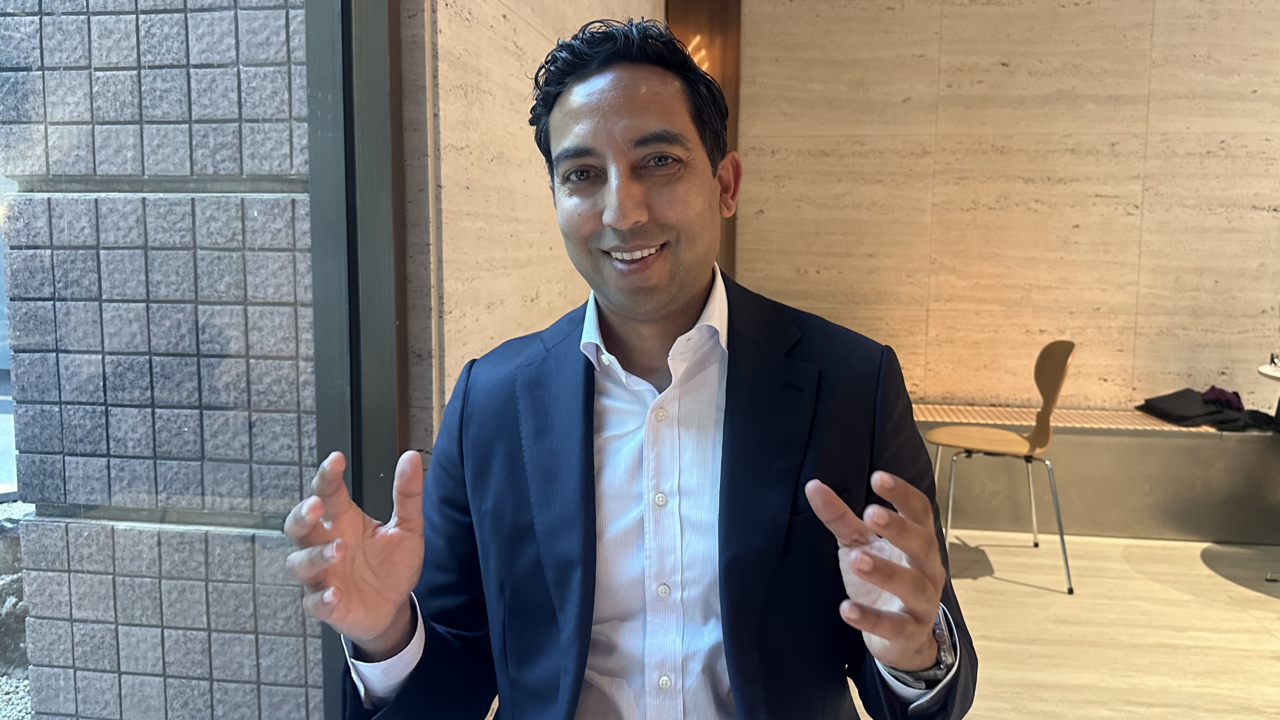
Birla has visited South Korea four times over the past year — a sign of how seriously he views the market. "Korea is a core market we have had our eye on from early on," he said. "Rather than scrambling to catch up once regulations are in place, I want to establish a presence now."
Driving that interest is the intense enthusiasm among Korean retail investors for XRP. "Thirty percent of global XRP trading volume comes from Korea," Birla said. "Since January this year, XRP has been the most traded asset on Upbit for more than half of all trading days."
Asked why XRP is in particular so popular in Korea, he admitted the question puzzles him too. "Every time I come to Korea I ask the same question, and I get a different answer each time," he said. "XRP and Ripple were among the few blockchain projects that worked with financial institutions from early on. In particular, the partnership with SBI helped create the perception that this was technology actually being used by financial institutions — and I think that resonated with Korean investors."
He expressed frustration at the repeated delays in South Korea's digital asset legislation. "Every time I visit Korea, I'm told things will be different in six months — but six months later, it gets pushed back another six months," Birla said.
He argued that broader adoption of blockchain requires both financial institution participation and a sound regulatory framework. "The internet emerged in the 1960s, but it took decades to reach mass adoption," Birla said. "Blockchain will also struggle to grow in earnest without integration with the existing financial system and institutional support."
Looking ahead, he said, "It has taken longer than expected, but change is now happening fast in the United States." He added that he hopes the blockchain industry will have grown to a scale that cannot be ignored by the time a new administration takes office. "Politicians will also want to be remembered as people who led innovation, not those who stood in its way," he said.
kyoung@heraldcorp.com