Interior minister vows to recruit police, lawyers to fill vacancies
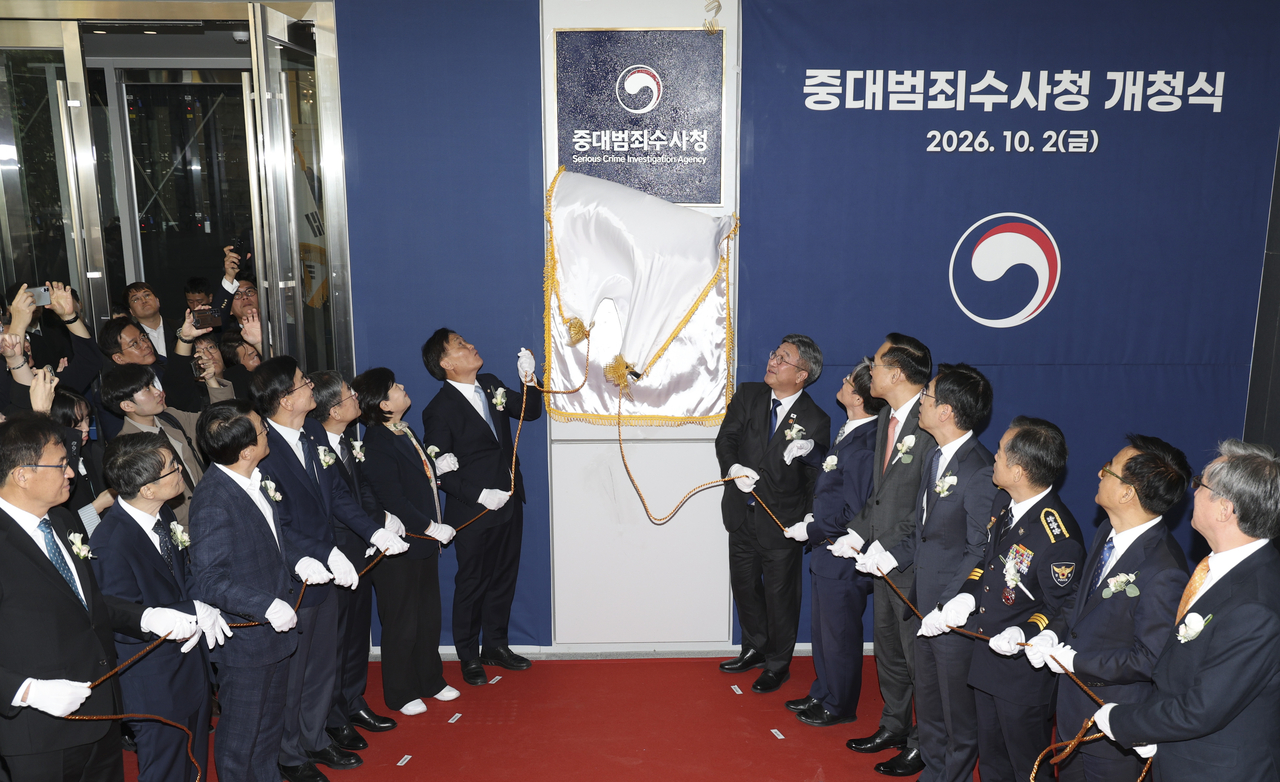
The Serious Crimes Investigation Agency, which opened Tuesday following the dissolution of the Prosecution Service, launched with its director's post vacant and staffing levels nearly 30 percent below its authorized headcount, making it all but certain the agency will need to recruit investigators from outside the prosecution — including from the police.
The Korean National Police Agency said in a document submitted Thursday to the National Assembly's Legislation and Judiciary Committee, chaired by Democratic Party of Korea lawmaker Seo Young-gyo, that it had received no formal request from the agency regarding the appointment of police officers, and that no competitive recruitment process targeting police was under way.
Under a special provision, former Prosecution Service employees may transfer to the agency without a separate examination until April 30 next year. The measure follows procedures set out in the law governing the agency's organization and operations. The plan is to prioritize filling investigative posts with prosecution-trained personnel before expanding career-track hiring to other job categories.
A Ministry of Interior and Safety official said the agency was currently processing transfer applications from Prosecution Service civil servants under the special provision, and that any remaining vacancies would be filled by recruiting police officers, lawyers, accountants, cybersecurity specialists and financial analysts.
The agency has been dogged by criticism that it was rushed into existence before adequate preparations were made. It began operations with roughly 1,900 staff — about 66 percent of its authorized strength.
At a national audit of the National Assembly's Interior and Safety Committee on Tuesday, lawmakers lambasted the agency for launching without a director or sufficient personnel, with some calling on it to actively recruit non-prosecution staff to plug the gaps.
"If about a third of the agency's positions remain unfilled, wouldn't it be better to appoint people from outside the prosecution as much as possible?" said Democratic Party lawmaker Lee Sang-sik. "To strengthen the democratic character of the organization, it would be good to hire non-prosecution personnel through various recruitment channels."
Interior Minister Yun Ho-jung said at the audit that he did not intend to penalize prosecutors as such, but that those trained in special investigation units who had learned to manipulate or suppress evidence would be left behind at the prosecution.
Responding to criticism that the agency's leadership was dominated by former judges and prosecutors, Yun said it had been structurally difficult to ask a sitting senior police superintendent to step down to a first-grade civil service post. He added that the agency planned to fill future vacancies through competitive career-track hiring, bringing in police officers, general-practice lawyers and other legal professionals.
Committee Chair Seo said that while it was entirely welcome for talented prosecution investigators to join the agency, its doors should also be open to capable candidates from other backgrounds who were committed to investigating serious crimes.
Mixed signals from police: wariness about a prosecution-dominated agency, but allure of big cases
Within the police, there are signs of reluctance to join an agency expected to be dominated by prosecution veterans. "Since prosecutors and prosecution investigators will make up the mainstream anyway, I don't think many police officers will be eager to go," one Korean National Police Agency official said.
Among officers at ranks where they are still building hands-on investigative experience, the mood toward a transfer is somewhat more positive — though it has cooled since the agency's launch. "The benefits of working there turned out to be less than expected, and there is a possibility of being rotated nationwide, so the initial enthusiasm for transferring seems to have died down a bit," one working-level officer said. "That said, depending on rank and circumstances, a lot of people at the inspector level and below are saying they would apply if a job posting came out."
Some officers are weighing a move out of ambition to work on major cases. "High-profile cases will tend to go to the agency rather than the police, so among officers who are hungry for investigative work, there are those giving it serious thought," said one officer at the inspector-general level. "The agency will inherit the investigative experience and techniques the prosecution has built up over the years, and I think the police could fall behind in investigative capability as a result."
arin@heraldcorp.com