'Budgets by principle, politics for the people'
Park diagnoses struggling neighborhood commerce and small-business hardship, calls for tailored support including digital transition
Raises concerns over main budget and supplementary spending process: 'Good results cannot justify skipping procedure'
Eastern Arterial Road undergrounding dispute a lesson in limits of top-down administration
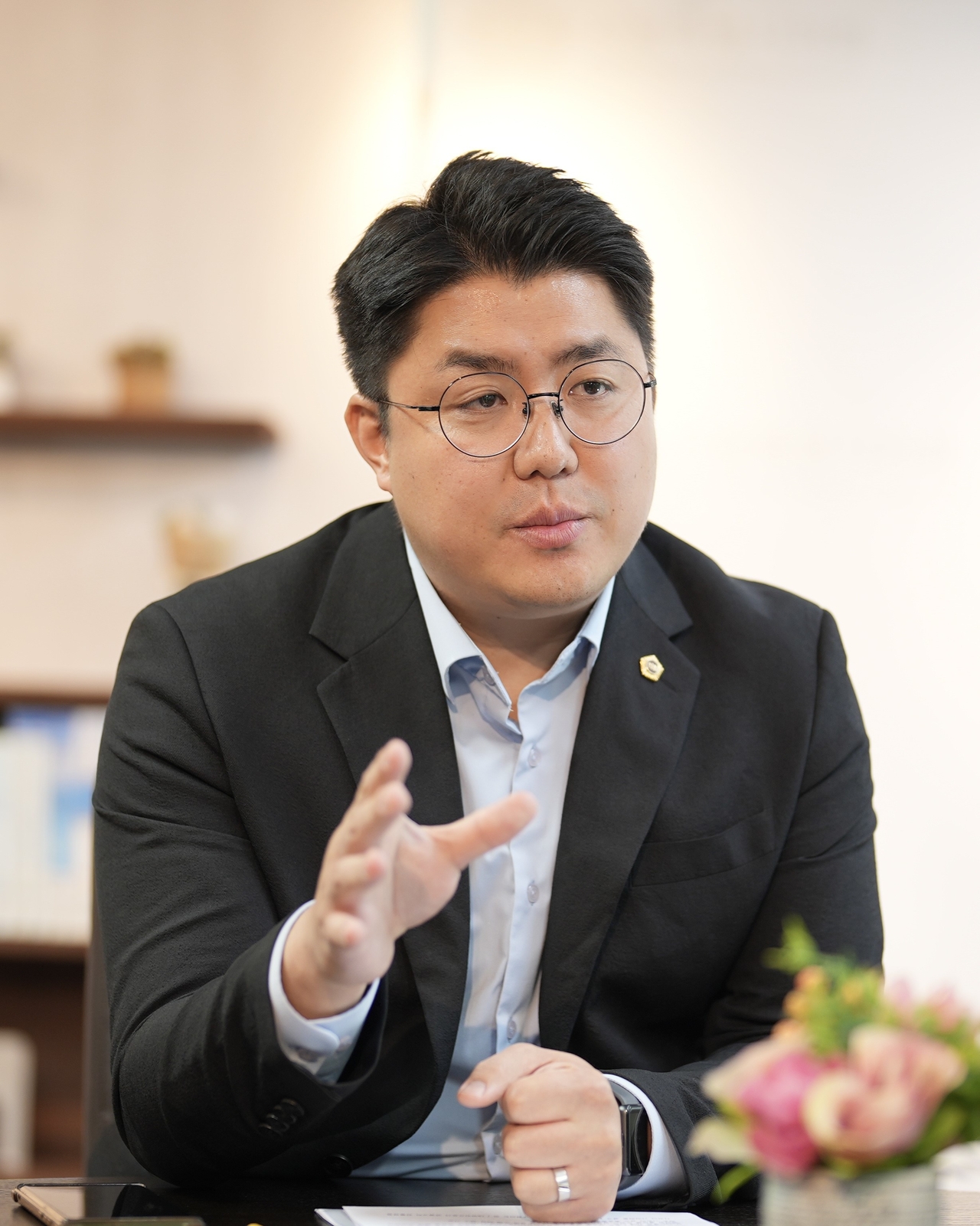
No matter how much Seoul's budget grows, its value diminishes if residents' lives do not improve. When economic indicators point upward but sales in neighborhood commercial districts remain flat, the results of policy deserve a second look. Even trillion-won infrastructure projects carry the cost of conflict and delay when they fail to win community consent.
These are the concerns that drive Seoul Metropolitan Council member Park Gyu-nam's legislative work. Park holds that the success or failure of policy should be measured not by the figures and project scales that government agencies present, but by tangible changes in residents' daily lives. He is equally firm that even well-intentioned projects must not stray from the basic principles governing how budgets are drawn up and spent.
Park, a member of the council's Planning and Economy Committee who also serves as its spokesperson, laid out his main legislative priorities in an interview on Thursday: restoring the everyday economy, ensuring accountability in fiscal management, expanding the local transport network and broadening civic participation.
He was particularly emphatic about the need for ruling and opposition parties to respond to livelihood issues together. "When it comes to restoring people's livelihoods, what does it matter which side you're on?" Park said. "If a proposal or policy genuinely helps residents, I think there is plenty of room for cooperative governance."
Livelihoods that numbers can't capture: start with neighborhood commerce
When Park examines Seoul's economic policy, his first stop is not major industrial facilities or headline economic indicators — it is the neighborhood shop and the traditional market.
His starting point was the hardship he heard from self-employed business owners during the election campaign. For merchants struggling with falling sales and rising operating costs, a macroeconomic recovery still feels like a distant prospect.
"The thing I heard most during the campaign was how difficult things were for people running small shops," Park said. "Even when various economic indicators improve, there is still a gap between those numbers and what people actually feel on the ground."
He said the way support is delivered must also change if neighborhood commercial districts are to become more competitive, arguing that one-off financial assistance alone is not enough to cope with a shifting consumer environment. He also noted that as online platform shopping becomes routine, the ability to use digital tools is now directly tied to sales — businesses in the same district can diverge sharply in competitiveness depending on how effectively they use online promotion and sales channels.
Support policy for small businesses should therefore be designed with the type of business, its scale and its level of digital readiness in mind, he said. The goal should not stop at expanding the number of recipients or the size of the budget, but should track whether the support actually translates into higher sales and more stable management.
Park was more pointed when it came to Seoul's fiscal management. What he has found through his legislative work is not a shortage of funds per se, but cases where the principles governing how budgets are drawn up and spent have not been properly observed.
He cited as a prime example situations where funding is sought through a supplementary budget for a project already included in the main budget but never properly executed, or where financial support is pushed forward before an adequate legal basis has been established.
A budget is the instrument through which policy is realized, but it is also a public resource built from taxpayers' money, he said. Regardless of whether a project is needed, questions of fiscal justification, feasibility and legal grounding must be examined first.
"If I had to put into words the problem I have seen in the council, it would be: no principles, no procedure," Park said. "The fact that an outcome is good cannot be a reason to skip the process." He added that it is important to properly establish principles and procedures while respecting the authority of each institution.
This connects to how he sees the respective roles of the executive and the legislature. In a structure where Seoul City draws up the budget and the council reviews and approves it, each side must respect the other's authority while ensuring sufficient scrutiny and checks. Park said budget review should not be reduced to a formality that simply decides whether a project goes ahead — it must also verify why a policy is needed, whether it overlaps with existing projects and whether it can actually be carried out, all of which are necessary to improve fiscal efficiency.
The principle he stresses is not opposition to any particular project. His emphasis is that the more a policy is needed by residents, the more its legitimacy and transparency must be secured throughout the process — only then can lasting results be expected.
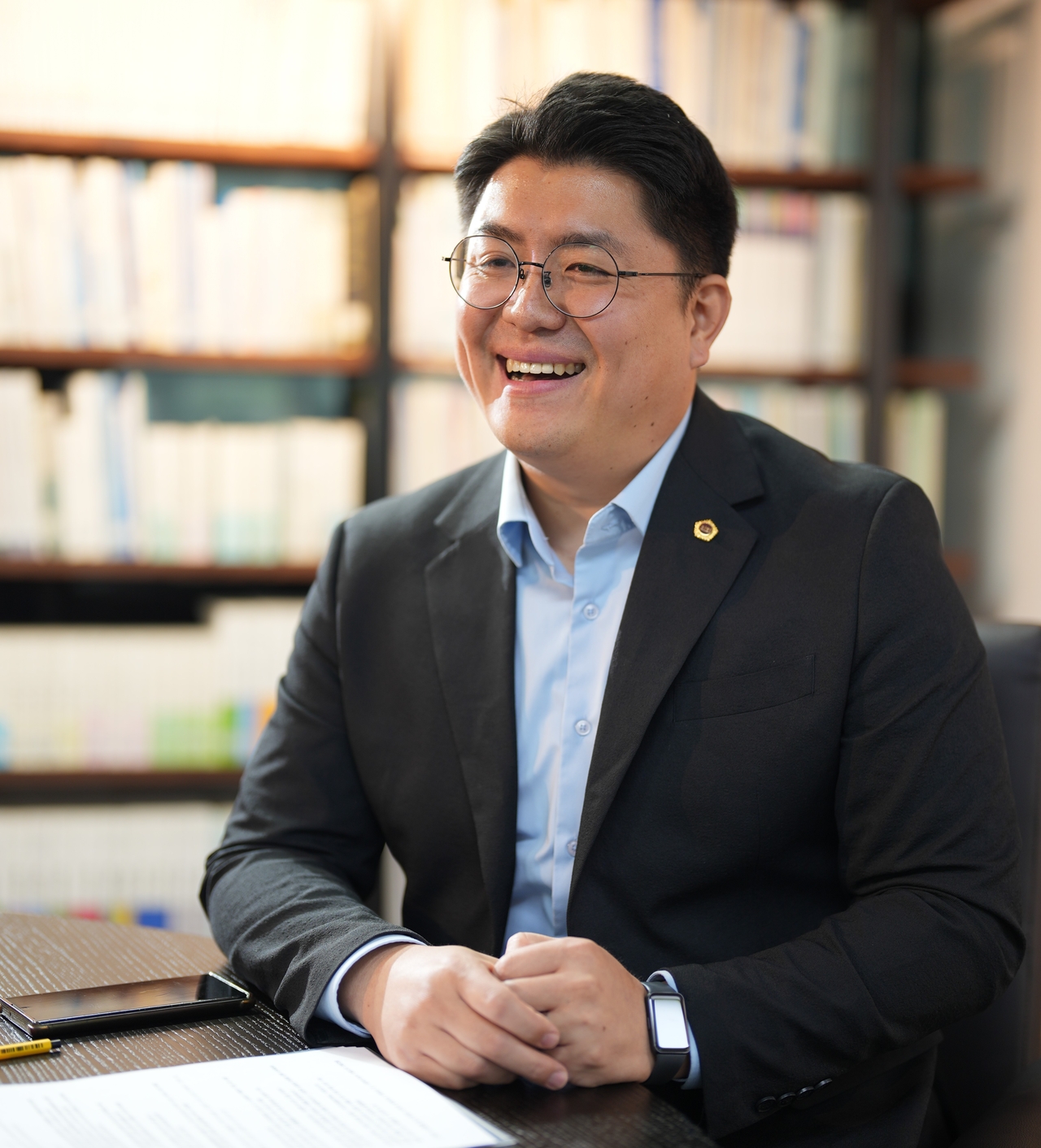
Lessons from the Eastern Arterial Road project: the limits of administration without community consent
Shifting from citywide fiscal concerns to local issues, Park's attention turns to the trust — or lack of it — between government and residents.
He pointed to the Eastern Arterial Road undergrounding project as a telling example. The project aims to ease chronic traffic congestion in Seoul's northeastern districts and make better use of above-ground space, but opposition from residents over the planned location of vertical shafts needed for construction exposed serious communication failures in how the project was being pursued. Plans to use green space were initially considered but met with sustained resistance, and conflict continued even as the location was adjusted.
Park said the lesson should be drawn not from the project's necessity, but from how it was handled. When government agencies draw up plans centered on cost and construction efficiency and then hold public briefings afterward, he said, it is difficult to earn the community's trust.
"I think the thing administration must be most on guard against is administrative convenience," he said. "If you fix the location first and then hold a briefing as an afterthought, resident opposition is bound to grow." Ultimately, he said, communication is what matters most.
Park sees community consultation not as a formality to be carried out after a project is already underway, but as a core process that must be built into the policy design stage. When sufficient discussion does not happen early on, resolving the resulting conflict later demands far more time and administrative resources. This, he said, is why large-scale urban infrastructure projects must weigh both administrative efficiency and community acceptance together.
On local legislative priorities, he identified improving the transport environment as a key task. Bus routes and the need for additional services in the Jangan-dong area of Dongdaemun-gu are directly tied to residents' daily mobility. Inadequate public transport access or long intervals between buses can cause inconvenience not only for commuters and students but also for people trying to reach local commercial areas.
Park said he plans to keep a close watch on these everyday transport issues and work toward solutions.
He is also paying close attention to the planned Myeonmok urban rail line, a transport infrastructure project designed to improve rail access in Seoul's northeastern districts and connect residents to a broader living area.
Park does not see large-scale transport projects and small-scale quality-of-life improvements as separate tasks. Residents will only feel the difference when long-term goals such as expanding the rail network go hand in hand with day-to-day fixes like adjusting bus routes. The same integrated approach — considering transport and everyday infrastructure together — should apply to local development projects as well, he said.
Lowering the council's threshold, restoring civic participation: changing how policy is made
In his role as Seoul Metropolitan Council spokesperson, Park said he also intends to close the distance between the council and the public.
The Seoul Metropolitan Council holds authority that directly affects residents' lives — reviewing the budgets of the Seoul city government and the Seoul Metropolitan Office of Education, and enacting ordinances. Yet Park's assessment is that most residents do not have a clear picture of what council members do or how the council makes its decisions. He said it is important not only to communicate the results of legislative work, but to build channels through which residents can share their views and take part in the policy-making process.
This concern is rooted in his own background. Starting with civic group work, he went on to serve as a cooperative governance coordinator for the Seoul city government, a policy support official for the Gyeonggi Province council and a secretary to a National Assembly member — gaining experience across government, the legislature and civil society. That path shaped his interest in how demands raised on the ground find their way into actual policy and budgets.
He singled out the participatory budgeting system as something that needs strengthening, saying he wants to examine the institutional framework to expand opportunities for civic participation — which have shrunk compared with the past — and ensure that residents' proposals are meaningfully reflected in policy decisions. Underlying this is the conviction that civic participation should extend beyond simply gathering opinions to shaping the priorities of budgets and projects.
Park sees the council's role as going beyond relaying residents' demands to actively driving the executive branch to review and act on them.
Near the end of the interview, Park recalled advice he received from residents when he first ran for office: do not forget the urgency you felt when you first entered politics, and keep listening to residents even after you win. He said he holds that advice as the standard for his legislative work as a first-term council member.
Restoring the everyday economy, establishing sound budget principles, expanding the transport network and broadening civic participation may look like separate policy areas, but they ultimately come down to the same question: how faithfully the needs of residents are reflected in administration and institutions. "I will not forget the sense of urgency I had when I first ran," Park said. "I will pursue legislative work that ensures residents' voices are genuinely reflected in policy and budgets."
7toy7@heraldcorp.com