Compact SUV wider than Santa Fe, Sorento
Expanded space focused on rear seats; doors open to 83 degrees
Real-world fuel economy in the 8 km/l range; highway acceleration adequate
"If a family can only buy one car, the Tucson would be an excellent choice."
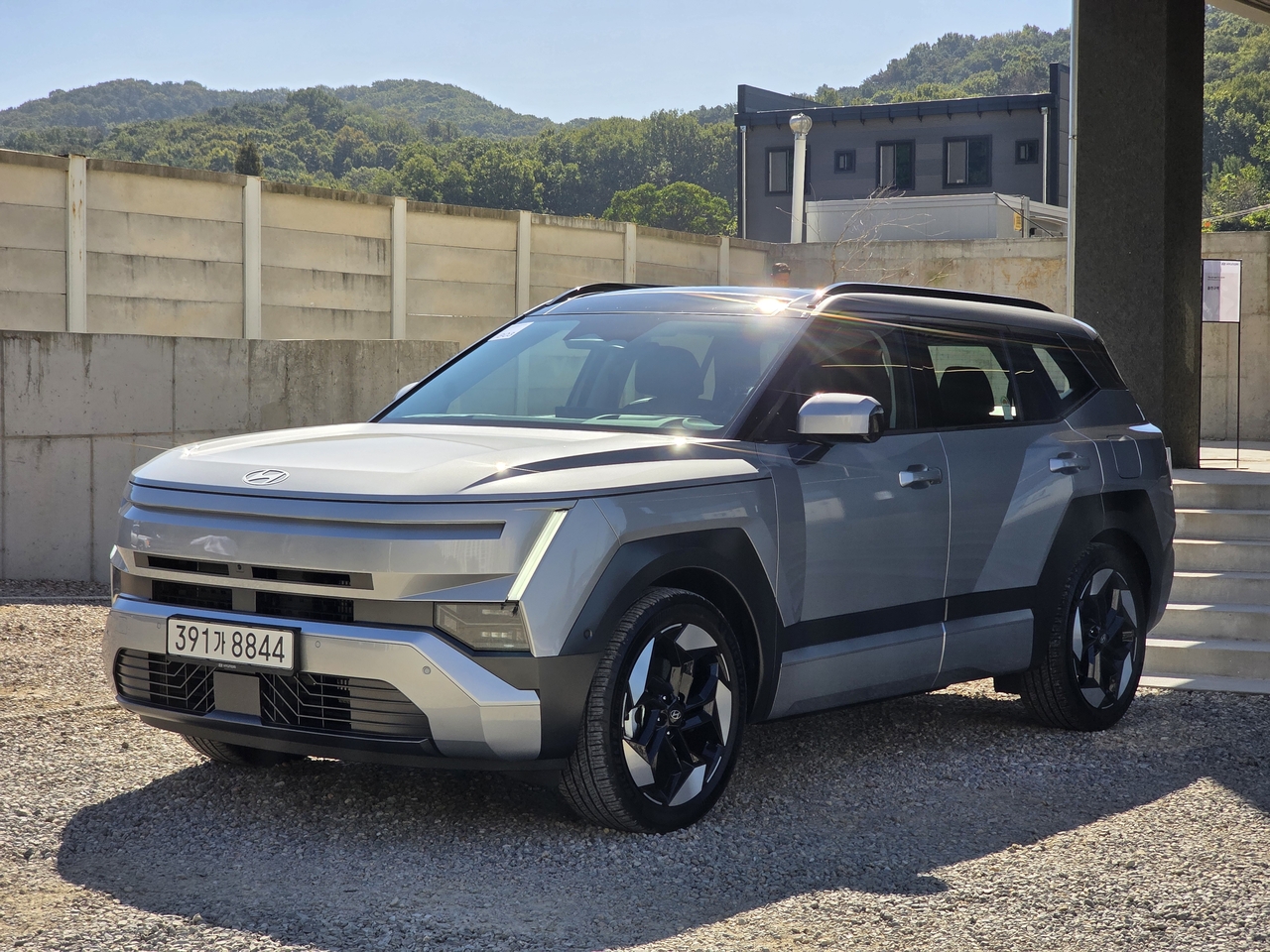
As Hyundai Motor President and CEO Jose Munoz suggested, the All-New Tucson — a full model change for the first time in six years — leaves nothing to be desired as a family car. The expanded body translates into generous rear-seat space that comfortably accommodates everyone from adults to infants in child seats, while an exterior design evoking the strength of steel gives the impression of a car built to protect its passengers.
The new Tucson 1.6 turbo gasoline model was put through its paces Wednesday at the "All-New Tucson Tech & Experience Day" held at Hyundai Motor Studio Goyang in Goyang, Gyeonggi Province. The test drive covered about 90 kilometers across regular roads, expressways and highways in the Gyeonggi area.
Wider than the Santa Fe — design made possible by advanced body-forming technology
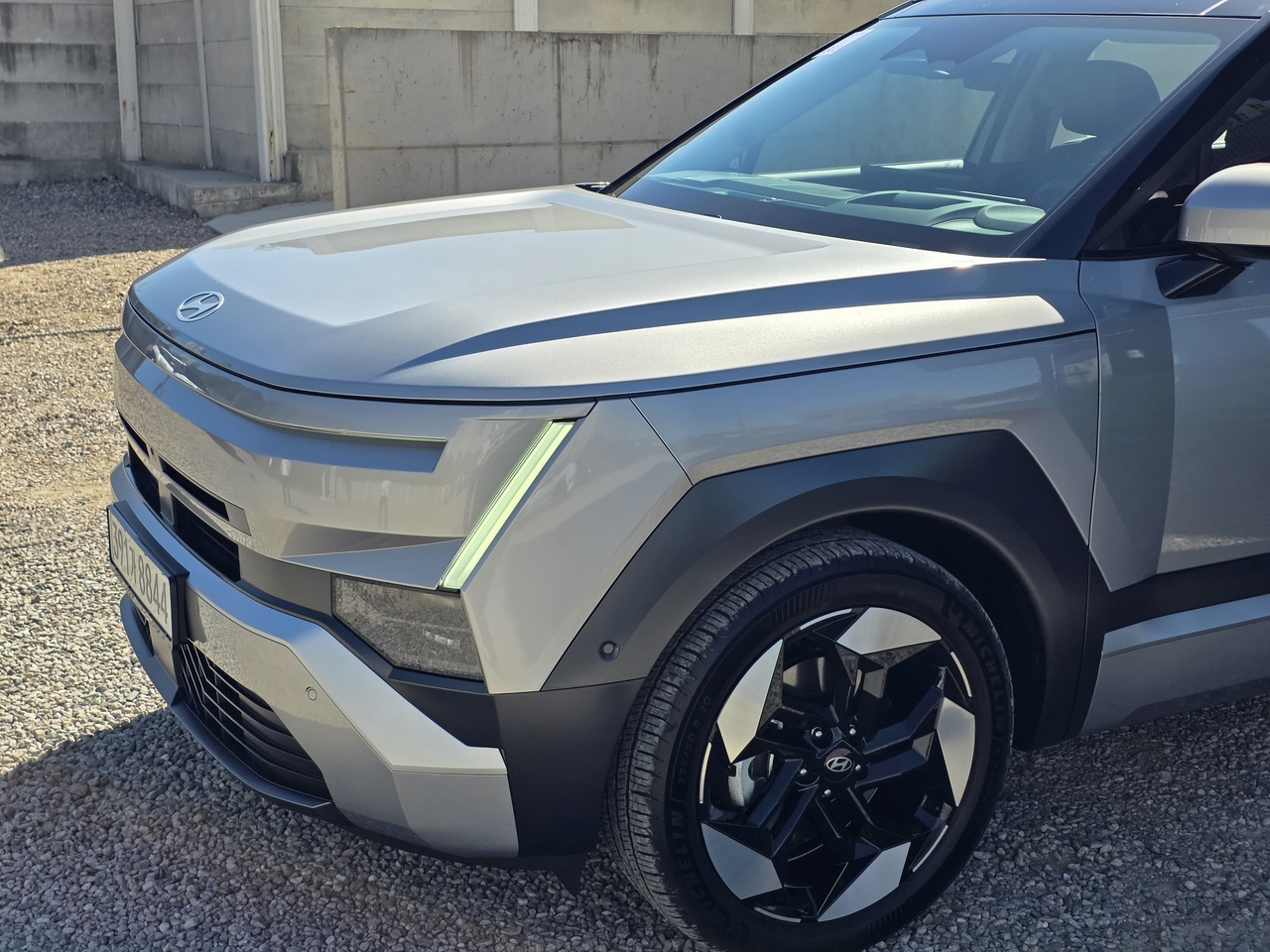
The changes to the new Tucson are immediately apparent from the outside. Built around Hyundai Motor's design language "Art of Steel," the model emphasizes the inherent solidity of steel, and its larger body gives an unmistakable impression of having bulked up.
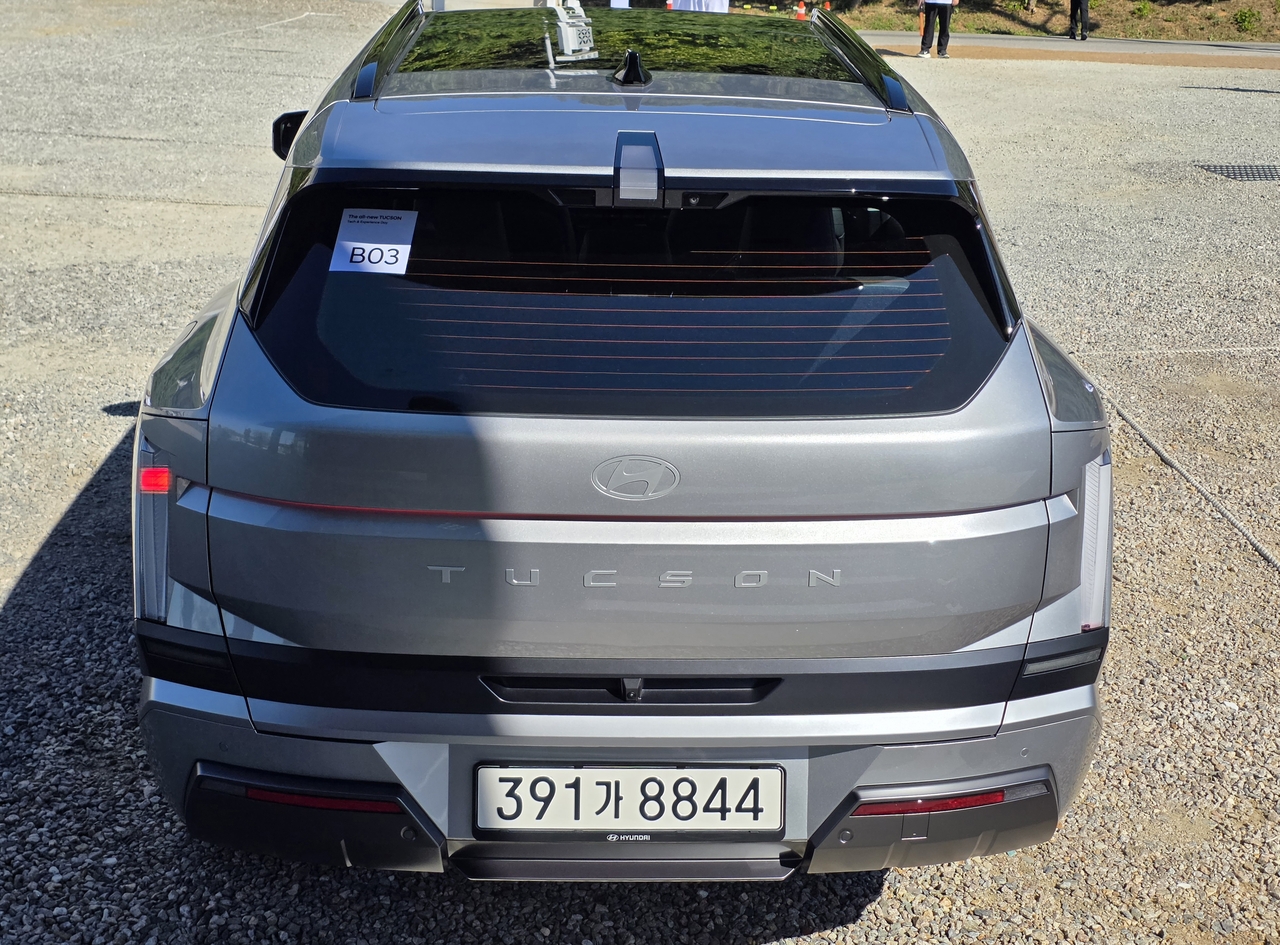
The overall length has grown by 60 millimeters, the width by 40 millimeters and the wheelbase by 30 millimeters. Although it sits in the compact SUV segment, the All-New Tucson's width of 1,905 millimeters is 5 millimeters wider than the Hyundai Santa Fe and Kia Sorento, both midsize SUVs. At 4,700 millimeters long, with a 2,785-millimeter wheelbase and a height of 1,685 millimeters, it is larger than the Kia Sportage in every dimension despite sharing the same compact segment.
The most striking exterior element is the three-dimensional fender on the side. The volume of the rear fender wrapping around the back wheels has been increased by 20 percent compared with the previous model, projecting a more muscular stance. At the front, a clamshell hood extending over the top of the front fenders adds to the visual presence; the hood itself is 15 percent longer than before. Vertical H-edge lighting daytime running lights and a horizontal slim center lamp using indirect illumination have been added to the front fascia, making the already larger body appear even wider.
Behind this design lies advanced body-forming technology. Hyundai Motor applied "forged shape control technology" and a "unit cam" structure to the hood manufacturing process to ensure consistent quality and a clean finish. The side outer panels were produced using "multi-directional tension control technology" and a "multi-stage forming method" to minimize surface creasing.
Hong Gyu-seon, a senior manager at Hyundai Motor's Forming Development Team 1, said the team extended its preliminary review and verification period to realize the challenging design. "We typically spend about three months on that process, but when we first saw the design we thought there was no way we could pull it off, so we moved the start date forward by two months and spent about five months on review and verification," he said. He added that forming analysis and verification were conducted at three to five times the level of previous models, and that the strong verification results meant production costs did not increase significantly compared with earlier vehicles.
Rear seats roomy enough for child seats and elderly passengers; fuel economy and acceleration leave room for improvement
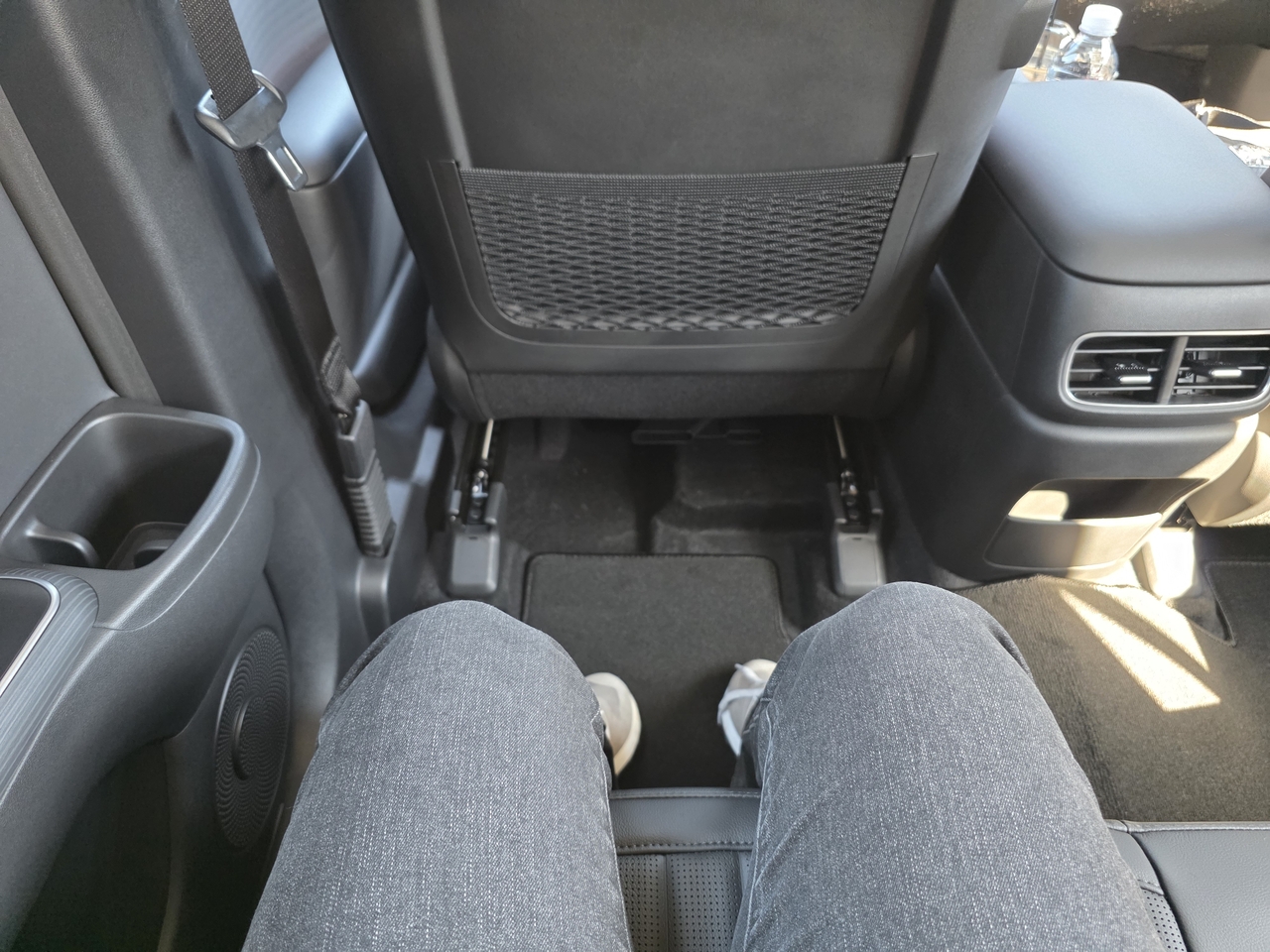
Inside the cabin, rear-seat livability has seen the most significant improvement. The added dimensions have been channeled into the second row: rear legroom grows by 14 millimeters, headroom by 29 millimeters, and shoulder room in both the first and second rows widens by 6 millimeters each. When this reporter — standing 160 centimeters tall — sat in the rear seat, enough floor space remained in front to fit a small carry-on bag.
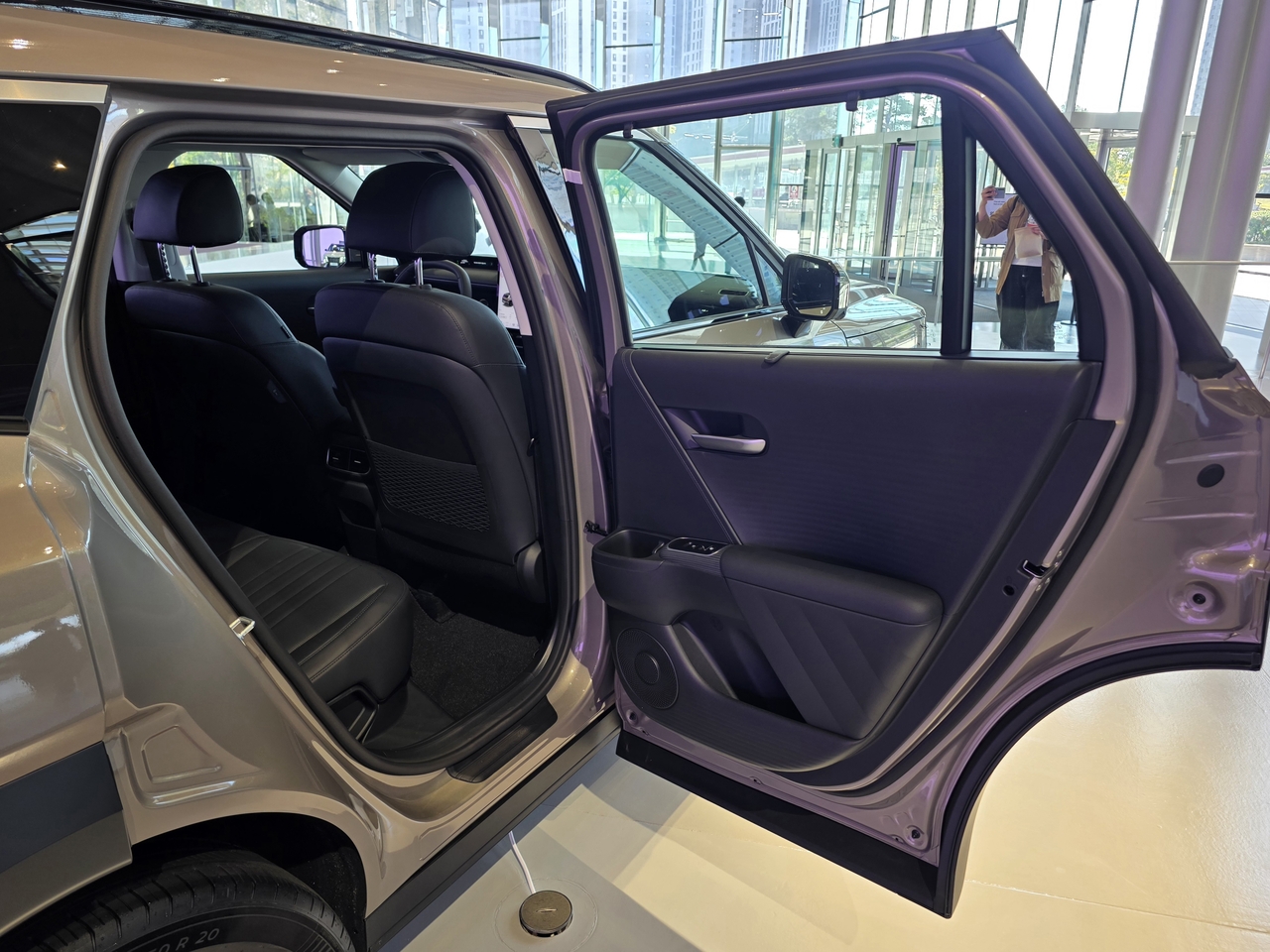
The rear doors now use a wide-open hinge that increases the opening angle from 73 degrees to a maximum of 83 degrees, making it noticeably easier to buckle a child into a car seat or assist elderly passengers. Trunk capacity has also grown, from 622 liters to 645 liters on the gasoline model.
Hyundai Motor also worked to improve cabin quietness and ride comfort for rear passengers. Sound-insulating glass, previously used only on the front windows, has been extended to the rear, while the front glass has been thickened by 1 millimeter to 5 millimeters. Reinforcing the body structure around the rear wheels and fitting a new suspension valve further reduces road vibration transmitted to the back seat.
Driving performance was solid. The 1.6 turbo gasoline model gains a larger turbocharger, pushing maximum output up by 13 horsepower to 193 horsepower, with peak torque of 27.0 kgf·m. The company says it replaced the previous seven-speed dual-clutch transmission with an eight-speed automatic to deliver smoother gear changes.
Rapid acceleration from a standstill felt somewhat labored, but the powertrain is more than adequate for everyday driving. On the highway, pressing the accelerator produced a steady, progressive build of speed, and the lane-keeping assist system helped maintain stable control at higher velocities.
Fuel economy was a disappointment. Measured over two legs of roughly 45 kilometers each, the car returned 8.3 km/l and 8.1 km/l — well short of the official combined rating of 12.2 km/l. Hyundai Motor said the official figure was certified on 17-inch tires, whereas the test vehicle was fitted with 20-inch tires and additional options, which dragged down efficiency.
Safety and convenience features have also been upgraded. A "door unlock power redundancy" system — which releases door locks even if the main power supply is cut in a collision, aiding occupant escape and rescue — has been applied for the first time on a Hyundai Motor vehicle. The SUV also marks the first Hyundai SUV to feature Pleos Connect. Vehicle pricing has not yet been announced.
eyre@heraldcorp.com