Losses from fare-free transport grow each year, operator says, citing violations of property and equality rights
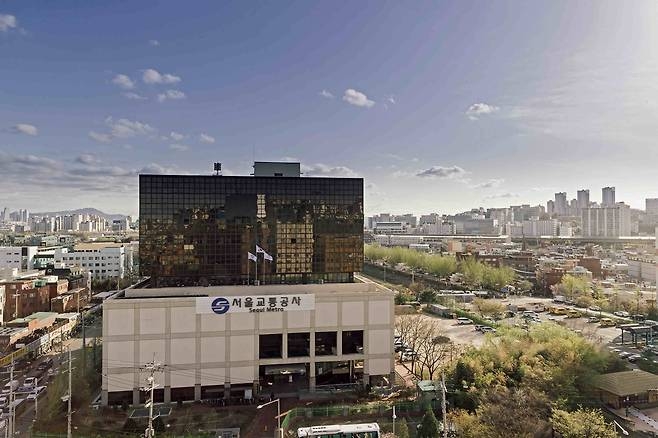
Seoul Metro said Thursday it had filed a constitutional complaint with the Constitutional Court, demanding compensation for revenue losses stemming from mandatory free rides for veterans and other eligible groups, citing the rapid growth of those losses as an urgent threat to the subway system's stable operation.
The company said losses have snowballed since January 2023, when an amendment to the Act on Support for Persons Eligible for Veteran's Compensation added combat-injured military personnel and combat-injured civil servants to the list of those entitled to free rides. Losses stood at 3.4 billion won ($2.54 million) in 2023, up 400 million won from the previous year, before rising to 3.7 billion won in 2024 and 3.9 billion won in 2025. Seoul Metro said it had repeatedly asked the Ministry of Patriots and Veterans to provide subsidies to cover the losses, but the ministry declined each time, citing a lack of budget appropriations. The company filed a civil suit against the government last July seeking repayment of roughly 3.7 billion won in losses for 2024, but a court of first instance dismissed the case in September.
After reviewing the ruling, Seoul Metro said it concluded that challenging the constitutionality of the free-ride statutes would be more effective than filing an appeal, prompting the constitutional complaint. In its petition, the company identified as the central problem the fact that Article 66, Paragraph 1 of the Act on the Honorable Treatment of Persons of National Merit imposes a free-transport obligation on the company without providing any specific provisions for subsidy payments to offset the resulting revenue losses.
The company argued this violates Article 23, Paragraph 3 of the Constitution, which requires just compensation when property rights are restricted for public necessity, amounting to an excessive infringement of constitutionally guaranteed property rights by forcing Seoul Metro alone to bear a "special sacrifice." The petition also contends that the government's practice of paying free-ride subsidies selectively — to some public transit operators but not others — violates the constitutional right to equal treatment.
Seoul Metro said that on subway Line 3 between Ogeum and Daehwa stations, it operates about 2.8 times as many services as Korail — 299 runs versus 107 — generating greater public benefit while absorbing larger losses, yet the government pays subsidies only to Korail.
Should the Constitutional Court strike down the relevant statutes, Seoul Metro said it plans to seek a retrial of the civil case dismissed in September in order to recover the free-ride subsidies. The company also said it would continue pressing the government to develop measures addressing losses from free rides for passengers aged 65 and older.
Seoul Metro President Kim Tae-gyun said providing free transport in honor of veterans and other eligible groups is a duty that both the government and Seoul Metro must fulfill. He added that he hoped the constitutional complaint would bring the company's difficulties into broader public debate and help create conditions under which it could receive fair compensation for the public services it provides.
kty@heraldcorp.com