Admission prices frozen for 21 years as fiscal losses mount; free-admission waivers reach 23.9 billion won — twice total revenue; Buckingham Palace charges roughly 43 times more than Gyeongbokgung
Admission fees at Gyeongbokgung and other major royal palaces and royal tombs have remained frozen for 21 years since 2005, with efforts to bring them in line with their cultural value continuing to stall. Lawmakers are now demanding that authorities set a firm timetable for a price increase and move quickly to channel any new revenue into on-site staffing and facilities.
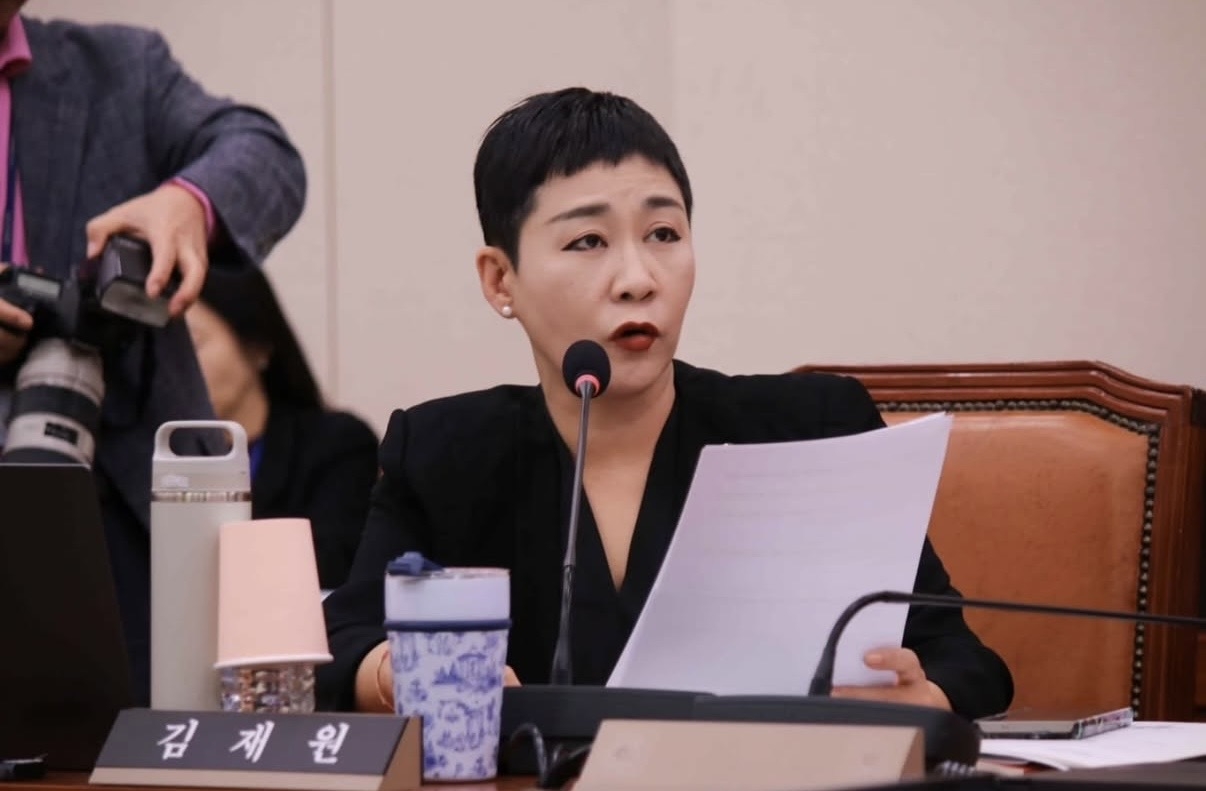
At Thursday's national audit of the Cultural Heritage Administration by the National Assembly's Culture, Sports and Tourism Committee, Rep. Kim Jae-won of the Rebuilding Korea Party and Rep. Choi Min-hee of the Democratic Party of Korea pressed the agency over its repeated delays in raising palace and royal tomb admission fees, urging it to produce a concrete implementation plan.
Kim said the Cultural Heritage Administration had reported to the president on Aug. 5 that it would announce revised fees in November and apply them from Jan. 1, 2027. He said a research report commissioned in December last year had already proposed setting fees at 5,000 won for the four grand palaces and Jongmyo Shrine and 3,000 won for royal tombs, along with a three-phase, five-year roadmap — yet none of it had been acted upon.
The Palace and Royal Tomb Heritage Bureau said in response that the pace of visitor growth had outrun the operational capacity and amenities at its sites. It added that a range of complex issues raised at public forums — including the scope of free admission for hanbok wearers and a tiered pricing system for domestic and foreign visitors — still needed to be resolved.
Bureau chief Jo Gyu-hyeong said improving the regulatory framework and the visitor experience had to come first in order to build public acceptance. "We judged it more appropriate as a matter of policy to first create an environment that visitors can actually feel the benefit of, and then raise the fees," he said.
Kim said total visitors to the four grand palaces, Jongmyo Shrine and Joseon royal tombs rose about 24 percent from 2023 to 2025, yet paying visitors grew only about 4 percent and admission revenue only about 9 percent. Over the same period, free-admission days expanded from 12 to 53, and the estimated value of fee waivers climbed from 17.6 billion won ($13.1 million) to 23.9 billion won — roughly double the total admission revenue of 12.1 billion won. Kim warned that without a fee adjustment, the deficit would grow uncontrollably.
![A view of Gyeonghoeru Pavilion at Gyeongbokgung [Korea Tourism Organization]](https://wimg.heraldcorp.com/news/cms/2026/10/08/news-p.v1.20261008.8ff60eaad9924b68889f9dd05077934d_P1.jpg)
Data presented at the audit on visitor numbers and admission revenue at the four grand palaces and Jongmyo Shrine laid bare what lawmakers called a "fiscal paradox" — more visitors, less money. Total visitors to the four palaces and Jongmyo rose 14.6 percent, from about 13.12 million in 2024 to about 15.03 million in 2025. Paying visitors, however, fell 4.1 percent, from about 4.88 million to about 4.67 million, while free visitors surged 25.6 percent, from about 8.23 million to about 10.35 million. As a result, the bureau's admission revenue for 2025 came to 12.1 billion won, a 2.3 percent decline from the previous year.
Staffing shortages and the safety risks they create also drew fire. According to Kim, each ticket and collection officer handled an average of 140,274 visitors in 2025, and three separate incidents in which on-site staff were assaulted by visitors were recorded from 2025 onward.
"Bringing admission fees in line with reality goes beyond simply securing revenue — it is directly tied to the safety of frontline staff," Kim said. He urged the agency to finalize and announce the fee increase and its effective date, and to submit to the National Assembly a plan to expand visitor support staffing as soon as possible.
Rep. Choi Min-hee of the Democratic Party of Korea, who questioned officials next, said domestic admission fees were far too low compared with major historic sites abroad. Converted at December 2025 exchange rates, admission to Buckingham Palace in the United Kingdom came to about 128,500 won ($96), Schönbrunn Palace in Austria to 57,755 won, the Alhambra in Spain to 37,829 won, the Palace of Versailles in France to 35,672 won, and the Grand Palace in Bangkok to 23,260 won. By contrast, Gyeongbokgung and Changdeokgung charge 3,000 won, while Changgyeonggung, Deoksugung, Jongmyo and the royal tombs charge just 1,000 won — figures that have not changed in 21 years.
Choi said the gap with overseas sites made the case for a fee increase clear. She called on the agency to move quickly on the visitor-experience improvements it had cited as reasons for the delay — including expanded amenities and an online reservation system — and to carry out a thorough public consultation process before proceeding with a fee adjustment.
terry@heraldcorp.com