'Demosath Project' turbine installed near BiMEP offshore wind R&D demonstration center
Saitec Offshore Technologies achieves milestone after a decade of work
Basque government funds up to 50% of offshore wind R&D costs
Basque trade agency: 'Government support has grown a new industry'
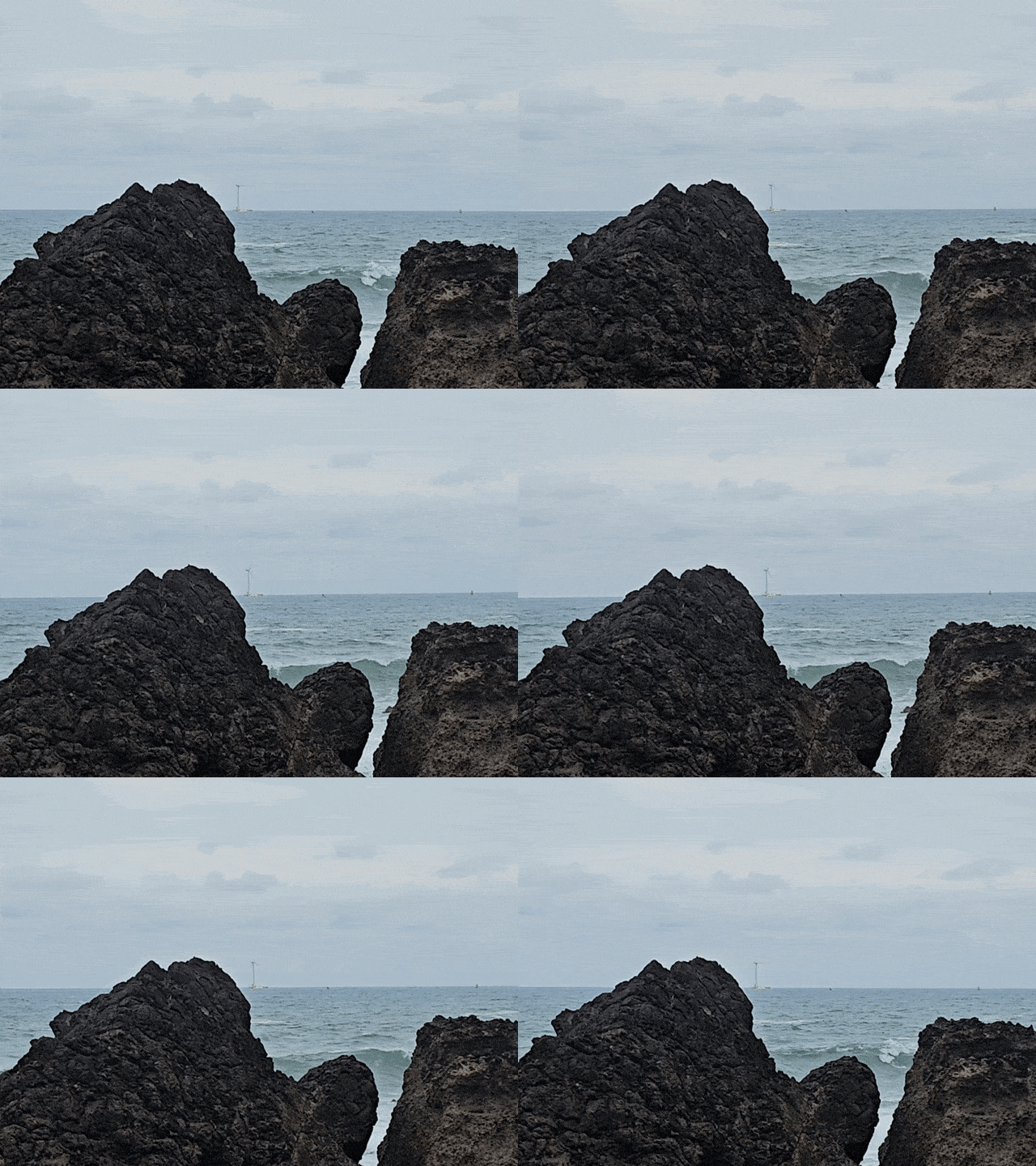
About 2 kilometers from BiMEP — the Basque Country's offshore wind research and development demonstration center — a single wind turbine floats on the open sea.
At first glance, it looks no different from any other floating offshore wind system. But it is in fact the turbine behind the Demosath Project, which swept a series of science awards and drew global attention by introducing, for the first time in the industry, a "rotating" concept to the floating structure.
The achievement belongs to Saitec Offshore Technologies, a company spun off from a civil engineering consultancy with more than 30 years of history, with the goal of breaking into the offshore wind sector. After three years of demonstration, the technology is now on the verge of being supplied to projects around the world, including a 700 MW offshore wind complex in France. Once exports stabilize, the company plans to build a factory capable of producing one 20 MW-class floater every two weeks.
Rotating with the sea breeze — civil engineering expertise meets offshore wind
The key difference between conventional turbines and the Demosath Project is that the floater rotates on its own to face the wind. This keeps the turbine constantly aligned with the wind direction, maximizing power generation efficiency. The principle sounds straightforward, but executing it is anything but simple. The design must prevent the cables and chains connecting the floater to the seabed from tangling as it rotates, while also ensuring the structure maintains its center of gravity and does not capsize.
The Demosath Project is a successful marriage of the parent company's long-standing civil engineering expertise with offshore wind technology. The chief executive of Saitec said the company approaches floater construction "as civil engineering specialists, not as energy industry players," adding that it offers "a different perspective and different solutions — including the use of concrete as a primary construction material."
The use of concrete is one of the Demosath Project's defining features. Steel, the conventional material for turbine structures, is something most countries must import. Concrete, by contrast, is universally available virtually anywhere in the world. For companies, the Demosath Project not only improves power efficiency but also fosters collaboration with local businesses and delivers cost savings.
The Saitec chief executive described the technology as "a solution that can significantly increase the involvement of local supply chains and local companies," adding that "this technology can be implemented 100 percent locally in South Korea as well." The Demosath Project itself was built through contracts with companies located within roughly 25 kilometers of the Port of Bilbao.
Government funds half of R&D costs — firms develop new products ahead of customer demand
![Jose Farra, head of sales at Slingshot, introduces the company's business to reporters on Friday. [Provided by the Korea Wind Energy Industry Association]](https://wimg.heraldcorp.com/news/cms/2026/10/08/news-p.v1.20261005.6ae4d150c19c44389f062d6c6b05d90c_P1.jpg)
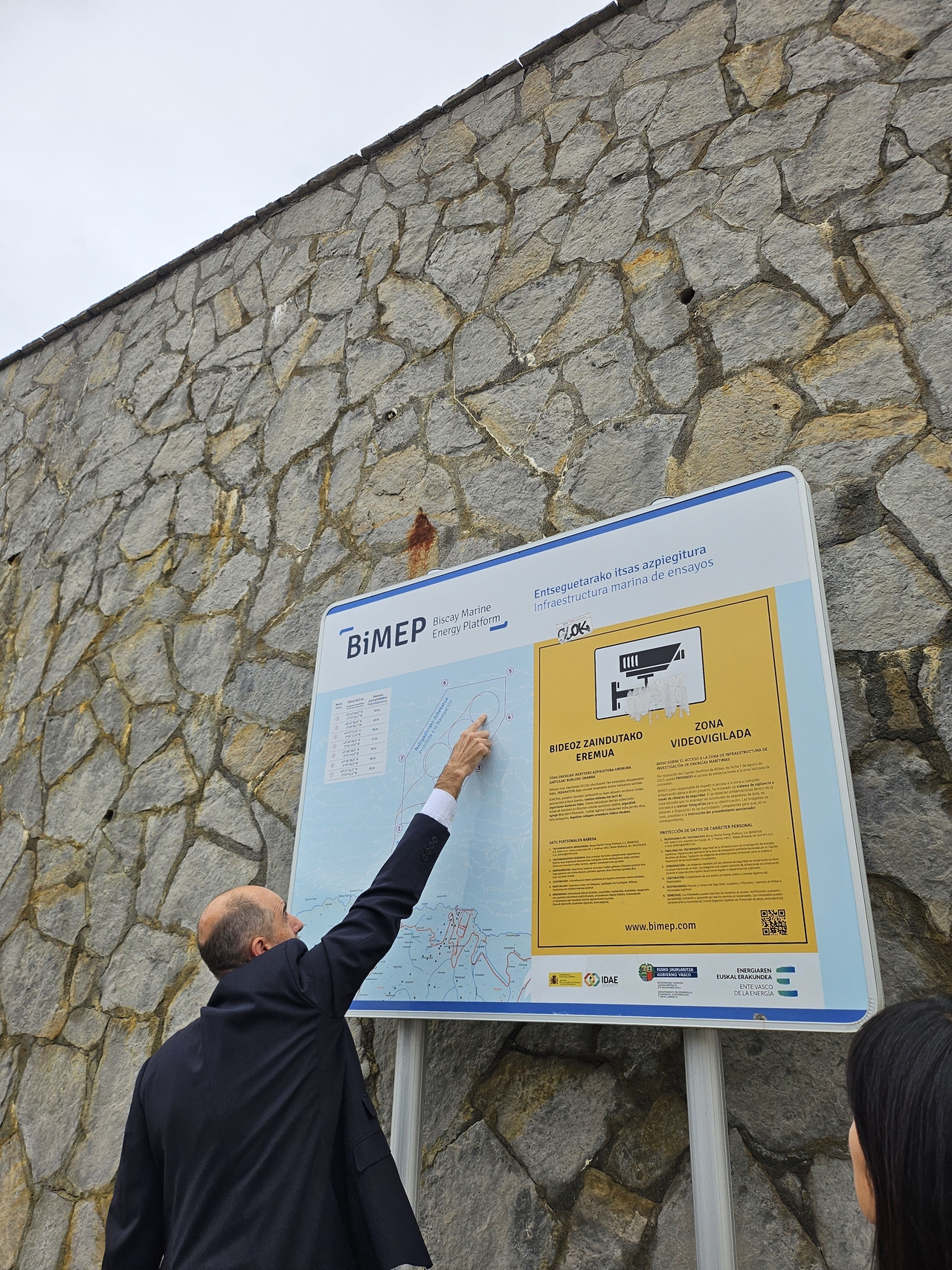
The Demosath Project stands as a prime example of the Basque government's sustained support for offshore wind R&D bearing fruit. BiMEP, where the project conducted its demonstration, is a 5.3-square-kilometer test site completed in 2015, with the Basque government holding a 25 percent stake and the Spanish central government holding 75 percent. Companies selected for the Basque government's Hazitek support program — which funds up to 50 percent of R&D costs in energy and other advanced technology sectors — can use that funding to develop and demonstrate new technologies at BiMEP.
Jose Farra, head of sales at Slingshot, an offshore wind lifting equipment company, said that while new product development normally requires a customer request first, government support allows firms to develop and test new products proactively, cutting lead times by up to a year.
Basque trade agency: 'An industry that didn't exist, built through public-private cooperation'
Backed by such government policy, offshore wind companies in the Basque region are pursuing R&D with growing ambition.
Nagore Bonia Gaberain, head of the Basque Trade and Investment Agency, said Basque companies invest 46 million euros ($51.5 million) annually in R&D. "The government began actively supporting offshore wind R&D in earnest from the 1990s, building the laboratories and testing infrastructure that the industry can now draw on," she said.
She added that many of the companies that have since pivoted to offshore wind were small and medium-sized enterprises that could not easily bear the costs on their own. "Ultimately, today's wind industry is a case of an entirely new sector — one that did not previously exist — growing on the back of active public-sector support and investment," she said.
klee@heraldcorp.com