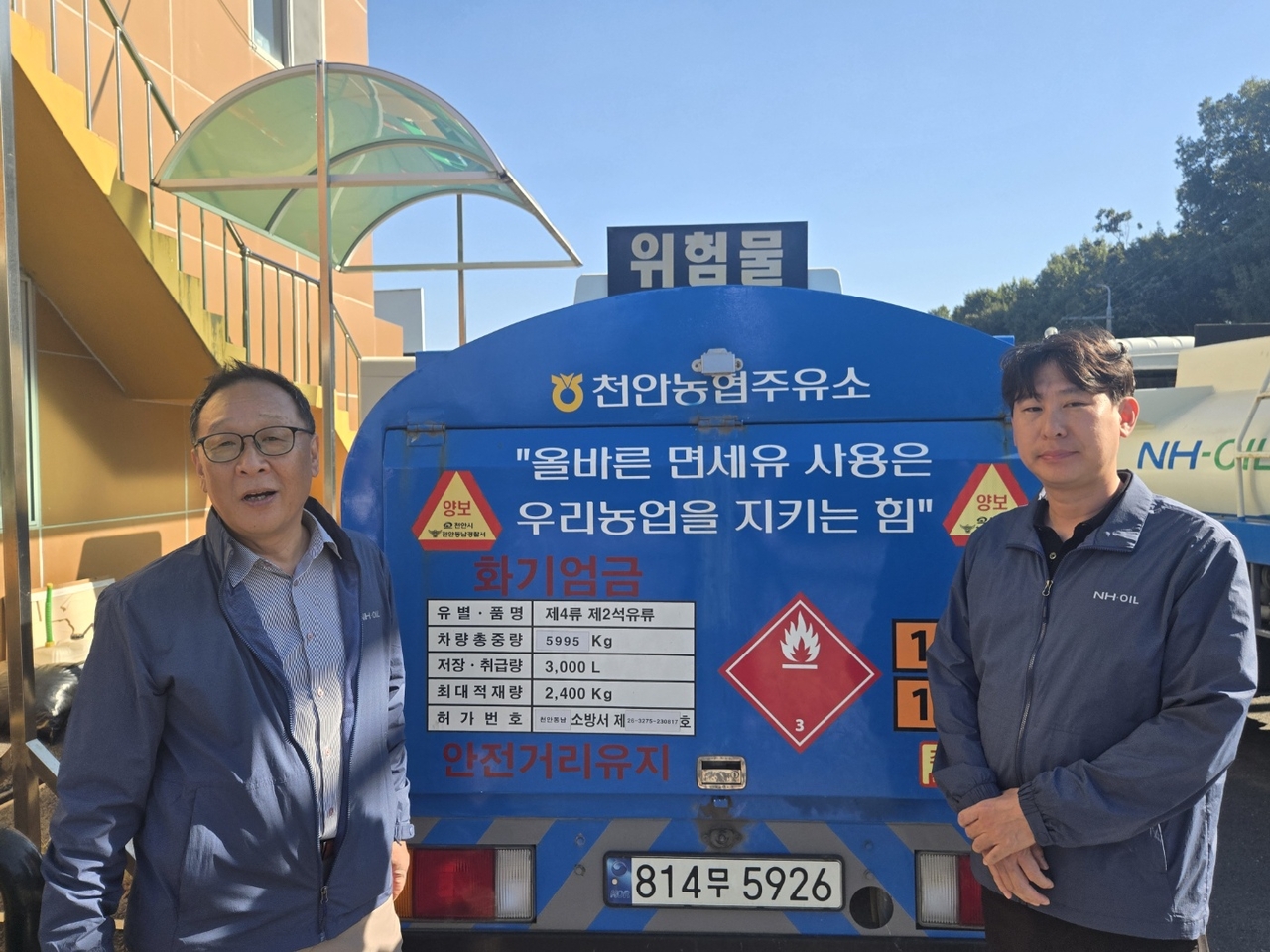
"Agricultural cooperative gas stations are not about profit — they exist to ensure farmers can focus on their work without worrying about fuel. With the fall harvest season driving a sharp surge in tax-exempt fuel demand for drying rice and other crops, we have serious concerns."
Kwon Yeon-su, head of the fuel business division at Cheonan Agricultural Cooperative, made those remarks in an interview at the cooperative's gas station in Pungse-myeon, Dongnam-gu, Cheonan, on Thursday. The station was also named one of this year's "good gas stations" by the Petroleum Market Monitoring Group, a designation given to outlets that kept price increases to a minimum and maintained honest pricing even as oil prices surged amid the Middle East war. The station's gasoline price stood at around 1,700 won per liter on Thursday.
Kwon, a farmer himself, said many cooperative gas stations would have shut down long ago had they been run like ordinary stations focused on profit. "Supplying fuel so that farmers can concentrate on their work without worry — that is the reason the cooperative exists," he said.
Last year, NH agricultural cooperative gas stations supplied petroleum products at prices below the refiner average, cutting farming households' operating costs by approximately 152.8 billion won ($114 million).
Since the outbreak of the Middle East war, NH Agri Business Holdings has proactively committed a total of 44 billion won — comprising 25 billion won in tax-exempt fuel subsidies, 13 billion won in NH card discount programs and 6 billion won in NH gas station price-stabilization support. Ahead of the spring farming season in March and April, it also supplied 16,500 liters of tax-exempt fuel to help ease the burden on farming households from high oil prices.
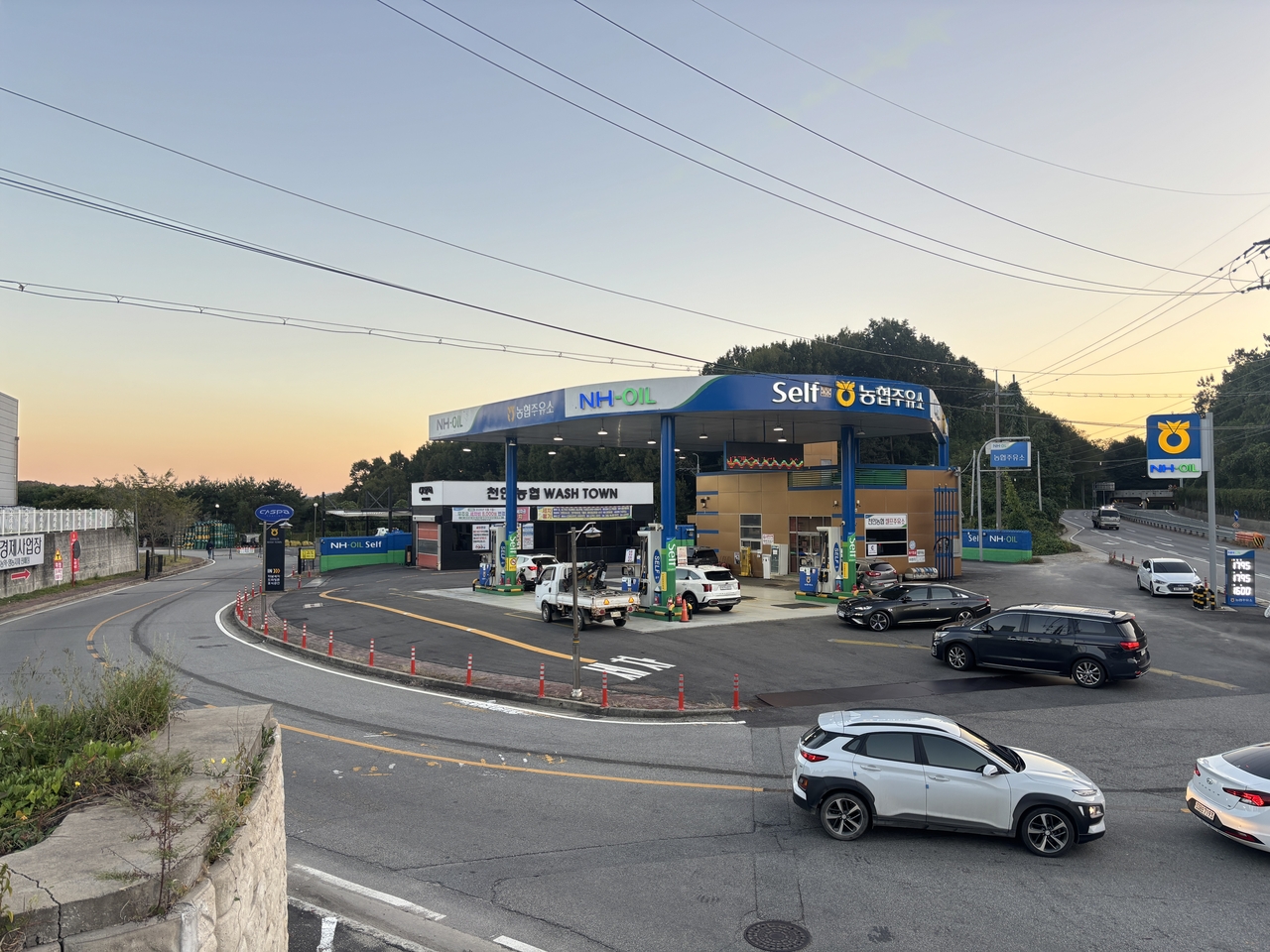
After the Middle East war broke out on Feb. 28, international petroleum product prices as measured by the Mean of Platts Singapore jumped 80 percent year-on-year, but the cooperative absorbed the losses rather than passing them on to farmers and consumers. Even so, when the government introduced a petroleum price cap on March 13, cooperative gas stations were excluded from loss-compensation eligibility.
In response, cooperative heads affiliated with the NH-OIL Agricultural Cooperative Gas Station Leadership Council appealed for measures to address the cooperative's fuel business losses on Sept. 29.
They estimated that cumulative losses at NH cooperative gas stations from the price cap would reach around 62 billion won. They also warned that if budget-fuel suppliers such as NH Agri Business Holdings were left out of a government plan to compensate refiners and provide 30 won per liter in support to refiner-branded stations, supplies of discounted winter heating oil and tax-exempt fuel could be disrupted.
Their argument is that while cooperative gas stations have continued to supply stable fuel to farming households in line with the government's price-stabilization policy — despite losses running into the tens of billions of won — the mounting deficit makes government support essential. To sustain national food sovereignty over the long term, they say, budget-fuel suppliers including the agricultural cooperative must be included alongside refiner-branded stations in any price-support scheme.
Kim Ju-yang, chief executive of NH Agri Business Holdings' agricultural economy division, said the cooperative would do its best to ensure stable agricultural production and uphold national food sovereignty by reducing the fuel cost burden on farmers during the winter season — when demand for tax-exempt fuel peaks — even as the fuel business runs large deficits. He went on to say that the cooperative was calling on the government and oil refiners to provide active cooperation and support so that it could continue to fulfill its role.
oskymoon@heraldcorp.com