District reviews 2027 disaster safety budget and confirms safety measures for local festivals
Seoul's Gangseo-gu has finalized its investment priority review plan for disaster safety spending as part of efforts to respond more effectively to various safety incidents.
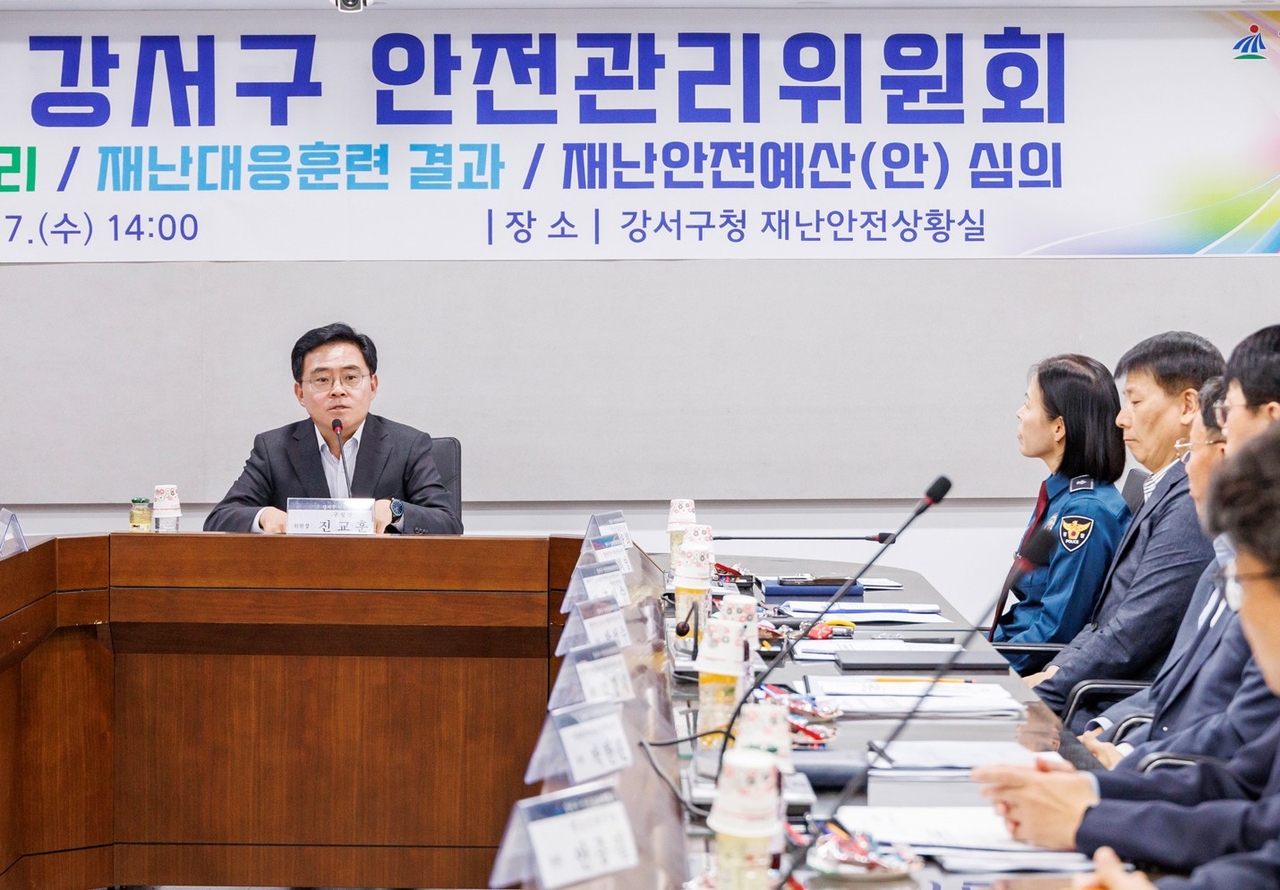
The district held a Safety Management Committee meeting Wednesday at the district office's disaster and safety operations center, deliberating and approving the fiscal 2027 disaster safety budget investment priority review plan — totaling 70.12 billion won ($52.2 million), an increase of 12.1 billion won from this year.
The plan categorizes disasters and safety incidents into four fields and 41 types, broken down into 116 detailed projects. It places particular emphasis on responding to natural disasters such as heavy rain and snowfall, as well as building a tighter local safety network covering child abuse prevention and children's safety. The budget plan is set to be finalized after deliberation and approval by the district council.
The meeting also reviewed the current state of safety management for local festivals.
Particular attention was paid to the 24th Heo Jun Festival, scheduled to run for two days starting Saturday at Seoul Botanic Park. More than 150,000 visitors attended last year, and large crowds are again expected this year, prompting officials to share safety management frameworks and identify potential risks in advance.
Participants agreed to strengthen inter-agency cooperation to ensure a safe festival, covering crowd management, visitor safety and traffic measures.
About 20 representatives from 13 organizations attended the meeting, including the district office, the Gangseo Police Station and the Gangseo Fire Station.
District Mayor Jin Kyo-hoon said the rapid progression of the El Niño phenomenon — driven by rising sea surface temperatures — has raised forecasts of a so-called "super El Niño" beginning this year, increasing the likelihood of heavy rainfall in South Korea between late autumn and early winter. "Since abnormal weather makes natural disasters difficult to predict, I urge all relevant agencies to work together to prevent disasters before they occur and respond swiftly when emergencies arise," he said.
seouldream01@heraldcorp.com