Su speaks at 'AMD Gamer Day' press briefing in Seoul
'Semiconductors are a team sport,' she says
Samsung foundry partnership also on the table
Targeting 3-to-5-year long-term partnerships
Satisfied with HBM4 performance; AMD pioneered HBM
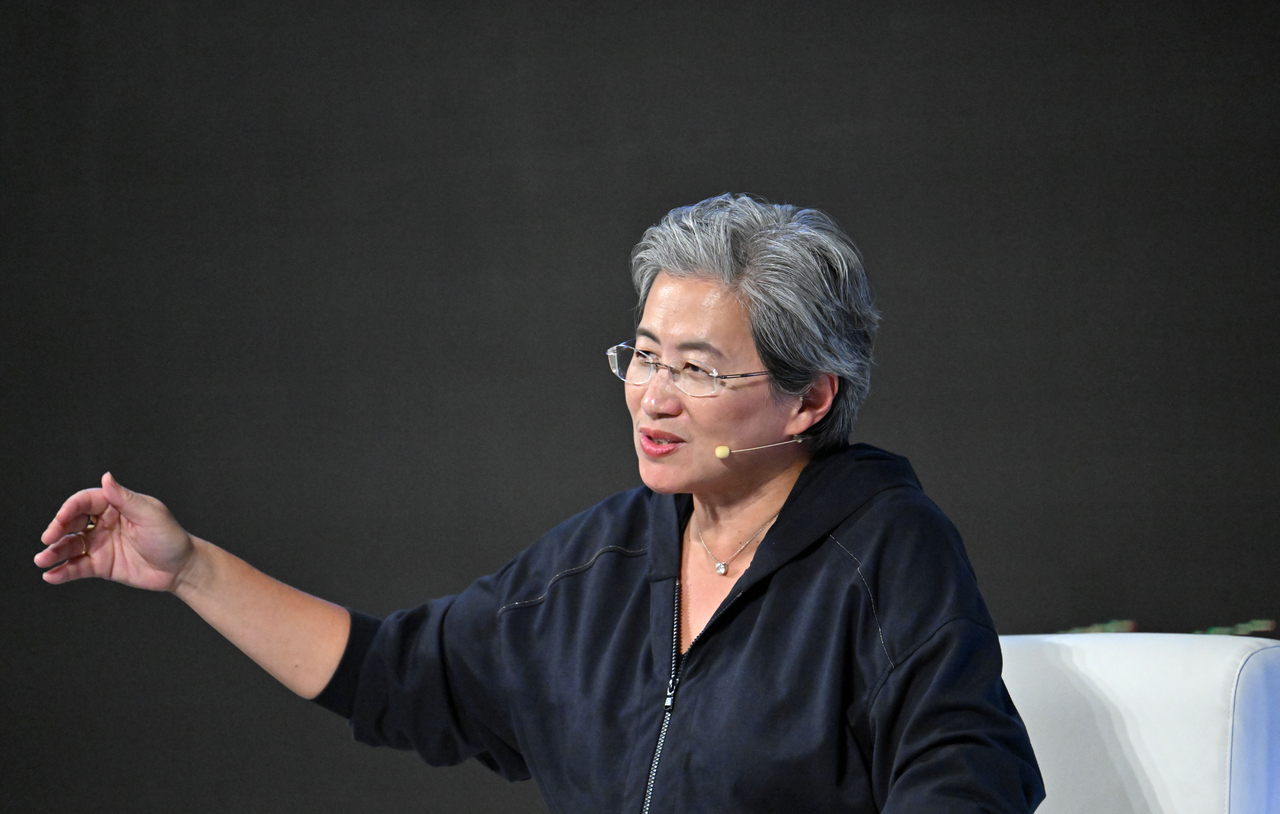
"AMD has no choice but to rely on the South Korean supply chain. Samsung Electronics and SK hynix are critical partners in achieving AMD's AI data center strategy."
AMD CEO Lisa Su made those remarks Wednesday at a press briefing following the AMD Gamer Day event at Dragon City in Yongsan, Seoul. She said semiconductors are "a team sport," adding that she had already met with SK hynix and was scheduled to meet with Samsung Electronics. "Meeting with partners is essential," she said.
Before the event, Su met with SK hynix CEO Kwak Noh-jung and other SK hynix executives. After the event, she left the venue to meet with Samsung Electronics DS Division head Vice Chairman Jeon Young-hyun.
Su traveled to East Asia to manage AMD's semiconductor supply chain ecosystem. She arrived in Taiwan on Tuesday before flying directly to South Korea. AMD relies on TSMC for the production of its flagship CPUs and GPUs, and sources HBM and server DRAM from Samsung Electronics and SK hynix. Su was set to depart for the United States on Wednesday evening after completing her back-to-back meetings.
Su said AMD has been able to secure a stable memory supply despite a tightening market, thanks to long-term partnerships it has built with Samsung Electronics and other domestic memory chipmakers.
"Even in a tight supply environment, we were fortunate to have built up our supply chain over a long period, which allowed our business to keep growing," she said. "We are working hard in many ways to optimize memory, and we are also asking our supply chain partners to ramp up faster."
Returning to South Korea for the first time in seven months since March, Su said AMD is not looking for short-term partnerships of one to three years, but rather medium-to-long-term partnerships spanning three to five years or more. "There are so many innovative companies in the Korean AI ecosystem, and I want to leave a broader footprint here to drive further progress," she said.
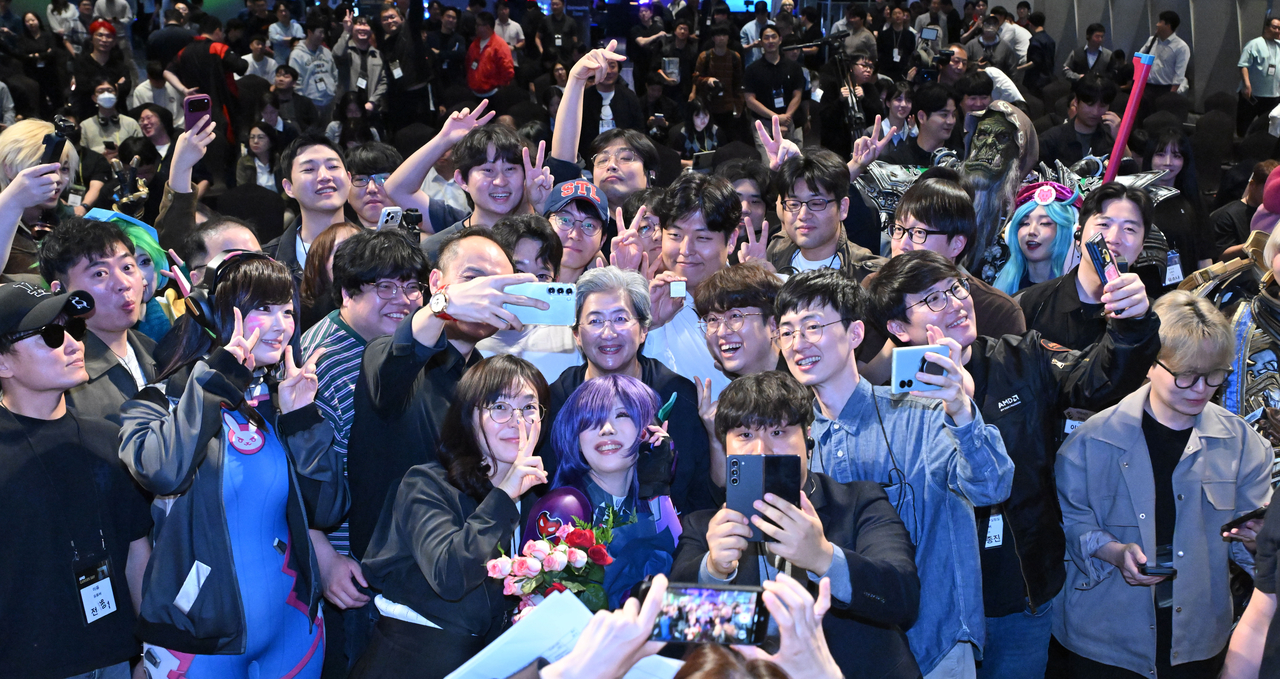
Attention is also turning to whether Samsung Electronics' foundry business could become a chip manufacturing partner for AMD, as securing advanced wafer production capacity has grown increasingly important amid surging AI semiconductor demand. The two companies signed an MOU in March to strengthen cooperation in next-generation AI memory and agreed to explore foundry collaboration for next-generation chips.
"Samsung Electronics is a company with which we have a strategic partnership," Su said. "I believe we can continue to collaborate in other areas, including foundry."
AMD has recently begun shipping its next-generation AI accelerator, the Instinct MI455X, along with its sixth-generation server CPU, the EPYC, and Helios — a rack-scale platform that integrates AI servers — as it pushes into the AI data center market.
Su said those launches were also made possible with support from Samsung Electronics and SK hynix, and highlighted AMD's role in pioneering HBM development. AMD and SK hynix have collaborated since the early stages of HBM development in the late 2000s.
"We are satisfied with the performance of sixth-generation HBM4 and it is delivering results," she said. "AMD is the company that made HBM happen, starting in 2015." She added that AMD is "leading the market by integrating complex technologies."
Su declined to give specifics, however, when asked whether the large-scale investment AMD announced in Taiwan could also extend to South Korea. AMD unveiled a $10 billion supply chain investment plan in Taiwan in May and reaffirmed that commitment during this visit.
"We are building supply chain partnerships all over the world," Su said. "In South Korea, there are opportunities to collaborate on system components, semiconductor wafers, packaging and memory." She added that AMD intends to invest "tens of billions of dollars globally to build out its supply chain."
jeongwan@heraldcorp.com