Historic religious and tourism sites added to original downtown area
![Suncheon's Maesan-deung in the 1910s (above) and education and medical facilities established by Southern Presbyterian missionaries in the 1920s. [Photo: Suncheon City]](https://wimg.heraldcorp.com/news/cms/2026/10/07/news-p.v1.20261007.13d2ca62e78f49ecaf9d4a2c0d637e1d_P1.jpg)
The Cultural Heritage Administration plans to designate the Suncheon Maesan-deung Modern and Contemporary Historical Cultural Space as a national registered cultural heritage site.
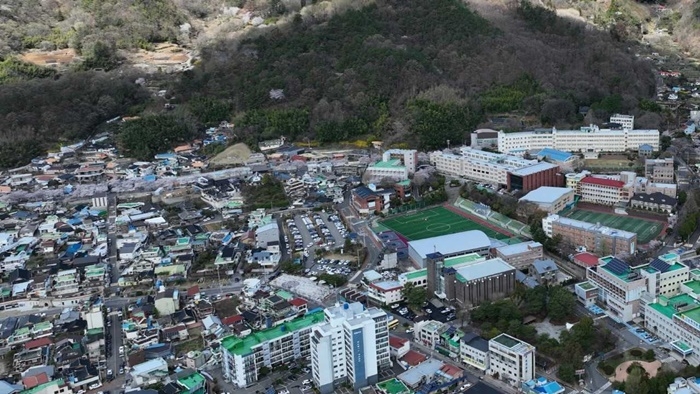
According to Suncheon city on Wednesday, the area to be designated covers a zone in the original downtown stretching from the west gate information center of Suncheonbu Eupseong to Suncheon Central Church, Suncheon Medical Center, the site of the Christian tuberculosis clinic and the Maesan-deung district.
The area has been earmarked for designation in recognition of its historical and cultural value as a reflection of Suncheon's modern and contemporary way of life across education, medicine, religion and residential life.
In addition to five cultural heritage properties already designated or registered within the zone, seven more are set to be added as national registered cultural heritage: the Rogers missionary residence, the old stone wall of the Maesan-deung missionary village, the Annyeoksan (Alexander) isolation ward, the stone building of the rehabilitation and vocational guidance center, the sarangchae (outer quarters) of the Woo family hanok in Geumgok-dong, the anchae (inner quarters) of the same hanok, and the residence of the Gosan clinic director.
The advance notice period runs for 30 days, after which public opinion from all sectors will be gathered before the National Heritage Committee reviews and grants final designation.
A city official said Suncheon plans to draw up a comprehensive maintenance plan by next year that reflects the historical and cultural value of the Maesan-deung area and the characteristics of each individual heritage site, then carry out conservation, restoration and utilization projects in phases through 2031.
The city particularly intends to develop a visitor trail connecting the original downtown with the Maesan-deung missionary heritage sites, expand exhibition, education and hands-on content, and build the area into a historical and cultural tourism hub linked to nearby cultural venues, restaurants, cafes and other local businesses.
Suncheon has long been considered a region where Protestant Christian culture took deep root during modernization, owing to the missionary activities of the Southern Presbyterian Church of the United States, which established a mission station there in 1910 and combined education — through Maesan Hagwon — with medical services through Jaae Hospital.
According to Statistics Korea and other data, the Protestant population share in Suncheon stands at 30 to 35 percent, far above the national average of 20 percent, and rises even higher when Catholics are included.
parkds@heraldcorp.com