The Yeosu Gwangyang Port Authority is seeking an operator for a four-berth container terminal, offering an annual lease of 38.5 billion won ($28.3 million).
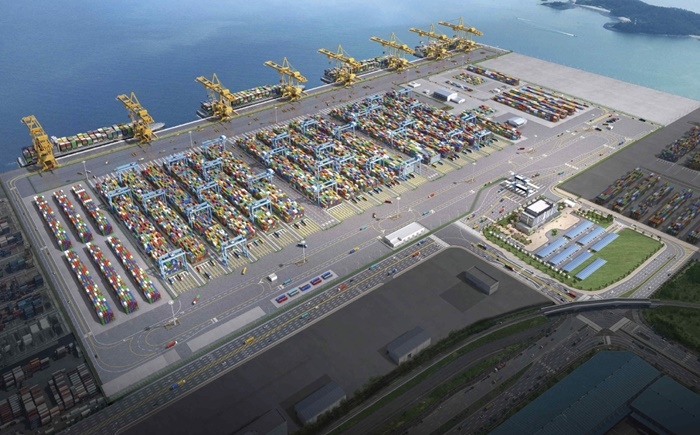
The Yeosu Gwangyang Port Authority is accepting applications from operators to run the Phase 3-2 unmanned automated container terminal at Gwangyang port, which the government and the authority are developing with a target opening date of 2029.
According to the Yeosu Gwangyang Port Authority (YGPA), the Phase 3-2 automated container terminal will cover 770,000 square meters and feature four berths — three capable of handling 4,000-TEU vessels and one for 2,000-TEU vessels — with a total quay length of 1,300 meters.
The terminal will deploy domestically developed technology in its core cargo-handling equipment, including container cranes (QC), automated rail-mounted gantry cranes (ARMGC) and automated guided vehicles (AGV). The plan calls for eight QCs, 32 ARMGCs and 44 AGVs.
The combined facility and equipment lease — covering the Phase 3-2 container terminal — is set at 38.5 billion won per year based on 2029 figures. The lease runs 30 years from the date operations begin, with the option to extend through negotiation to a maximum of 50 years upon expiry.
To ease the operator's burden in the early years, YGPA will apply a stepped rent schedule: 23.1 billion won (60 percent of the full rate) in the first year, 30.8 billion won (80 percent) in the second year, and the full 38.5 billion won from the third year onward. Both single companies and consortiums are eligible to apply.
Phase 3-2 is designated as a hub for the government's physical AI port strategy. The terminal will introduce an AI-integrated terminal operating system that automatically optimizes berth allocation, yard layout and cargo-handling equipment operations when a vessel docks, improving operational efficiency and safety.
YGPA will hold an information session on Oct. 27 to walk prospective applicants through the project overview, bidding procedures and document preparation requirements.
Once the Phase 3-2 automated terminal is fully operational, it is expected to strengthen Gwangyang port's competitiveness in container logistics by improving port efficiency through automation and expanding capacity to handle ultra-large container vessels.
"We will select an operator with proven capability to run an automated container terminal stably and a sustained ability to generate cargo volume," YGPA President Choi Gwan-ho said.
Applications will be accepted through Nov. 24. Detailed eligibility requirements, evaluation criteria, lease terms, required documents and information on registering for the project briefing are available on the YGPA website.
parkds@heraldcorp.com