A residential complex of up to 40 stories and 2,037 units will transform the Sagajeong Station area, with expanded parks, neighborhood facilities and improved roads set to create a more livable environment.
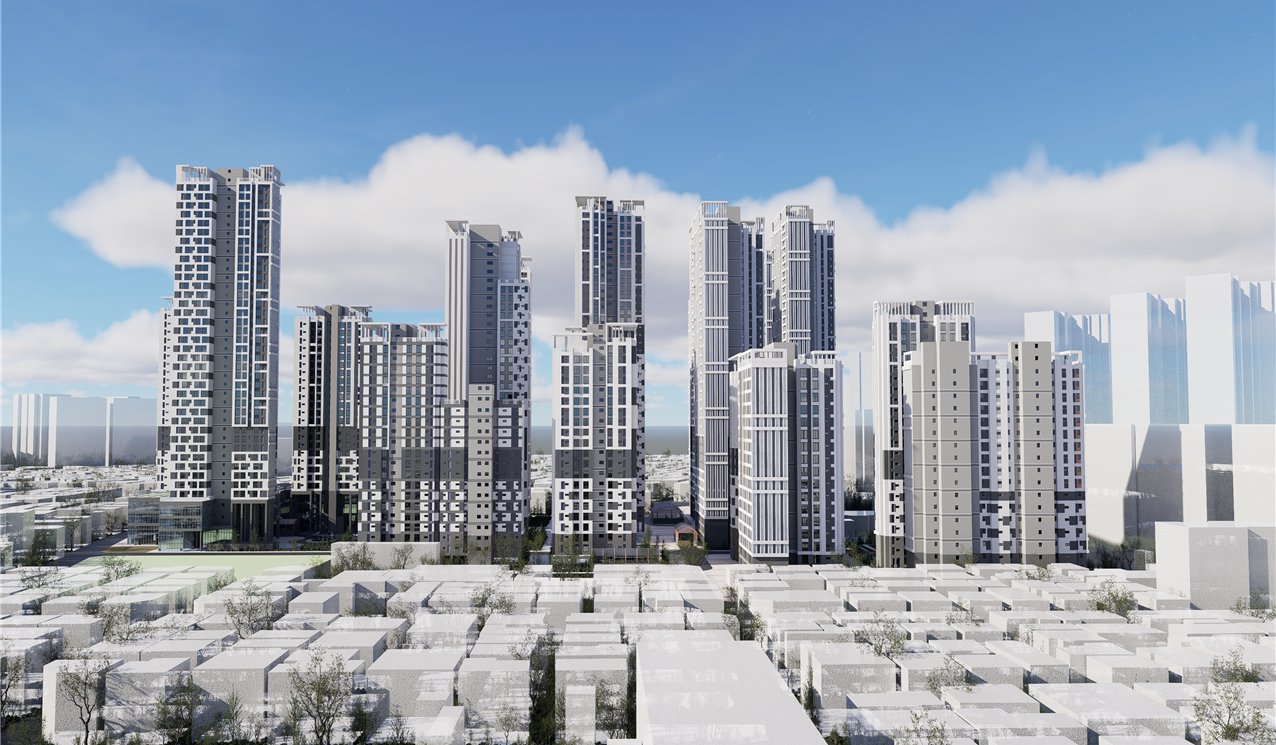
Seoul designated the area around 572-1 Myeongmok-dong in Jungnang-gu as a redevelopment zone Thursday, officially approving the improvement plan and zone designation for the Sagajeong Station transit-oriented urban redevelopment project.
In May, the Seoul Metropolitan Government's Urban Planning Committee approved a modified version of the zone designation and improvement plan. The final designation followed the completion of subsequent administrative procedures.
Under the designation, 69,712.7 square meters around 572-1 Myeongmok-dong will be newly designated as a redevelopment zone. Three of the four planned lots, covering 54,437.60 square meters, will accommodate 2,037 units of apartment housing across 16 buildings ranging from four basement floors to a maximum of 40 above-ground floors. Of those units, 566 will be long-term jeonse public housing and 137 will be redevelopment rental units.
The site sits in the transit-oriented area around Sagajeong Station on subway Line 7, offering strong access to Gangnam and convenient connections to central Seoul and northern and southern Gyeonggi Province via the nearby Dongbu Expressway. Additional redevelopment projects in the vicinity — including a long-term jeonse housing urban redevelopment project near Myeongmok Station and a Moa Town initiative — are also under way, with further improvements to the area's residential environment expected to follow.
The improvement plan focuses on creating a residential complex that secures public value through communication and harmony with the surrounding urban fabric, while forming a streetscape that blends with the neighboring area.
A park of approximately 7,123.8 square meters will be developed in connection with the existing Kkachi Children's Park. Neighborhood commercial facilities will be placed along the southern streetfront adjacent to Sagajeong Station to provide residents with rest areas and to create a street environment linked with the existing commercial district.
Road and pedestrian conditions will also be improved. Myeongmok-ro 49-gil, which runs east to west through the site, will be retained, while Sagajeong-ro 49-gil, running north to south, will be widened from 8 meters to 10 meters. A visual corridor connecting Jungnangcheon Stream and Yongmasan will be planned in conjunction with the existing street grid, and additional visual corridors within the complex will be secured to promote natural ventilation and enhance the urban landscape.
Building heights will be calibrated to complement the nearby apartment complexes and low- to mid-rise residential areas, with varied floor heights designed to harmonize with the surrounding neighborhood. A street-level landscape connecting toward Jungnangcheon Stream will also be developed to create a pedestrian-centered environment.
Jungnang-gu District Mayor Ryu Gyeong-gi said the designation marks the start of full-scale progress on the Sagajeong Station transit-zone redevelopment project. "We will spare no administrative support to ensure that the improved residential environment around Sagajeong Station and a pleasant residential complex in harmony with the surrounding area are built swiftly and stably," he said.
seouldream01@heraldcorp.com