Restrictions on new franchise and large-chain openings to extend beyond Seoulsup-gil to parts of Bangsongdae-gil and Yeonmujang-gil starting in December; district revamps its community sustainability plan for the first time in a decade
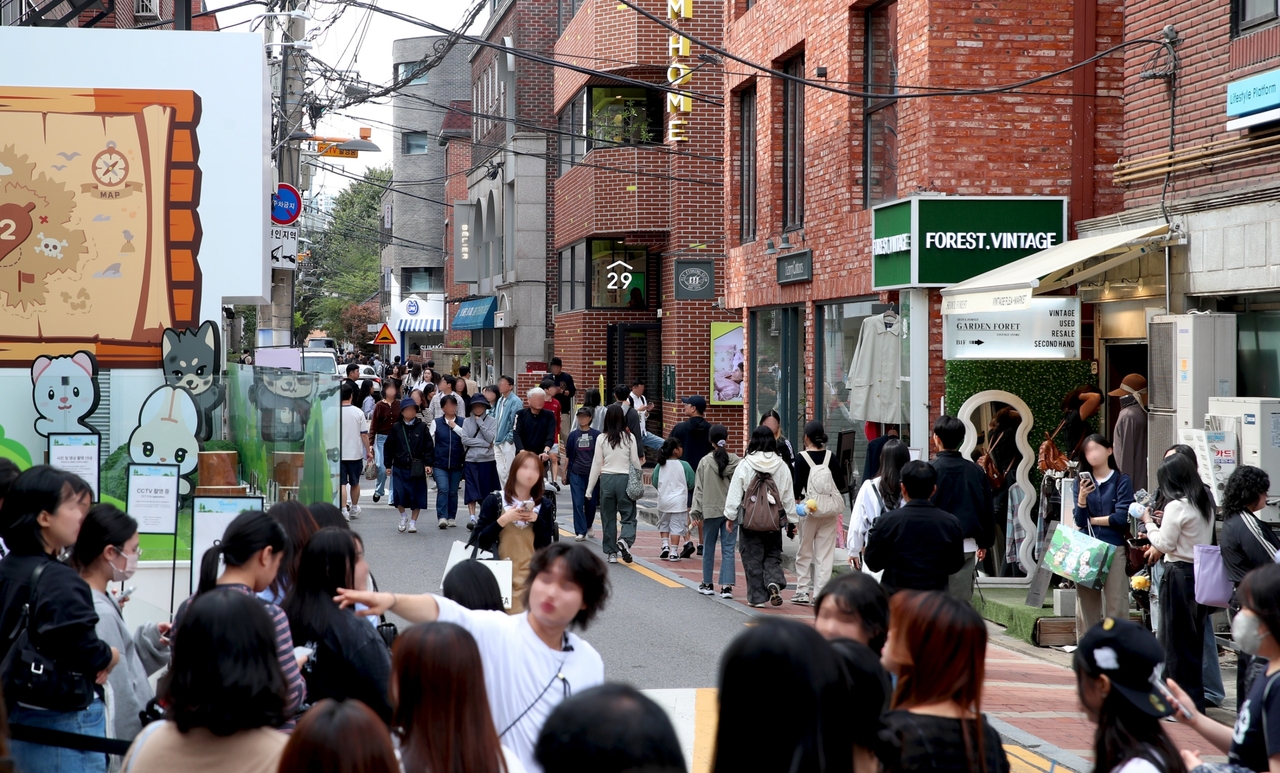
Seoul's Seongdong-gu will expand its restrictions on new openings by large corporations and franchise chains — currently in effect along Seoulsup-gil — to cover parts of Bangsongdae-gil and Yeonmujang-gil, with the expanded rules taking effect in December.
Seongsu-dong has grown into a distinctive commercial district where red-brick industrial buildings, independent local brands and small businesses coexist, rooted in the area's manufacturing heritage. But as the neighborhood has drawn wider attention, rents — particularly along Yeonmujang-gil — have risen sharply, raising concerns about the long-term viability of its existing commercial ecosystem.
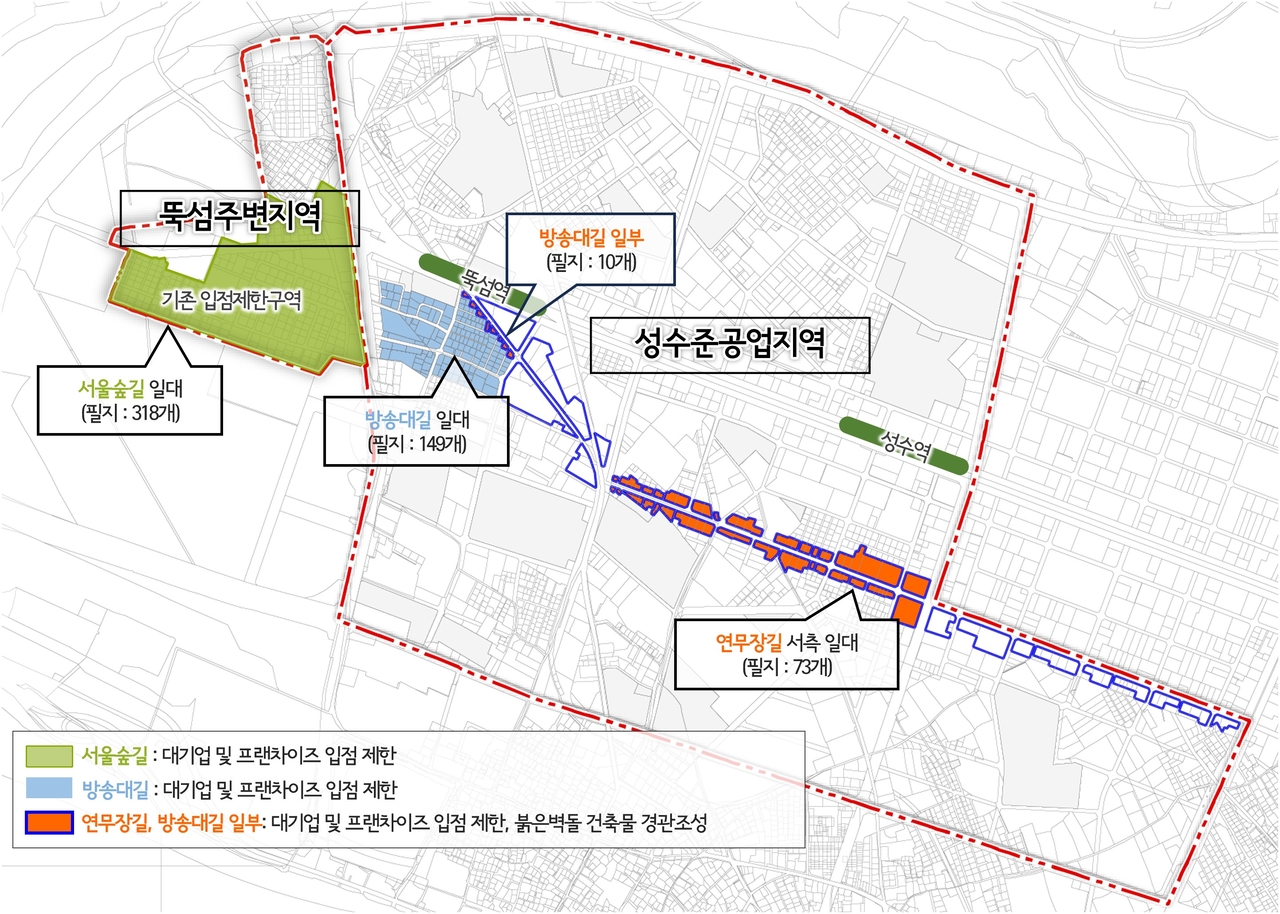
In response, the district linked the expansion to a district-unit plan for the Seongsu quasi-industrial zone announced Sept. 3, designating 232 lots along parts of Bangsongdae-gil and Yeonmujang-gil as subject to the new restrictions. The measure is part of a broader anti-gentrification policy aimed at preserving Seongsu-dong's character and diversity while sustaining its growth.
The restrictions are not a blanket ban, however. They apply only to three business categories — full-service restaurants, snack bars and bakeries — operated by large corporations or franchise chains. Even within those categories, small-scale franchises below the legally defined size threshold may still open, as may businesses that receive approval through a community consultative body.
In addition, 72 lots on the western side of Yeonmujang-gil and 10 lots along Bangsongdae-gil will be subject not only to the entry restrictions but also to a red-brick streetscape initiative, aimed at preserving the architectural character that defines Seongsu-dong's visual identity.
The entry-management policy is one of 17 projects under the district's revised "Community Sustainable Development Plan," which Seongdong-gu updated and announced Sept. 23. The district overhauled the plan — originally drawn up in 2017 — for the first time in roughly a decade, responding to major shifts in Seongsu-dong's commercial landscape, including the rapid spread of pop-up stores and a surge in domestic and international visitors.
The revised plan is organized around four strategic pillars — protecting the local community ecosystem and commercial district, community management through public-private cooperation, building consensus on shared growth, and revitalizing local commerce and culture — encompassing a total of 17 projects.
Key projects include the franchise and large-chain entry management measures, as well as initiatives to keep pace with the pop-up-driven transformation of the district: operating a public pop-up store, distributing a pop-up guidebook and conducting weekly on-site monitoring. The district also plans to strengthen the area's self-sustaining capacity through "Seongsu Town Management," a privately led local governance framework that brings together community stakeholders to collectively manage the commercial district.
Seongdong-gu District Mayor Yoo Bo-hwa said Seongsu-dong's competitiveness stems from the individuality and diversity that its many different players have built together. "We will use this policy as a foundation to support Seongsu-dong in preserving its unique local appeal while enabling the community and its commercial district to grow together sustainably," she said.
seouldream01@heraldcorp.com