Incheon Port accounts for 258 of 2,300 accidents at major trade ports nationwide; over 17,000 maritime accidents recorded across South Korea in the same period
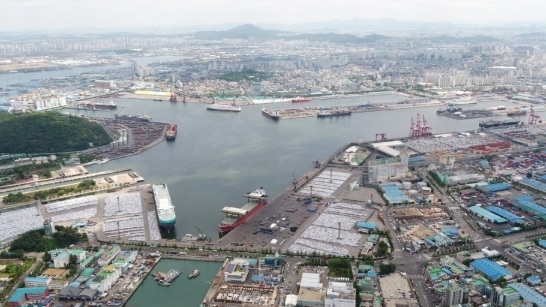
A total of 258 maritime accidents occurred at Incheon Port and its access waterways over the past five-plus years, data shows, prompting calls for stronger and more systematic safety management at the port and its approaches.
Rep. Kim Seon-gyo of the People Power Party — a member of the National Assembly's Agriculture, Food, Rural Affairs, Oceans and Fisheries Committee representing Yeoju and Yangpyeong in Gyeonggi Province — released an analysis Monday of data submitted by the Ministry of Oceans and Fisheries showing that 17,257 maritime accidents occurred nationwide over the roughly five-year period from 2021 through July 2026.
Of those, 258 took place at Incheon Port and its access waterways. Broken down by year, there were 37 accidents in 2021, 34 in 2022, 69 in 2023, 73 in 2024, 15 in 2025 and 30 through July this year.
The accident count at Incheon Port and its access waterways ranked third among major trade ports nationwide, behind Busan Port and its approaches with 441 incidents and Ulsan and Pohang ports with 295.
Jeju and Seogwipo ports recorded 225 accidents, Mokpo Port and its access waterways 191, and Yeosu and Gwangyang ports and their approaches 173.
Maritime accidents have been rising steadily across the country, climbing from 2,720 in 2021 to 2,863 in 2022, 3,092 in 2023, 3,255 in 2024 and 3,513 in 2025.
Through July this year, 1,814 accidents had already been recorded. Comparing 2021 and 2025, the number of accidents rose by about 29 percent over five years.
The human toll has also been severe. A total of 675 people were killed or went missing in maritime accidents during the same period.
By accident type, safety incidents — such as falls and onboard injuries — accounted for the largest share of fatalities and disappearances at 409, or about 61 percent of the total. Capsizings followed with 127 deaths or disappearances, then collisions with 61 and sinkings with 30.
By incident category, engine damage was the most common cause at 5,244 cases, followed by entanglement in floating debris at 2,392, flooding at 1,366, collisions at 1,365, propulsion shaft damage at 1,046 and safety incidents at 1,000.
Incheon Port, as the main gateway to the greater Seoul area, handles heavy vessel traffic with a wide variety of ships navigating its port and access waterways, making on-site safety management increasingly critical for accident prevention, observers noted.
A total of 2,300 accidents were recorded at trade ports and their access waterways nationwide during the period, with Incheon Port and its approaches accounting for more than 10 percent of that total.
"Despite ongoing safety management efforts, maritime accidents have surged 29 percent in five years — a very serious situation," Kim said. "Since a significant portion of casualties stem from safety incidents, we must closely examine on-site risk factors and put in place effective measures to prevent accidents."
gilbert@heraldcorp.com