Nothing in this world is exactly the same as anything else. Even twins differ from each other, and no two products off the same machine are truly identical. It is precisely because things are different that we find them curious and interesting. To be different is to be special. When we treat difference as something strange, we discriminate. Yet when we look closely, we find that while everything differs, everything also resembles something else. It is not only twins who look alike — all people resemble one another, and people resemble nature. Tracing those resemblances is itself a rewarding journey. We are all one, and at the same time, we are many.
I was reminded of this while studying word origins. When I first heard that the Korean words "dareuда" (to be different) and "dalmda" (to resemble) share the same etymological root, I was skeptical. Surely different is different, and alike is alike, I thought. But the more I reflected on it, the more I came to see that while nothing in the world is perfectly identical, nothing is completely different either. That is a profound insight — a vision of the world that language itself reveals. Religiously and philosophically, we are people who differ and yet resemble one another.
The Korean word "biseuthada" (to be similar) tells a similar story. Something similar is not, strictly speaking, the same. The very concept of a "similar word" implies that two things are not entirely identical. Yet we often mistake similar words for the same word. Most vocabulary etymologically related to "biseuthada" carries a sense of imprecision or being off-target. The clearest examples are "bitnagada" (to go astray) and "bitmatchda" (to hit at an angle) — both convey a direction that is not quite right. Words like "bitgeum" (a diagonal slash), "bital" (a slope), "biteulda" (to twist), "biteulgeorida" (to stagger) and "bittureojida" (to go crooked) all suggest something slanted or unsteady. In hanja-based vocabulary, what we call a "similar word" is technically a synonym in the sense of near-equivalence, not exact equivalence — yet we often treat the two as identical. We take what is merely similar and call it the same.
What about the word "gatda" (to be the same)? It is something of an irony that such a word exists in a world where nothing is truly identical. I puzzled over it for a long time, because the expression "gachi" carries two distinct meanings: resemblance and togetherness. "Kkotgachi" means "like a flower," while "gachi sarayo" means "let's live together." You might call it the riddle of "gachi." On reflection, though, I found that "gatda" is etymologically rooted in the idea of closeness — "gakkapda" (to be near). Because something feels close, we come to think of it as the same. That is likely why "gachi" appears in figurative expressions such as "baramgachi" (like the wind) or "hanulgachi" (like the sky) — they convey a felt sense of nearness. And "gachi gapsida" (let's go together) probably began as an invitation to stand close and walk side by side.
Meanwhile, the Korean words for "I" and "you" — "na" and "neo" — are worth a closer look. They are the prime example of the Korean saying that "a" and "eo" sound different and mean different things. Neither is right or wrong; they are simply distinct. That is an important insight. You and I are different beings — but we are not completely different. We resemble each other. All people do. In Korean, a person who is neither "na" (I) nor "neo" (you) is called "nu" — a third person who is also different, yet also alike. The idea that we differ and yet resemble one another is a genuinely good way to see the world. Nothing is perfectly the same, but nothing is entirely foreign either.
That is why we must live together. To hate one another, to discriminate, to exclude others as wrong — none of that reflects the image of humanity that the Korean language reveals. The words "dareuда" (different), "biseuthada" (similar) and "gatda" (the same) together paint a picture of people who resemble one another living side by side. The word "hamkke" (together) captures that vision of becoming one. It contains the root "han," meaning one. Its opposite, in a sense, is "hannat" — the state of being reduced to isolated, scattered individuals. When we drift apart, each of us becomes a mere "hannat," a lone fragment. I dream of a life in which we all move forward together. We are all, in the end, close to one another.
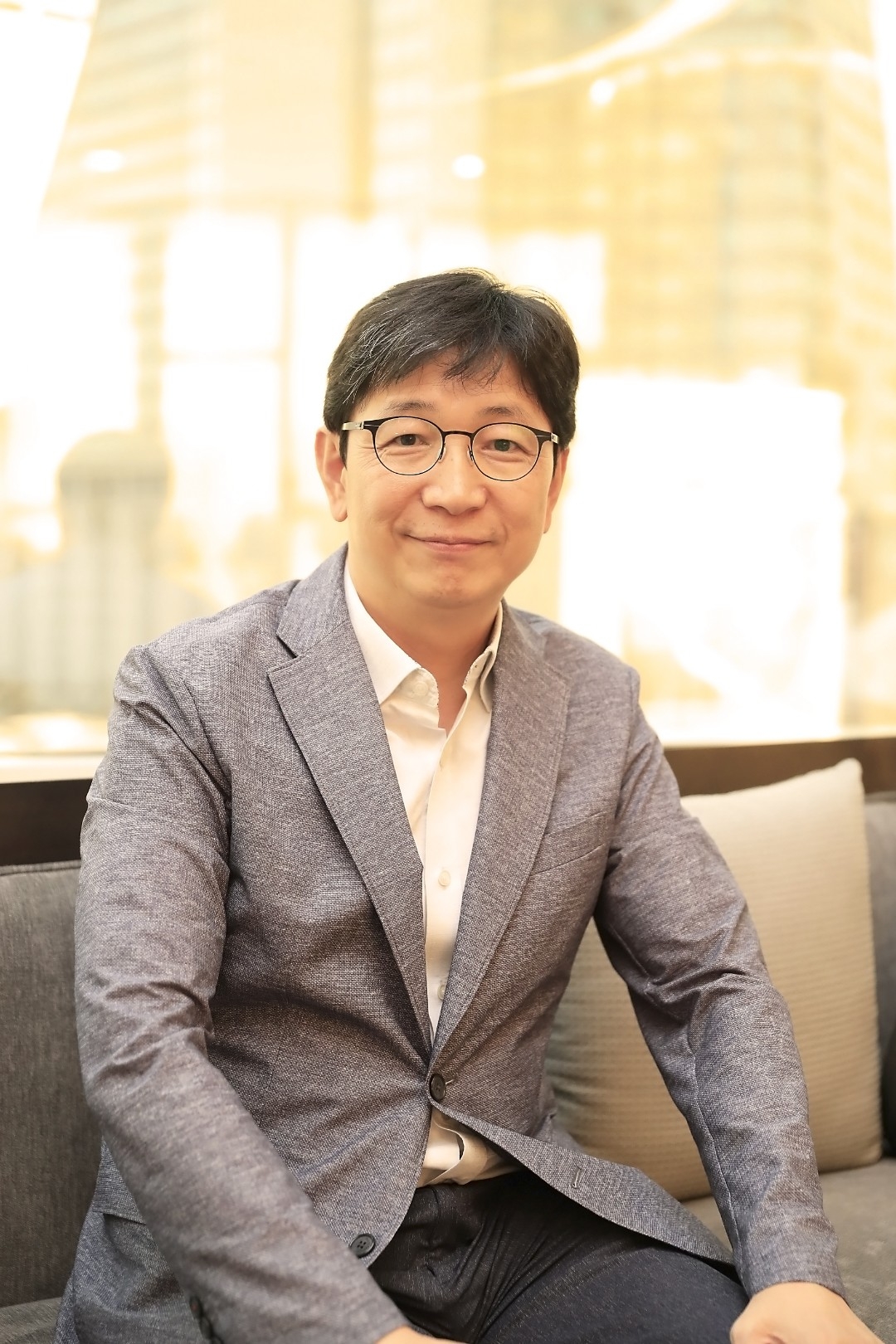
By Cho Hyun-yong, professor at Kyung Hee University
bigroot@heraldcorp.com