Share prices respond to growth potential, not confirmed earnings
Young investors should focus on saving, not deploying capital
Expert urges soft landing toward retirement at 75, diversified income pipelines
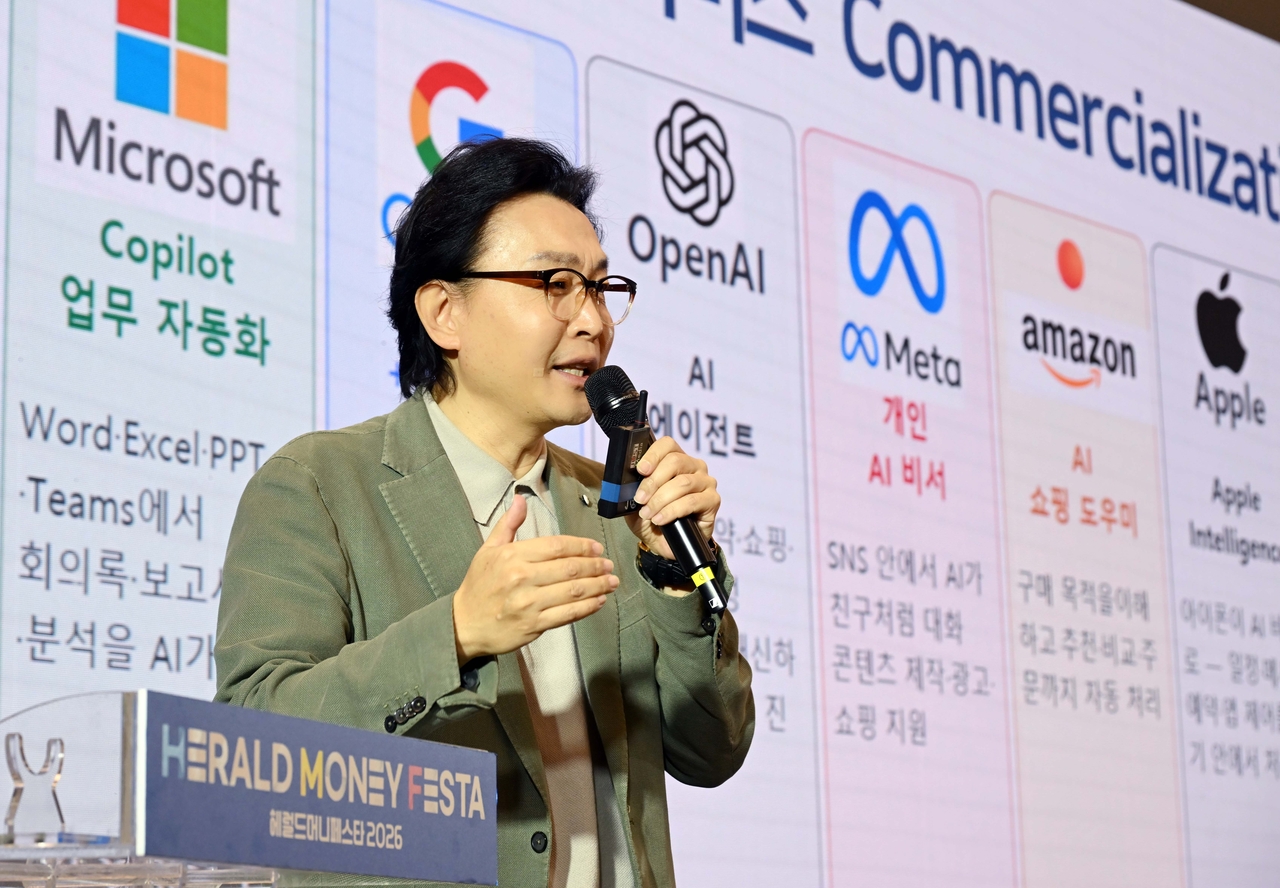
Kim Kyung-pil, chief executive of Money Training Lab and widely known by his online persona "Donjjulnam," took the stage Friday at Herald Money Festa 2026 at Dongdaemun Design Plaza in Jung-gu, Seoul, laying out an investment roadmap for the coming AI era and tailored asset-management principles for different generations.
Kim cautioned against short-term fixation on domestic semiconductor blue chips that have surged sharply this year, saying investors should be "preparing now for the AI ecosystem that will fully take shape over the next five years." He was particularly blunt with younger investors in their 20s and 30s: unless they have money they can afford to lock away for five or more years, they should "leave the stock market right now." For older generations, he prescribed a soft landing toward full retirement at 75 and the building of a diversified cash-flow pipeline.
Kim drew on a fried-chicken shop analogy to illustrate the paradox between earnings and share prices in the semiconductor sector. "A shop that normally sells 100 chickens a day would be thrilled to get 500 orders on the night of the Yeouido fireworks festival," he said. "But around day five, you start thinking: the festival ends the day after tomorrow. Samsung Electronics and SK hynix are posting strong earnings right now, but the market believes those earnings cannot last."
He noted that both companies are on track for record-breaking results next year as well, yet their share prices are not moving in step. "Earnings and share prices have nothing to do with each other," Kim said. "Share prices react far more strongly to growth potential than to confirmed results."
He went further, arguing paradoxically that share prices may only rise once earnings normalize. "When the fireworks festival ends and earnings return to normal, if Samsung Electronics and SK hynix can prove they are irreplaceable essentials within the AI ecosystem, the market will award them a price-to-earnings ratio of 20," he said.
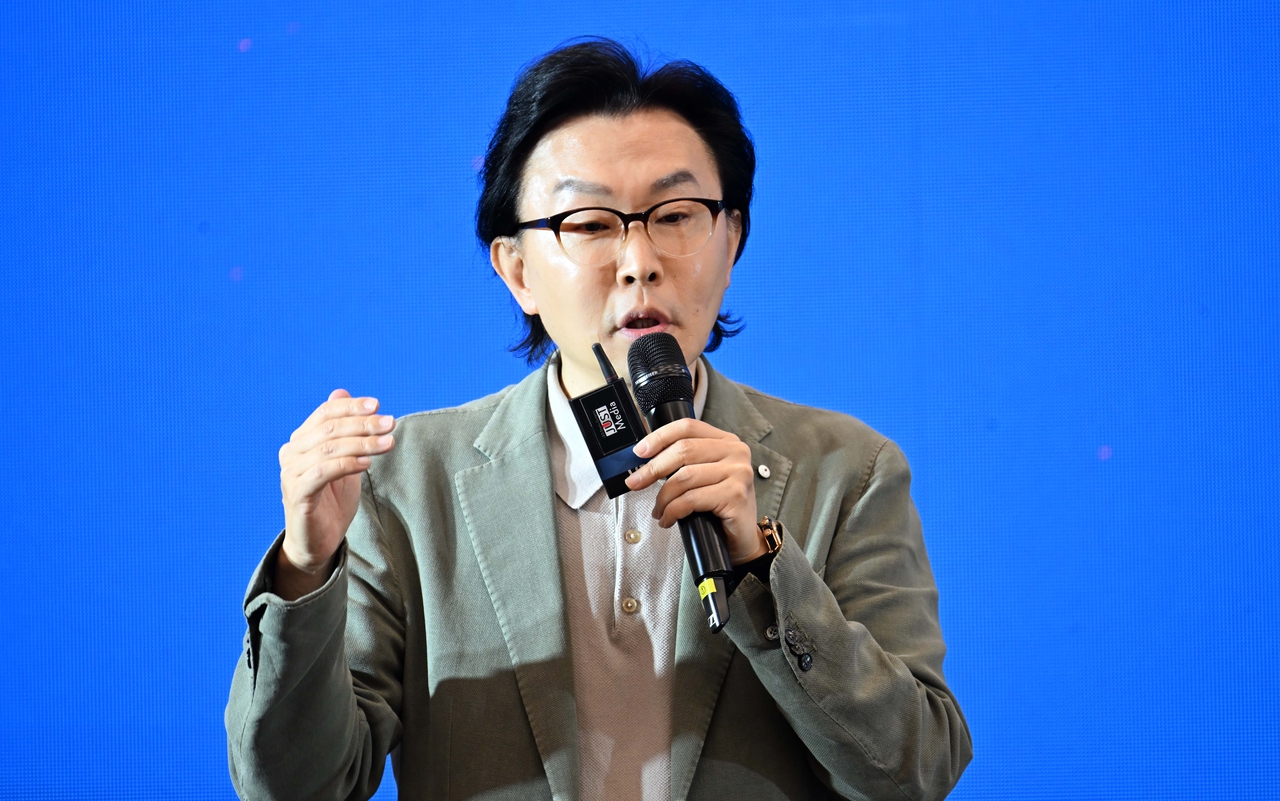
Kim identified the AI industry's true inflection point as five years out — the moment AI moves beyond hardware and cloud infrastructure and becomes embedded in everyday life. "Before smartphones existed, people didn't know what they were missing, but now everyone uses one," he said. "By 2031, everyone will be using a personal AI assistant for around 250,000 won ($184) a month, and tech companies will be vacuuming up money as a result."
But capturing those gains requires patient, long-term investing — and Kim did not spare younger investors who have entered the market with short-term funds. "If you have 'winning money' — money you absolutely will not need for the next five years no matter what — you have a chance," he warned. "But 'losing money,' funds you actually need to spend, like a jeonse deposit or tuition, will be lost because you won't be able to hold through a downturn."
He cited 20 years of Kospi data to back up the point. "After each of the four peaks where retail investor buying was most concentrated — October 2007, January 2018, July 2021 and May this year — returns were negative one year later, but had recovered 30 months out," he said. "It is already proven that only those with winning money, funds they don't need within five years, can hold on without selling and seize the opportunity," he added.
Kim advised younger investors with limited seed capital to draw strict lines between different pools of money. He defined three categories — money to save, money to spend and money to invest — and said young people should have three to four times as much in the "save" bucket as in the "invest" bucket, given the large sums needed for life milestones such as buying a home or getting married. Only retirement funds and other money that can be locked away long-term should be aggressively deployed into long-term accumulation vehicles such as US index funds tracking the NASDAQ 100 and S&P 500, he said.
"Don't watch the waves that change by the minute — invest in the wind that makes the waves," Kim said. "If you believe AI is destined to reign, invest in a way that matches that conviction."
Turning to older generations, he said they should not think about stopping work altogether, but rather change its form and aim for a soft landing toward full retirement at 75. "Once you fully retire, you stay home all week, so you have to calculate post-retirement living costs at twice your basic living expenses," he said. "The key is not the size of the amount but how many income pipelines you can build — national pension, retirement pension, monthly rent income, dividend stocks and the like."

jiyun@heraldcorp.com
park.jiyeong@heraldcorp.com