Residential school to enroll 50 students per grade, 150 total, as new model for science education
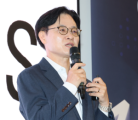
![Kim Tae-young, head of the establishment planning division for the GIST AI Gifted School, presents at an expert roundtable on building the school's educational framework, held in Seoul. [GIST]](https://wimg.heraldcorp.com/news/cms/2026/10/02/news-p.v1.20261002.b5e15c8e063b4764827bb494dc392813_P1.jpg)
"In an era when AI provides the answers, what gifted students need is not the ability to find the right answer quickly — it is the ability to ask new questions."
The Gwangju Institute of Science and Technology has unveiled the first blueprint for an AI Gifted School set to open in 2029. The vision is not to produce students who simply learn AI earlier or use it better than their peers, but to cultivate a new generation of science talent who ask their own questions and harness AI to solve problems no one has yet defined.
GIST said it held an expert roundtable Thursday at the AI Policy and Strategy Graduate School's Seoul campus in Jung-gu to discuss the school's framework, covering student selection, instruction and assessment, growth support, and faculty and administrative systems.
The AI Gifted School is being developed under the Ministry of Science and ICT's AI talent-development policy, with a target opening year of 2029. It will operate as a residential school enrolling 50 students per grade for a total of 150.
The core of the educational philosophy is a shift from "answers" to "questions." Kim Tae-young, head of the school's establishment planning division, said the goal is to move students away from being passive responders who answer preset questions and toward becoming active voices who pose their own questions and express their own ideas. Communication skills, creativity, self-motivation, civic awareness and a spirit of challenge were also identified as key competencies.
![Participants in the expert roundtable on building the GIST AI Gifted School's educational framework pose for a group photo. [GIST]](https://wimg.heraldcorp.com/news/cms/2026/10/02/news-p.v1.20261002.480473bdf7b9478bba8ccfd4ebd5f07d_P1.jpg)
Student selection and assessment will also look different. Rather than measuring only academic achievement or AI proficiency, the school plans to evaluate students' capacity for independent learning and thinking, their ability to explain ideas logically, and their potential to generate new questions. A "growth-centered assessment" model was also proposed, in which students are observed over a set period through problem-solving exercises, records of their development, and portfolios.
Responsibilities will be divided between AI and teachers. AI will supply students with information and learning materials, while teachers and mentors will focus on students' emotional well-being, relationships and career development, supporting collaboration and growth in ways that go beyond what AI can provide.
GIST President Lim Ki-chul said the AI Gifted School is "a national undertaking to nurture the talent that will open a new civilization in the AI era," adding that GIST would draw on its AI research capabilities and educational infrastructure to create a new model for gifted education.
nbgkoo@heraldcorp.com