First meeting of agricultural trade policy council since elevation to statutory body
Producers to make up at least one-third of members; in-person, pre-deliberation rules adopted
2027 low-tariff quota plans for feed and processed food ingredients discussed
![This image is unrelated to the article. [Getty Images Bank]](https://wimg.heraldcorp.com/news/cms/2026/10/02/news-p.v1.20261002.75d692786cc94d55ab33ad2b01f8220a_P1.jpg)
Agricultural producers will have a greater say in shaping import policy for farm products. Under a revamped structure, producer group representatives will make up at least one-third of the Agricultural Trade Policy Deliberation Council, which was recently elevated to a statutory body, and procedures for gathering field-level input on major import items before decisions are made will be strengthened.
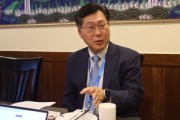
The Ministry of Agriculture, Food and Rural Affairs held the first meeting of the Agricultural Trade Policy Deliberation Council on Friday at the aT Center in Seoul, with about 30 participants including representatives from producer and consumer groups, experts and officials from related agencies.
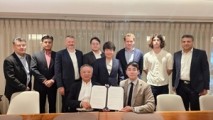
The council was elevated to a statutory body in August following an amendment to the Act on Distribution and Price Stabilization of Agricultural and Fishery Products passed in August last year. Friday's meeting was the first since the elevation, and a ceremony was held to commission new members.
Producer participation was built into the membership from the outset. At least one-third of all council seats are reserved for representatives of producer organizations. Six groups are represented: the Korea General Agricultural Organizations Council, the Korean Women Farmers Association, the Korea Fruit Industry Agricultural Cooperative Federation, the Korea Radish and Cabbage Producers Association, the Korea Onion Association and the Livestock-Related Organizations Council.
The council's operating rules have also changed. In-person meetings are now the default, and procedures for gathering broad input from associations and groups with a stake in major import items have been improved. The intent is to more actively reflect the views of producers of the relevant commodities before import policy decisions are finalized.
At the inaugural meeting, members discussed a draft 2027 operating plan for low-tariff rate quotas — arrangements that apply reduced tariffs up to a set volume on feed, processed food ingredients and other goods in short domestic supply. The Ministry of Agriculture, Food and Rural Affairs plans to follow up by consulting with the Ministry of Economy and Finance based on the meeting's outcomes.
"We plan to develop and adjust related policies on the basis of broad participation by stakeholders affected by imported agricultural products," Vice Minister of Agriculture, Food and Rural Affairs Kim Jong-gu said. "We will work to ensure that members' views are fully reflected as we pursue import agricultural policies that take into account the interests of both producers and consumers."
adastra@heraldcorp.com