Donghae's Chogu village keeps eco-farming alive — and celebrates it with a grasshopper festival
A Joseon-era statesman's exile left a lasting legacy of enlightened agriculture
Mangsan-dong in Donghae is best known for Mangsan Beach, one of the five great beaches along the East Sea coast. At the beach entrance, a sign quoting the philosopher Nietzsche — "There is always some madness in love" — never fails to draw a smile from visitors passing through.
Yet Mangsan-dong holds a more layered history than its seaside reputation suggests. The neighborhood has a remarkable connection to three towering figures of the Joseon dynasty: royal consort Jang Ok-jeong (known as Jang Hui-bin), Queen Inhyeon — who was briefly deposed — and State Councillor Yakcheon Nam Gu-man.
As an administrative district, Mangsan-dong oversees the legal neighborhoods of Mangsan, Goeran, Manu, Simgok and Chogu. It was to Chogu and Simgok that Yakcheon was exiled following the Gisa Hwanguk — the political upheaval in which the Southerners faction, backed by Jang Hui-bin, defeated the Westerners-Noron faction aligned with Queen Inhyeon.
Nam Gu-man, a leading figure of the Soron faction, had tried to hold a neutral position, but a blunt remonstrance that could be read as placing blame for the political chaos on King Sukjong himself ultimately landed him in exile in Chogu.
Beyond the beach, Mangsan-dong offers a wealth of cultural and natural destinations: Simgok Yakcheon village, the Simgok reservoir, the Mangsan sand dunes at Nobong Beach, and Yakcheonsa — a small temple that enshrines a portrait of Nam Gu-man.
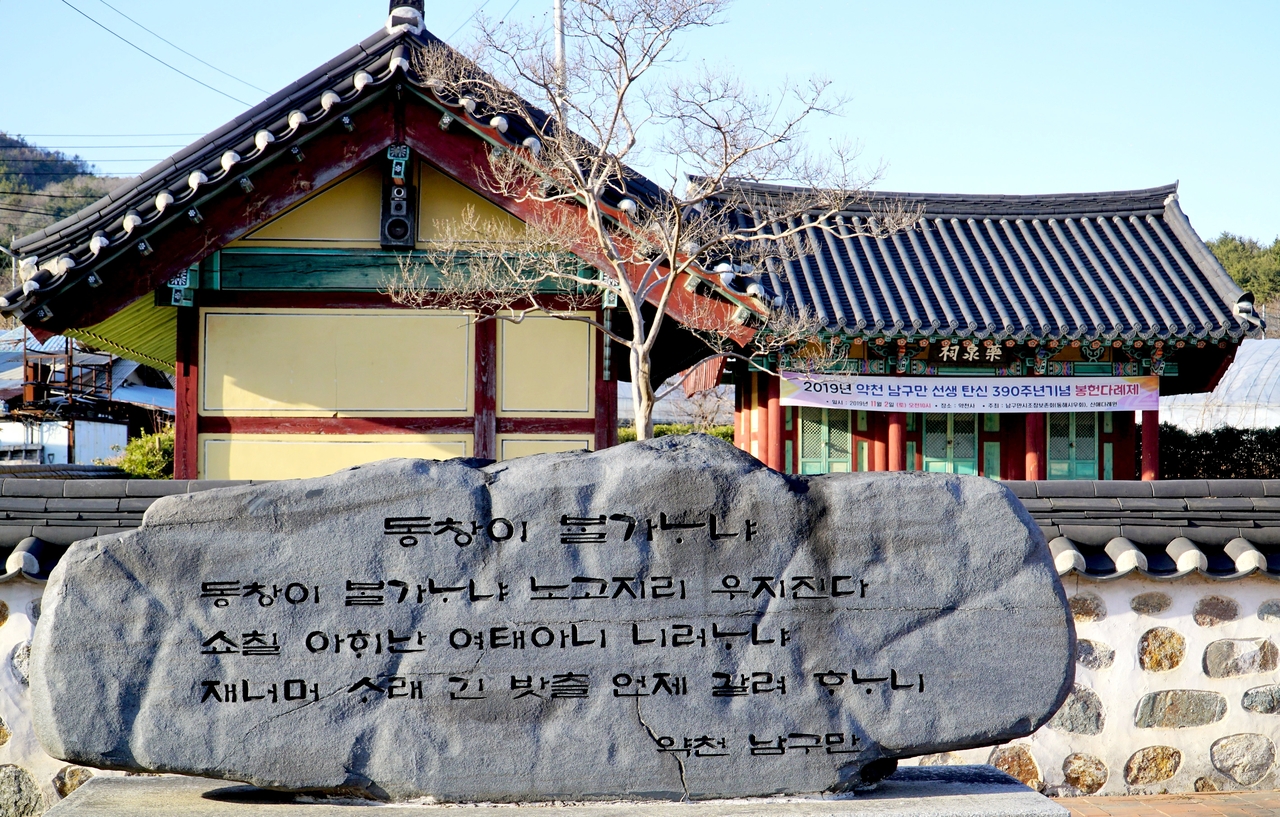
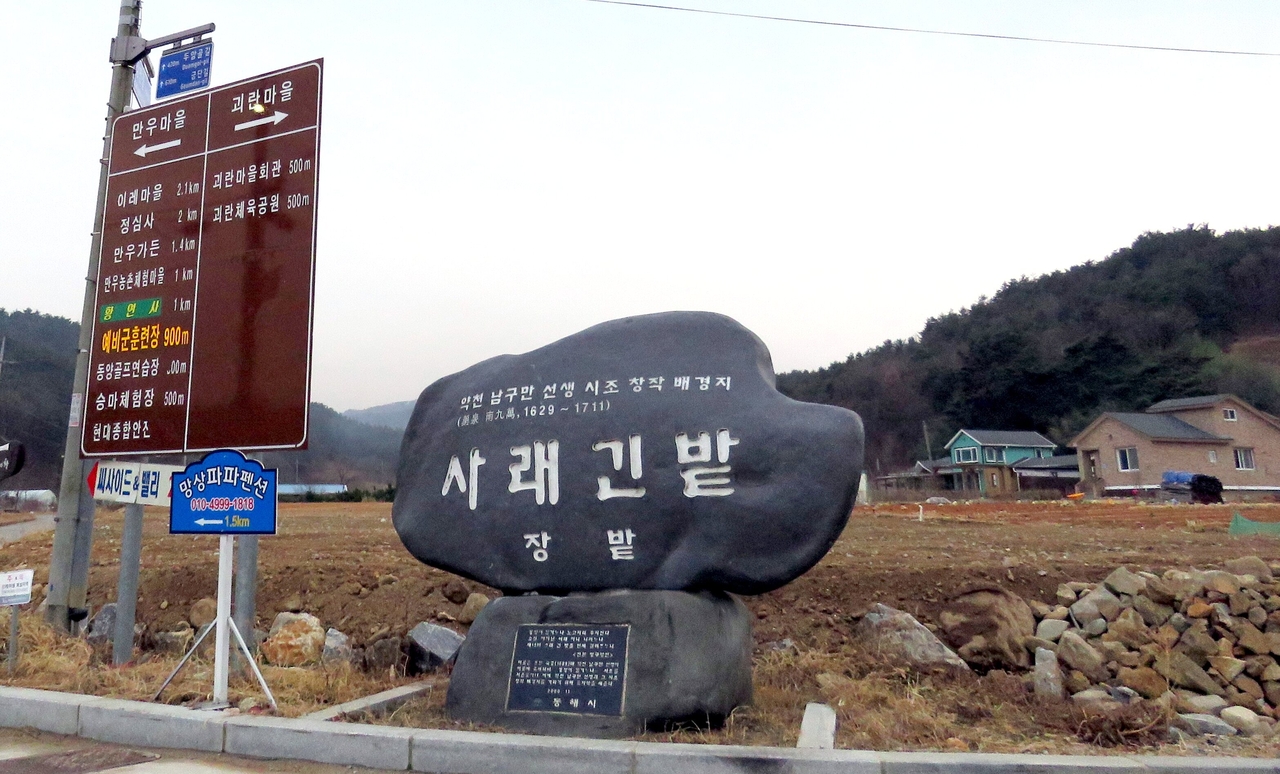
It is here, in Chogu village, that the "saraegginbat" — the long-furrow field — immortalized in Nam Gu-man's sijo poem stands. The verse opens: "Has the east window brightened? … When do you plan to till that long-furrow field beyond the hill?" Most readers take it as a tranquil portrait of unhurried rural life, though some scholars argue it was a pointed rebuke of officials who neglected their duty to govern wisely and care for the people.
Modern visitors tend to prefer the gentler reading — a languid countryside scene with the sea in view. Many come longing to leave the relentless pace of contemporary life behind and simply sit in a place like Chogu village, gazing at the water, a fire, or the forest in quiet contemplation.
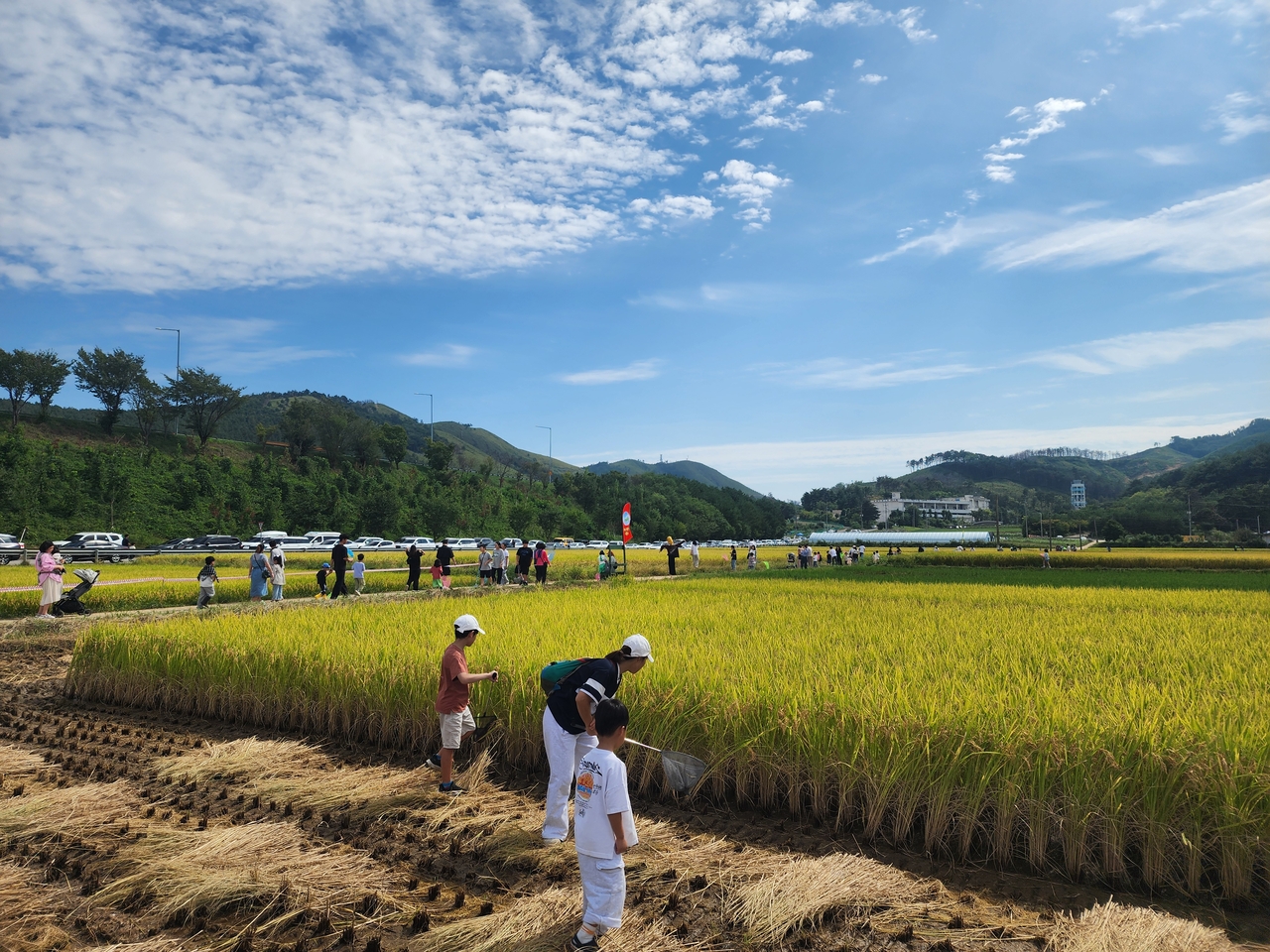
Donghae city is now staging an unusual festival in the very village where Yakcheon once lived. On Saturday, the Mangsan Grasshopper Festival will be held at Mangsan-deul, a field at 348-1 Chogu-dong.
After his exile, Nam Gu-man championed scientific farming and rural enlightenment in the area — a legacy Chogu-dong has carried forward by adhering to eco-friendly organic farming methods to this day. With no pesticides used, grasshoppers thrive naturally in the fields.
The traditional remedy for keeping grasshoppers from damaging crops was straightforward: catch them and roast them.
Roasted grasshoppers are not a memory confined to middle-aged villagers who grew up in the countryside. Word spread that they make a fine snack with drinks and are good for the body, and fried grasshoppers remain popular in cities and rural areas alike — in demand enough that some vendors offer express delivery.
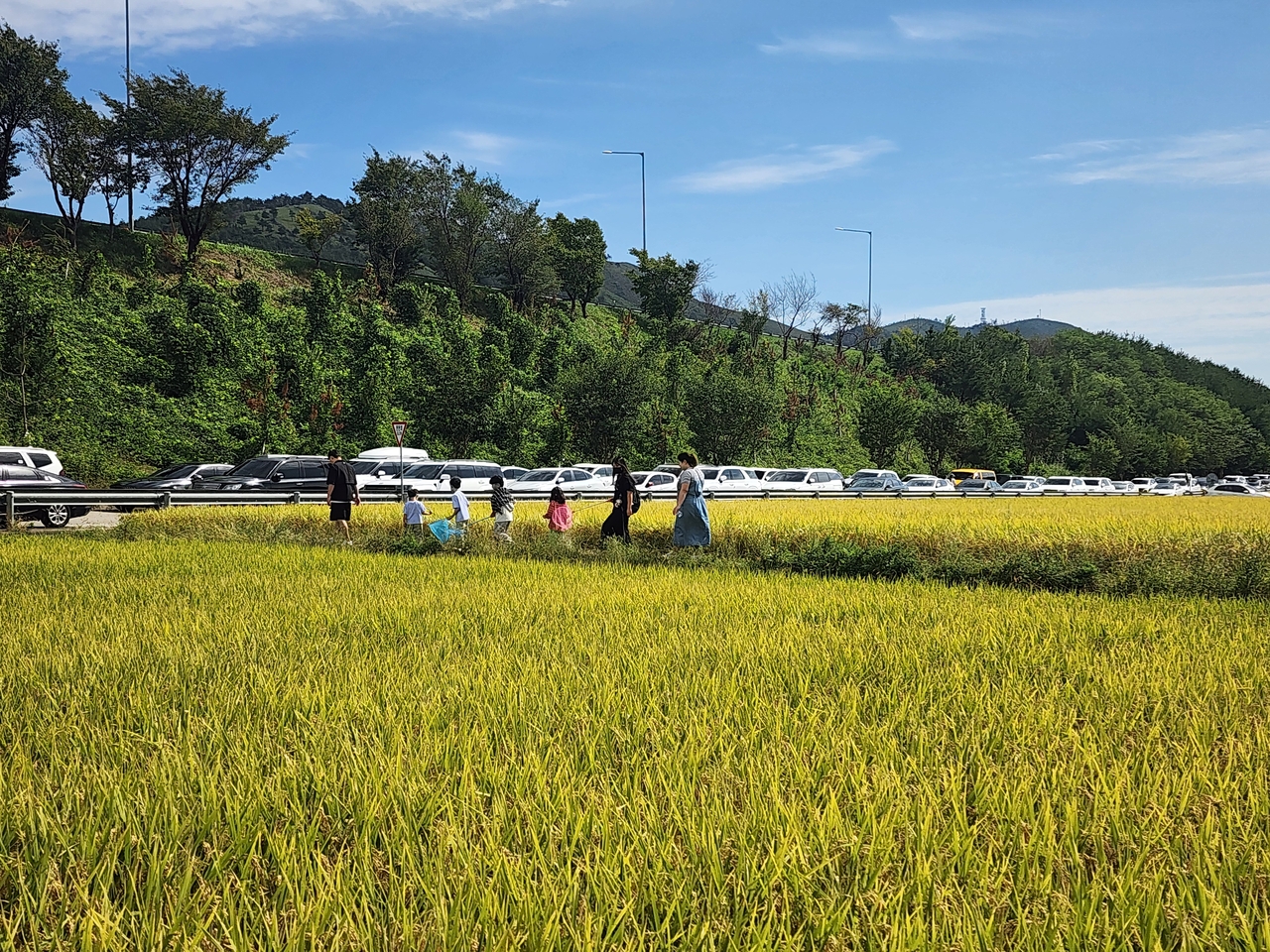
Mangsan-dong — a community that straddles farming and fishing — organized the festival to share the value of its eco-friendly agriculture and rural heritage with the wider public, while offering hands-on nature experiences designed to help visitors unwind.
The opening stage will feature a performance of Mangsan Goeran Gocheongje Nongak, a communal farmers' music tradition designated as an intangible heritage of Gangwon Province. Passed down through generations as a prayer for village peace and a good harvest, the performance is expected to give the festival a meaningful grounding in traditional culture.
Visitors can try making wooden grasshopper crafts and take part in traditional rice-cake pounding, and browse displays including a grasshopper photo zone and a vintage cultivator.
Promotional booths will showcase Mangsan rice and glutinous scorched-rice snacks grown through eco-friendly farming, and food stalls will serve tteokbokki made with Mangsan rice, injeolmi rice cakes and cotton candy.
A crowd favorite from last year returns: live grasshoppers will be released into the fields for visitors to catch. The activity doubles as a practical exercise — catching grasshoppers protects the grain crop while also yielding an alternative food source.
Mangsan-dong chief Lee Gyeong-a said the festival was designed to bring residents and visitors together in the eco-friendly fields of Mangsan-deul. "We hope many people will come, enjoy the autumn atmosphere and experience traditional culture," she said.
abc@heraldcorp.com