Fine applies when three or more workers die in a year due to safety violations
People Power Party seeks 5 billion won cap; scale of penalties for large firms at issue
Democratic Party vows not to call cloture vote even if filibuster proceeds
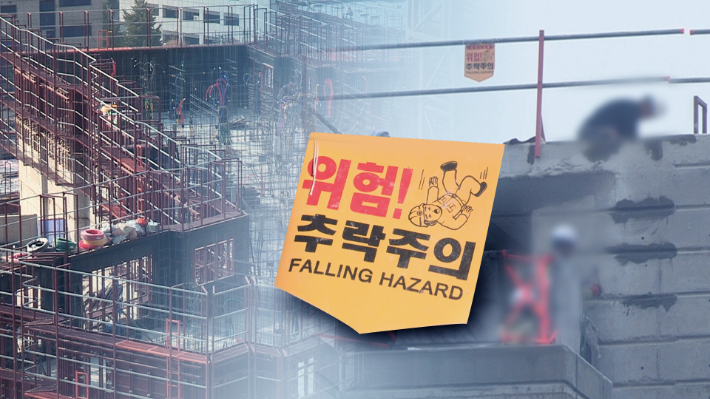
The National Assembly is set to take up a bill Thursday that would impose fines of up to 5 percent of operating profit on companies where three or more workers die within a year due to violations of safety and health regulations under the Occupational Safety and Health Act.
The measure is designed to strengthen corporate financial accountability and prevent recurring fatal accidents. However, the People Power Party has proposed an amendment capping the fine at 5 billion won ($3.69 million), making the appropriate level of penalties for large companies the central point of contention.
According to the Ministry of Employment and Labor, the bill would allow authorities to impose a fine of up to 5 percent of a company's operating profit on business owners where three or more workers die within a year as a result of safety and health violations. The intent is to deter industrial accidents and encourage investment in workplace safety by imposing financial penalties on companies responsible for multiple or repeated fatal incidents.
The bill is a key legislative priority in the ministry's push to strengthen financial penalties as part of its industrial accident prevention policy. Its core provision requires companies that repeatedly cause fatal accidents through safety and health violations to bear liability in proportion to the scale of their profits.
The central dispute is whether to set a separate monetary cap on the fine. The Democratic Party of Korea is pushing to impose a fine of up to 5 percent of operating profit with no ceiling. The People Power Party has proposed an amendment that retains the 5 percent benchmark but limits the maximum fine to 5 billion won.
Whether a cap is introduced would determine the burden placed on companies with large operating profits. For a company with 100 billion won in operating profit, applying the maximum rate of 5 percent yields a fine of exactly 5 billion won — making the two proposals identical in that case. But for a company with 400 billion won in operating profit, the maximum fine under the uncapped version would be 20 billion won. Applying the 5 billion won cap would reduce the maximum liability by 15 billion won.
The gap widens further for companies with 1 trillion won in operating profit. Five percent of that figure comes to 50 billion won, but under the People Power Party's amendment the maximum fine would be capped at 5 billion won. The key question is how much the introduction of a fixed ceiling would undercut the bill's original design of scaling penalties in proportion to a company's profits.
These figures are based on simple calculations using the maximum rate, and actual fines would vary depending on the final text of the legislation and the specific criteria used to determine the amount. However, if a cap is introduced, the larger a company's operating profit, the lower the effective maximum fine as a share of that profit.
From the perspective of the ministry's industrial accident prevention policy, the key question is how effectively financial penalties can encourage companies to invest in safety and take steps to prevent recurrences. The final method for calculating fines — not just whether the bill passes — is expected to determine how effective the system will be in practice.
The Democratic Party plans to bring the bill to a floor vote in the National Assembly Thursday afternoon. The People Power Party is considering a filibuster, and the Democratic Party has said it will not call a vote to end debate even if unlimited deliberation proceeds, leaving the outcome for the day uncertain.
fact0514@heraldcorp.com